Is there anything more distracting than a GPU fan screaming like a jet engine during a tense final-circle moment in Apex? We've all been there. You're trying to hear footsteps, but your PC is putting in a shift that could rival a Lanseria take-off. The dream of a powerful yet silent gaming rig is real, and it all starts with the right graphics card. This guide will help you find the perfect quiet GPU in 2026 by looking at today's top tech.
What Defines a Truly Quiet GPU?
Before we look at specific models, let's break down the science of silence. Finding a quiet graphics card isn't just about picking the one with the biggest fans. It’s a balance of smart engineering and thermal efficiency. The best silent PC builds focus on a few key factors that will become even more important as we head towards 2026.
### Heatsink and Cooler Design
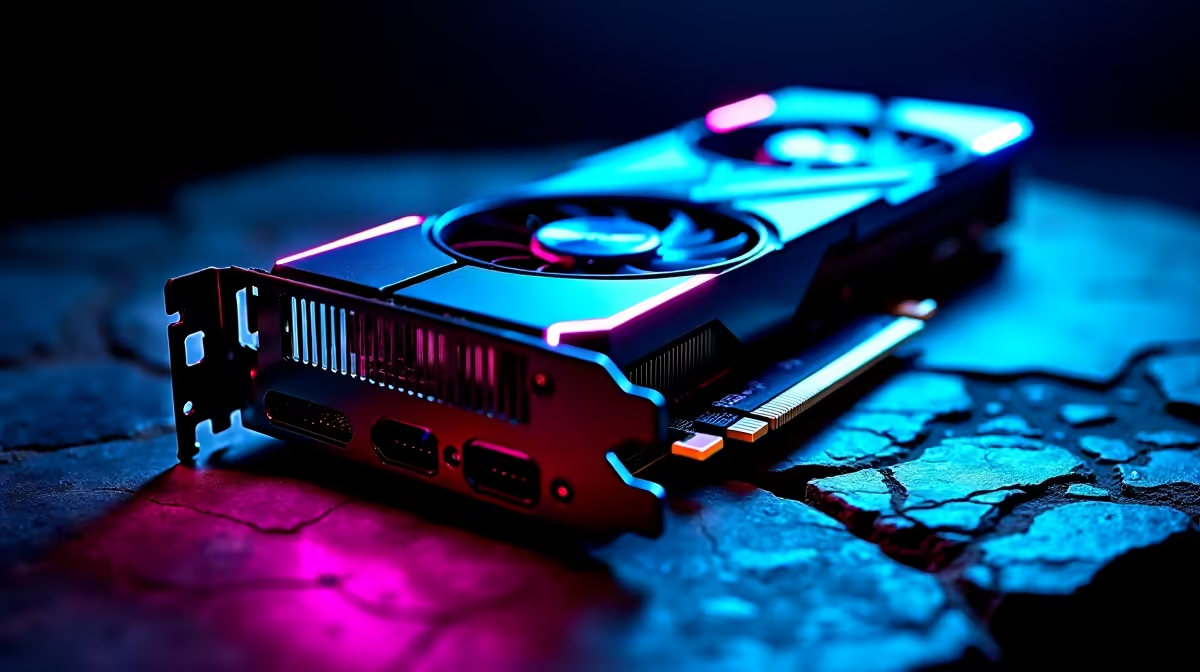
The unsung hero of a quiet GPU is the heatsink. A larger, more dense heatsink with a sophisticated heat pipe or vapour chamber design can dissipate more heat passively. This means the fans don't have to work as hard... or at all. Top-tier cards often have massive, over-engineered coolers that allow them to run whisper-quiet even under load. This design philosophy is something we expect to see perfected in the quest for the ultimate quiet GPU of 2026.
### Fan Technology and 0dB Modes
Modern GPUs feature "0dB" or "Fan Stop" technology. The fans simply don't spin until the card hits a certain temperature, usually around 50-60°C. For everyday tasks like browsing or watching videos, the card is completely silent. When you do start gaming, the blade design, bearing type, and motor quality all contribute to how much noise is produced. It’s this tech that makes a silent PC build possible without sacrificing performance.
Check Your Airflow! 🔧
Your PC case is a massive factor in GPU noise. A case with poor airflow will trap hot air, forcing your GPU fans to spin faster and louder to compensate. Ensure you have a clear path for air to enter from the front or bottom and exhaust out the top or back. A well-ventilated case can make even a mid-range card run quieter.
Predicting the Top Quiet GPU Contenders for 2026
While we can't review a 2026 product today, we can analyse current trends from the big players—NVIDIA, AMD, and Intel—to predict what the future of silent performance looks like. The focus is shifting towards power efficiency, which directly translates to less heat and less noise.
### NVIDIA's Path to Silence 🤫
NVIDIA's high-end cards are known for their impressive performance, and their cooling solutions have become incredibly advanced. The triple-fan designs on many custom RTX 40-series cards are masterpieces of thermal engineering. As their architecture becomes more efficient, we can expect future generations to produce even less heat, making them prime candidates for the quietest GPU title. Many of the most powerful and quietest options are found among premium NVIDIA cards over R15,150, where manufacturers invest heavily in custom cooling. For a broader view, exploring NVIDIA's GeForce lineup shows this commitment to quality coolers across different price points.
### AMD's Cool and Calm Approach
AMD has made huge strides with its RDNA architecture, focusing on performance-per-watt. Cards like the RX 7800 XT and 7900 XTX showcase excellent custom cooler designs from partners like Sapphire and PowerColor that are both effective and quiet. We anticipate AMD will continue this trend, offering competitive options for gamers seeking a low-noise experience. The latest AMD Radeon cards are already fantastic choices for quiet PC builds.
### Intel's Arc: The Dark Horse?
While newer to the dedicated GPU space, Intel is one to watch. Their focus on media encoding and AI features is strong, and as their drivers and architecture mature, they could become a surprising contender. Keep an eye on Intel's Arc graphics cards as they refine their designs for future generations.
Beyond Gaming: Other Silent Options
It's worth noting that not all quiet cards are built for gaming. For professionals in creative fields, silence is golden. Often, professional workstation graphics cards are designed for stability and can be surprisingly quiet, though they lack the gaming-specific driver optimisations. The key takeaway is that the principles of a good cooler apply across the board. When you're searching for the right GPU, filter by your needs but always check reviews for noise level tests. Investing in one of the many available high-performance graphics cards with a reputable cooler is the best strategy for long-term acoustic bliss. ✨
Ready to Build Your Silent Rig?
The journey to a whisper-quiet PC starts with the right components. From entry-level silence to high-end performance, the perfect graphics card is waiting for you. Explore our massive range of graphics cards and find the perfect GPU to power your world... peacefully.