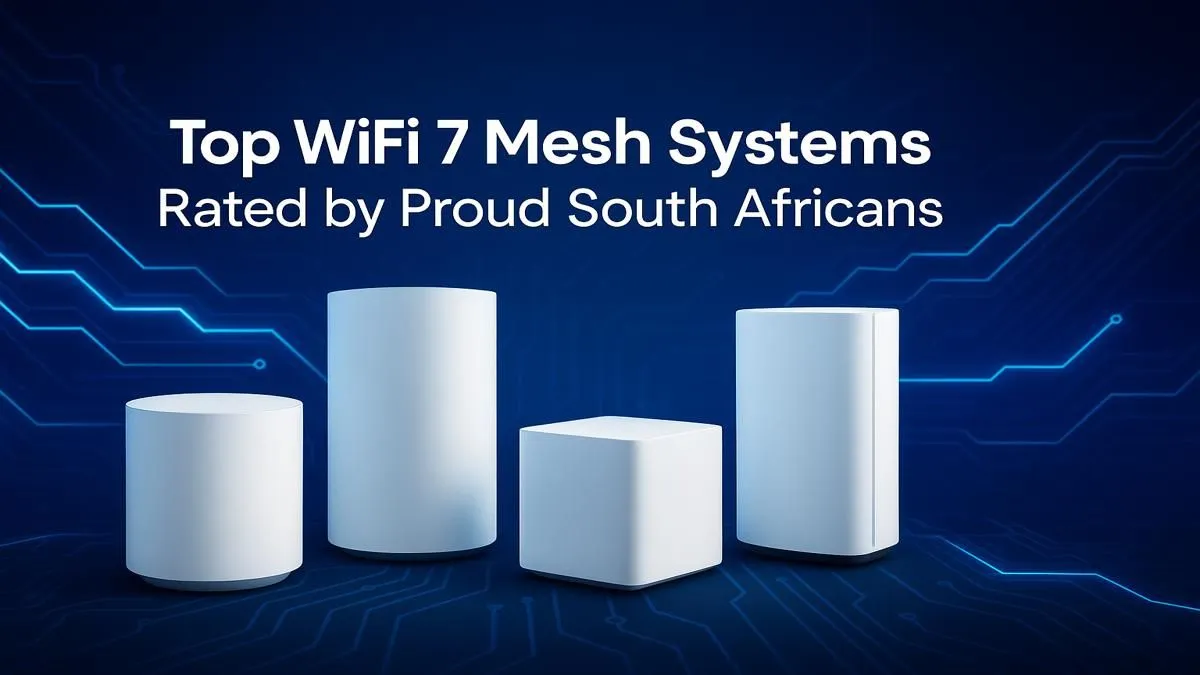
Tired of your fibre connection feeling fast in the lounge but dead by the braai? Or that dreaded lag spike hitting mid-match because someone started streaming Showmax upstairs? You're not alone. For South African homes battling thick walls and Wi-Fi dead zones, the solution is finally here. A WiFi 7 mesh system isn't just an upgrade; it's a total network revolution, promising insane speeds and seamless coverage everywhere. Let's dive in. 🚀
Why a WiFi 7 Mesh System is a Must-Have in SA
Let's cut through the jargon. What makes a WiFi 7 mesh system in South Africa so special? It boils down to two key technologies working together.
First, you have WiFi 7. Think of it as opening up new, wider lanes on the digital highway. It uses tech like Multi-Link Operation (MLO), allowing your devices to talk to the router on multiple radio bands simultaneously. This slashes latency and boosts speed, which is brilliant for competitive gaming and 4K streaming.
Second, you have the "mesh" part. Instead of one single router trying to cover your whole property, a mesh system uses multiple nodes or satellites. They work together as one smart network, blanketing your home in a strong, stable signal. You can walk from your office to the garden without your connection ever dropping. This is a massive improvement over older solutions like simple wireless range extenders, which often create a separate, slower network.
For the typical South African home, with its brick walls and spread-out layout, a WiFi 7 mesh system is the ultimate fix for buffering and dead spots.
Key Features in the Best WiFi 7 Mesh Systems
When you're browsing for the perfect WiFi 7 mesh system in South Africa, not all kits are created equal. Beyond the core tech, here are the features that truly make a difference for local users.
Multi-Gigabit Ethernet Ports
Your internet speed is only as fast as its weakest link. Look for systems with at least one 2.5 Gbps (or faster) port on each node. This ensures you can take full advantage of high-speed fibre plans from providers like Vumatel or Frogfoot. It also allows for a "wired backhaul"—connecting the nodes with an Ethernet cable for maximum possible speed and stability, which is far superior to what many traditional standalone wireless routers can offer on their own.
Intelligent QoS (Quality of Service)
A good mesh system lets you tell it what's important. With smart QoS, you can prioritise traffic for your gaming PC or console. This means your game's data gets to jump the queue, even if someone else in the house starts a massive download. The result? Lower ping and a much smoother online experience. ✨
Simple, App-Based Management
Gone are the days of logging into a confusing web interface. Modern mesh systems are managed via a slick smartphone app. This makes setup a breeze and gives you powerful tools at your fingertips, like parental controls, creating a guest network, or checking which devices are connected.
Mesh Placement Pro Tip 🔧
For the best performance, place your second and third mesh nodes roughly halfway between the main router and a known dead zone. Don't hide them in cupboards! They need open air to communicate effectively. Use the system's mobile app, which often has a signal strength tester to help you find the sweet spot for each satellite unit.
Getting Your Mesh Network Up and Running
Setting up a new WiFi 7 mesh system is surprisingly straightforward. The main unit typically connects directly to your main fibre router with an Ethernet cable. From there, the companion app guides you through placing the satellite nodes around your home and creating your new, unified Wi-Fi network.
The real magic is in the seamless handoff. As you move through your house, your phone or laptop will automatically and intelligently switch to the node with the strongest signal, without you even noticing. It’s a single network name (SSID) for your entire property.
Do You Need New Gear to Use WiFi 7?
This is a common question. To get the absolute maximum speed and benefit from all of WiFi 7's features, your devices (like your PC, laptop, or smartphone) also need to be WiFi 7 compatible. For desktop PCs, this might mean considering dedicated WiFi 7 wireless adapters to unlock that next-level performance.
But here's the good news: WiFi 7 is fully backwards-compatible. All your existing WiFi 6, 5, and older devices will connect to your new mesh network and work perfectly. They will simply connect at their own top speed. Upgrading your network infrastructure now prepares your home for the future, ensuring you're ready for the next generation of tech. It’s about future-proofing your entire wireless networking setup for years to come.
Ready to Banish Buffering Forever?
A WiFi 7 mesh system is the ultimate investment for a fast, reliable connection across your entire home. Explore our complete range of networking gear and find the perfect setup to conquer lag.