Stuttering frames in the final circle? Dropped FPS ruining your raid? In the high-stakes world of competitive gaming, every millisecond counts. What if your CPU had a secret weapon... a massive 102MB GameCache designed to feed your graphics card data at lightning speed? This isn't just a number on a box; it's your ticket to a smoother, faster, and more responsive gaming experience right here in South Africa. 🚀
What Exactly is This Massive 102MB GameCache?
Before we dive into the performance gains, let's quickly break down what a CPU cache is. Think of it like a chef's personal workbench. The bigger and more organised the bench, the faster they can grab ingredients (data) without a long walk to the main pantry (your slower system RAM).
Most CPUs have a decent-sized workbench. But a processor armed with a 102MB GameCache has a colossal, hyper-efficient workstation. This massive pool of L3 cache allows the CPU to store and access huge amounts of game-critical information instantly, slashing the time it would normally take to fetch that data from elsewhere. It’s a simple but incredibly effective design.
How GameCache Unlocks Higher FPS ⚡
So, how does a big workbench translate to more headshots? Simple. Modern games like Warzone, Apex Legends, and Baldur's Gate 3 are incredibly data-hungry. With a huge 102MB GameCache, your processor keeps vast amounts of game logic, character models, and positional data ready for immediate use.
This dramatically reduces latency and ensures your CPU is constantly feeding your graphics card without delay. The result?
- Higher Average FPS: More frames for a smoother visual experience.
- Improved 1% Lows: A significant reduction in those jarring stutters and dips that get you eliminated.
- Enhanced Responsiveness: A snappier, more connected feel to your game.
This is especially true for AMD's X3D processors, which are specifically engineered with this 3D V-Cache technology. You can see this tech in action in our powerful Ryzen 7 bundles, designed to drop right into your system for an instant boost.
Bottleneck Buster Tip 🔧
Not sure if your CPU is the bottleneck? Use a monitoring tool like MSI Afterburner. If your GPU usage is consistently below 95-99% while one or more of your CPU cores are maxed out in-game, it’s a clear sign your processor is holding you back. This is where a CPU with a large GameCache makes a huge difference.
Is a CPU with 102MB GameCache Right for You?
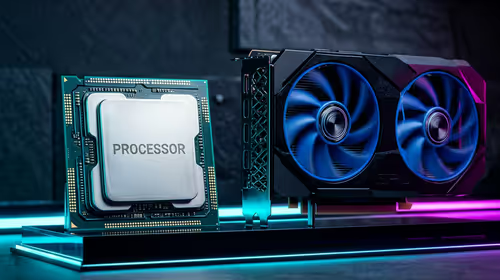
If you're a serious gamer, the answer is almost certainly yes. While a powerful GPU is essential, it can't perform at its peak if it's constantly waiting for the CPU to catch up. A processor with a large GameCache is the ultimate wingman for a high-end graphics card, especially if you are:
- A Competitive Gamer: Playing at 1080p or 1440p on a high-refresh-rate monitor where every single frame matters.
- A Strategy & Simulation Fan: Playing CPU-heavy games that need to track hundreds of units or complex calculations.
- An Upgrade Enthusiast: Looking for the single biggest gaming performance uplift you can get from a CPU upgrade.
Building a new rig from the ground up gives you ultimate control. Starting with one of our AMD barebone kits provides a solid foundation built around this performance-focused architecture. Of course, every build is unique, and you can explore various starting points, including powerful Intel barebone kits for different needs.
For many gamers, the easiest route to a serious performance uplift is through our expertly paired motherboard and CPU combos, taking the guesswork out of your upgrade.
Ready to Unleash Your True FPS Potential?
A massive GameCache isn't just a feature; it's a competitive edge. Stop letting CPU bottlenecks dictate your performance. Explore our wide range of AMD CPUs and find the perfect processor to dominate your favourite games.