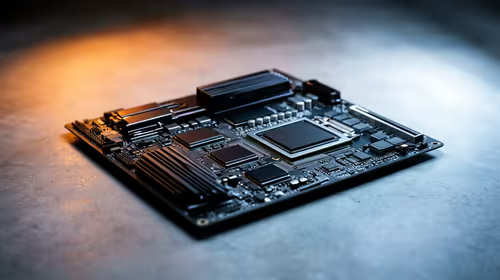
14,000 megabytes per second. It sounds like a typo, right? This isn't science fiction; it's the blistering reality of next-gen PCIe 5.0 storage. But beyond the jaw-dropping numbers, what does a 14,000MB/s SSD actually do for your gaming rig or editing workstation here in South Africa? Is it an essential upgrade or just a flashy spec for bragging rights? Let's cut through the hype and find out what this speed really means for you. 🚀
Beyond the Benchmarks: What is a 14,000MB/s SSD?
At its core, a drive hitting these speeds is a PCIe 5.0 NVMe Solid State Drive. Think of the PCIe slot on your motherboard as a highway. For years, PCIe 4.0 was a fast, multi-lane highway that felt revolutionary. PCIe 5.0 effectively doubles the number of lanes, allowing for a staggering increase in data traffic.
This means a 14,000MB/s SSD can read and write data at a rate that makes even fast PCIe 4.0 drives (which top out around 7,000MB/s) look sluggish. It’s a monumental leap in performance, but one that requires a compatible modern motherboard and CPU to unlock its full potential. Exploring the latest solid-state drives shows just how quickly this technology is evolving.
The Real Impact on Your Gaming Sessions
So, will this speed make you a better gamer? Not directly… but it will transform your experience.
The most obvious benefit is the near-total elimination of loading screens. With technologies like Microsoft's DirectStorage, games can pull assets directly from your ultra-fast SSD to your graphics card. This means seamless transitions in massive open-world games—no more distracting texture pop-in as you sprint through a city or fly across a landscape. Imagine loading into a map in Apex Legends or The Finals before your squad has even finished choosing their characters. That’s the kind of practical advantage a 14,000MB/s SSD delivers. For gamers chasing peak performance, top-tier drives from CORSAIR are often built with these demanding scenarios in mind.
Supercharging Creative Workflows ✨
For content creators, time is money, and waiting for files is pure pain. This is where a 14,000MB/s SSD truly shines.
Consider editing 4K or even 8K video. With this level of throughput, you can scrub through complex timelines with multiple layers of effects and colour grades without a single stutter. Large project files that used to take minutes to load will now open in seconds. Transferring hundreds of gigabytes of raw footage from one drive to another becomes a coffee-break task, not a lunch-break one. This raw power is available across many options from a trusted brand like ADATA, alongside other reliable Kingston drives.
Creator Pro Tip ⚡
For video editing, configure your software (like Adobe Premiere Pro or DaVinci Resolve) to use your fastest SSD as a dedicated 'cache' or 'scratch' disk. This ensures all the temporary files, renders, and previews are read and written at maximum velocity, making your entire editing process noticeably smoother.
The Big Question: Is It Worth Your Hard-Earned Rand?
Let's be honest: a 14,000MB/s SSD is a premium, top-tier component. Is it overkill? For some, yes. If you're a casual gamer or primarily browse the web, a high-quality PCIe 4.0 drive will serve you brilliantly and offer better value for your money.
However, if you fall into one of these categories, the investment is absolutely justifiable:
- Hardcore Enthusiasts & Pro Gamers: You want zero bottlenecks and the absolute fastest loading times possible to maintain a competitive edge.
- Professional Video Editors & 3D Artists: Your livelihood depends on workflow efficiency. Shaving hours off projects by eliminating render and transfer waits is a massive win.
- Future-Proofers: You're building a high-end rig today that you want to remain at the cutting edge for years to come as more games and applications are optimised for PCIe 5.0 speeds.
For many users, capacity is just as important as speed. Checking out some of our most popular 2TB SSDs is a great starting point to balance performance, space, and budget.
Ultimately, the jump to a 14,000MB/s SSD isn't just about a bigger number on a benchmark. It’s about removing the final barrier between you and a truly instant, seamless computing experience.
Ready to Experience True Speed?
Whether you're future-proofing your ultimate gaming PC or eliminating bottlenecks in your creative workflow, the right SSD is crucial. From incredible value to groundbreaking performance, we've got the drive for you. Browse our massive range of SSDs and find the perfect upgrade for your machine.