Ever been in a clutch moment in Apex Legends or transferring a massive 4K video file, only for your PC to feel sluggish? You might blame your CPU or GPU, but the culprit could be your lightning-fast NVMe SSD overheating. Thermal throttling is a real performance killer, silently slowing your rig down when the heat is on. That's why understanding the importance of an aluminum heatspreader SSD is crucial for any serious South African PC user.
Why Your SSD Gets Hotter Than a Summer in the Karoo
Modern NVMe SSDs are incredibly fast, transferring gigabytes of data in seconds. But all that speed generates a significant amount of heat, especially in the controller chip—the brains of the drive. When this chip gets too hot (often above 70°C), it activates a safety feature called thermal throttling. ⚡
Essentially, the drive intentionally slows itself down to prevent damage. The result? Slower load times, in-game stuttering, and longer file transfers... exactly when you need performance the most. This is where the physical design of an aluminum heatspreader SSD becomes a vital part of your build.
How an Aluminum Heatspreader Keeps Things Chill
Think of a heatspreader as a radiator for your SSD. It's a simple yet highly effective piece of grooved metal—usually aluminum due to its excellent thermal conductivity—that sits on top of the drive's hottest components.
Its job is twofold:
- Absorb Heat: It pulls heat away from the controller and NAND flash chips.
- Dissipate Heat: The increased surface area allows the heat to radiate away more efficiently into your case's airflow.
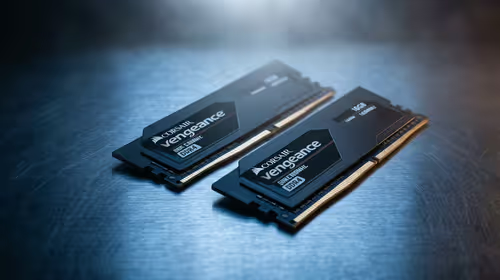
This passive cooling solution can lower operating temperatures by 10-20°C, preventing the drive from hitting its throttle point. This means you get the blazing speeds you paid for, consistently. Brands like CORSAIR often integrate robust heatspreaders into their performance-focused drives for this very reason.
Check Your Temps 🔧
You can easily monitor your SSD's temperature with free tools like CrystalDiskInfo or HWMonitor. If you see your drive consistently hitting 70°C or more under load, it's likely thermal throttling. This is a clear sign that your next upgrade should be an SSD with better heat management.
Do You Really Need an SSD with a Heatspreader?
So, is an aluminum heatspreader SSD essential for everyone? The answer depends on your workload.
For casual web browsing and office work, you might never push your drive hard enough to notice throttling. But for high-performance tasks, it's a different story. If you're a gamer loading massive open worlds, a video editor scrubbing through 4K timelines, or someone who frequently moves large files, a heatspreader is non-negotiable. It ensures your drive maintains peak performance during sustained use.
Many high-quality drives from trusted brands like Kingston and ADATA now include sleek, effective heatspreaders as standard. And as game sizes continue to balloon, investing in a high-capacity drive like a speedy 2TB SSD with proper cooling is a smart move for future-proofing your rig. 🚀
Ultimately, choosing an aluminum heatspreader SSD isn't just an aesthetic choice; it's a strategic one for guaranteeing sustained, reliable speed. Don't let heat be the bottleneck in your high-performance PC.