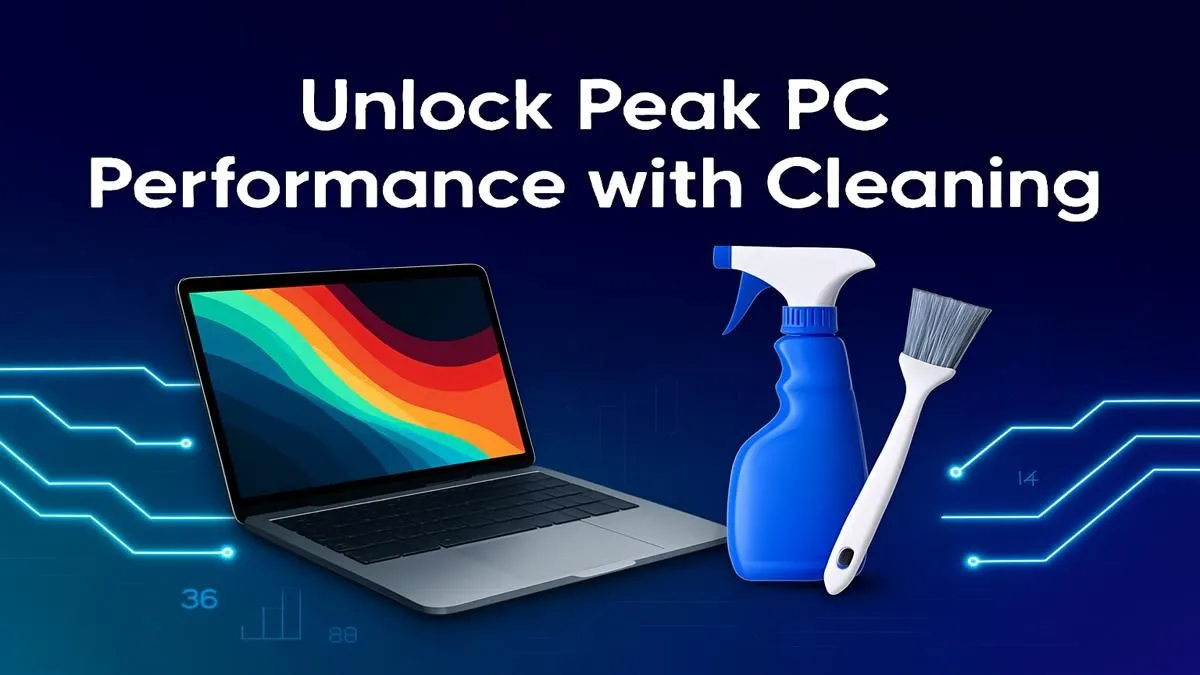
Is your PC sounding more like a jet engine than a high-performance gaming rig? You line up the perfect shot in Apex Legends, your fans scream, and your frames drop at the worst possible moment. That lag isn't just bad luck, boet. It’s your computer gasping for air, suffocated by dust. A clean PC is crucial for performance, a simple truth that applies to all machines, even the best gaming PC deals.
Why a Clean PC Boosts Your Performance
Think of dust as a tiny, fluffy blanket suffocating your most expensive components. Your CPU and GPU generate a serious amount of heat, and their cooling systems—those fans and heat sinks—are designed to dissipate it. When they're clogged with dust, they can't.
This trapped heat leads to something called "thermal throttling." Your components get too hot, so they automatically slow down to protect themselves from damage. It’s like trying to sprint while wearing a winter jacket in Durban's summer… you’re going to slow down. This is especially true for the powerful components found in modern PCs above R20k, which need every bit of cooling they can get to run at peak speed. Keeping them clean isn't just maintenance; it's unlocking free performance.
Your Essential PC Cleaning Toolkit 🔧
You don’t need a fancy workshop to get the job done. A few key items will make your PC cleaning session safe and effective.
- Compressed Air: Your number one weapon against dust. A can of compressed air provides powerful, focused bursts to dislodge grime from tight spaces.
- Isopropyl Alcohol (90%+): Perfect for cleaning thermal paste or stubborn spots on surfaces (but never directly on a motherboard).
- Microfibre Cloths: Soft, lint-free, and ideal for wiping down your case exterior and side panels.
- Cotton Swabs & Soft Brushes: Great for getting into the nooks and crannies of fan blades and heat sinks.
A small investment in these tools helps protect your rig for years, whether it's one of the latest PCs under R20k or a custom-built monster.
Hold Your Fans! ✋
When using compressed air on any fan (CPU, GPU, or case), gently hold the blades with your finger to stop them from spinning. Forcing them to spin faster than their design spec with compressed air can damage the fan motor. A still fan is a safe fan!
The Ultimate Guide to a Clean PC for Performance
Ready to get your hands dirty (so your PC can get clean)? Follow these steps for a flawless dust-busting mission.
Step 1: Power Down and Prep
Safety first! Completely shut down your PC. Switch the power supply unit (PSU) off at the back and unplug it from the wall. Disconnect all your peripherals. Move your case to a well-ventilated area—your garage or balcony is perfect to avoid blowing dust all over your room.
Step 2: Open the Case and Assess
Remove the side panel(s). Take a moment to look at the state of things. The main culprits for dust build-up are usually the intake fans, the CPU cooler, the GPU fans, and the PSU shroud. Taking a "before" picture can be incredibly satisfying later.
Step 3: Blow Out the Dust 🚀
Grab your can of compressed air. Using short, controlled bursts, start from the top of the case and work your way down. The goal is to blow dust out of the case, not deeper into it. Pay special attention to:
- CPU Cooler: Blow air through the fins of the heat sink.
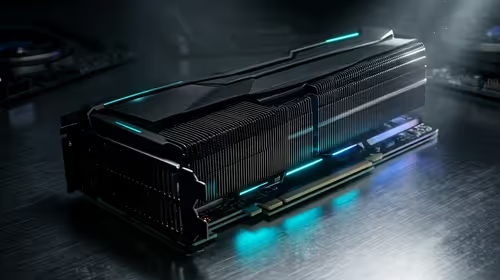
- GPU: Clean the fans and the heat sink visible through the shroud.
- Case Fans: Clear any dust caked onto the blades and frame.
- Dust Filters: Most modern cases have removable filters at the front, top, or bottom. Slide them out and give them a thorough clean.
This simple routine is the secret to getting years of top-tier performance, and it's especially impactful for affordable budget gaming PCs, helping them punch well above their weight class.
When It's Time for a Fresh Start ✨
Sometimes, even a spotless PC can't keep up. If you’ve performed a deep clean and your rig still struggles to run the latest titles or chugs during intense workloads, the issue might be aging hardware, not just dust. Technology moves fast, and a PC that was top-of-the-line five years ago may simply be outmatched by today's demanding software.
If a deep clean doesn't restore the speed you need, starting fresh with one of our expertly assembled pre-built PC deals guarantees you a clean slate... literally. You get optimised performance, clean cable management, and the power to dominate right out of the box.
Ready for a Dust-Free Performance Boost?
A clean PC is a fast PC, but nothing beats the power of a brand-new, expertly built rig. If your old machine has seen better days, it might be time for an upgrade. Explore our incredible range of Gaming PCs and find the perfect machine to conquer your world.