Quick Answer
For work from home in South Africa, an ergonomic office chair is generally the better choice for full-day desk sessions focused on productivity, while a gaming chair suits those who split their time between work tasks and extended gaming. Ergonomic chairs prioritise lumbar support and posture over long hours, while gaming chairs prioritise comfort for reclined, relaxed positions. Your sitting style and daily hour allocation should drive the decision.
The Core Design Difference: Posture vs Comfort Position
Ergonomic office chairs are designed around the principle of supported upright sitting. The lumbar support is adjustable and positioned to maintain the natural curve of your lower spine during forward-facing desk work. Armrests adjust for height and width to reduce shoulder and neck strain during long typing and mouse sessions. The seat pan is typically flatter and firmer to distribute weight evenly and encourage an active sitting position.
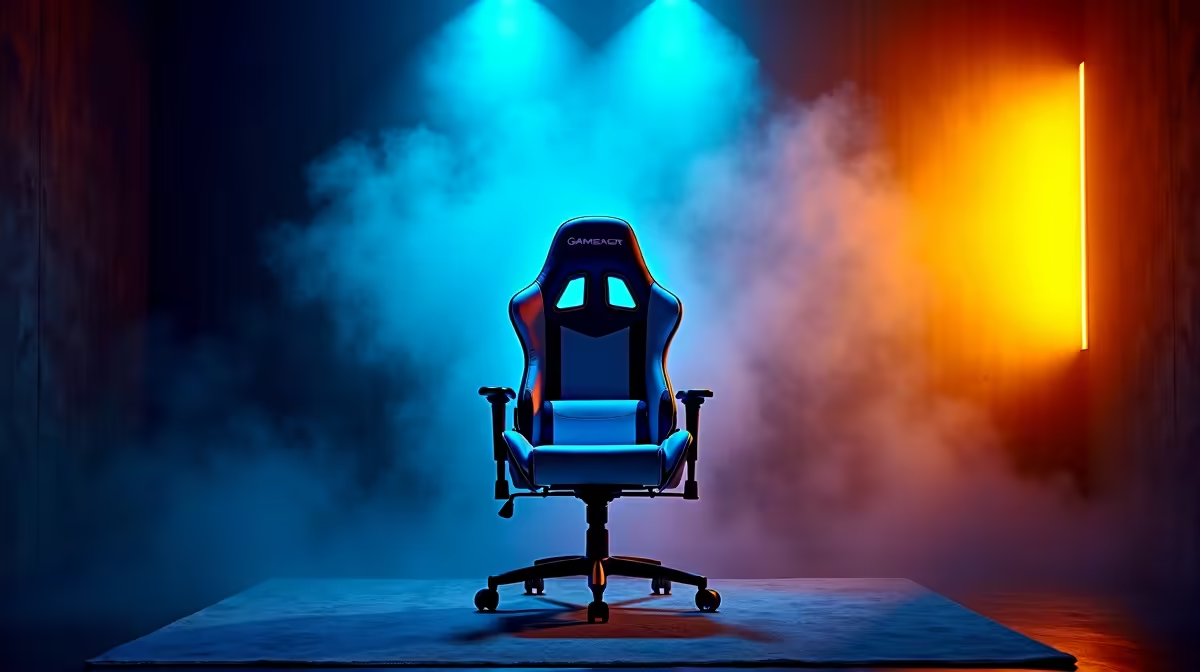
Gaming chairs are designed for a more reclined position. The high bucket seat back, prominent shoulder bolsters, and neck pillow are borrowed from motorsport seating and work well when you are leaned back controlling a game. During upright desk work -- typing, video calls, writing reports -- the ergonomics become less ideal. The lumbar pillow is external and static rather than integrated and adjustable, which means it may not sit in the right position for your body dimensions.
Work From Home Hours: The Deciding Factor
If your primary use is a full-time WFH desk job (8+ hours of sitting, writing, video calls, spreadsheets), an ergonomic office chair is the defensible choice from a health and productivity standpoint. Back pain and posture-related discomfort are among the leading causes of WFH productivity loss. A quality ergonomic chair reduces this risk significantly over a 3-5 year period.
If your WFH day is shorter (4-6 hours of work tasks) followed by several hours of gaming, a quality gaming chair can serve both purposes adequately. Modern gaming chairs in the R3,000-R7,000 ZAR range have improved their ergonomic credentials significantly. They are not equal to a purpose-built ergonomic chair, but the gap has narrowed.
ZAR Price and Value Comparison in the SA Market
Entry-level gaming chairs (R1,500-R3,000): Generally poor ergonomics, cheap foam that compresses within a year, and weak build quality. Not recommended for full-time WFH use.
Mid-range gaming chairs (R3,000-R6,000): Better build quality, improved foam density, and more adjustment points. Suitable for occasional WFH plus regular gaming use.
Entry-level ergonomic office chairs (R3,000-R6,000): At this ZAR price point you start getting genuine lumbar adjustment, better seat pan contouring, and synchro-tilt mechanisms. Superior to a gaming chair in the same price bracket for pure desk work.
Premium ergonomic chairs (R8,000+): The tier where seating engineering genuinely changes over a working day. If you are running a home office full-time and spending 8 hours daily at a desk, this investment pays back in reduced physiotherapy costs and sustained productivity.
Reliable Everyday Performance
South Africa's local operating conditions means WFH setups sometimes extend into late evening hours as workers make up time lost during outages. This increases daily sitting hours beyond what might be typical in an always-on power environment. If your effective WFH day is 10+ hours once power-restoration time is factored in, ergonomic chair investment becomes even more justified.
Aesthetic and Space Considerations for SA Home Offices
Gaming chairs have a pronounced visual identity that does not suit all home office setups. For professionals on frequent video calls -- increasingly common in SA remote work culture -- a racing-bucket chair in a bold colour may not project the right aesthetic. Ergonomic office chairs have more neutral designs that blend into professional home office backgrounds.
Space is also a consideration. Gaming chairs tend to be wider and taller. In SA digs and smaller apartments where the home office is a corner of a bedroom, a more compact ergonomic chair may fit the space better.
Frequently Asked Questions
Can a gaming chair cause back pain during full-time desk work?
Yes, if it does not suit your body dimensions or sitting posture. The prominent side bolsters can restrict movement and encourage a fixed posture that becomes uncomfortable over long periods. Ergonomic chairs are specifically engineered to avoid this problem.
Are gaming chairs good for students who work and game in the same session?
For students at res or in digs who split time between assignments and gaming sessions without fully distinct work and leisure zones, a mid-range gaming chair (R3,000-R5,000) is a practical compromise. It handles both use cases adequately if budget prevents buying two separate chairs.
How long should a quality office or gaming chair last in SA conditions?
A mid-range gaming chair typically holds its structural integrity for 2-4 years with regular use. A quality ergonomic office chair at R5,000+ should last 5-8 years before foam or mechanism degradation becomes noticeable. Factor the lifespan into your ZAR-per-year cost calculation when comparing options.
Ready to Find Your Perfect Match?
Browse gaming chairs and seating options for your SA home office or gaming setup at Evetech. Shop Gaming Chairs