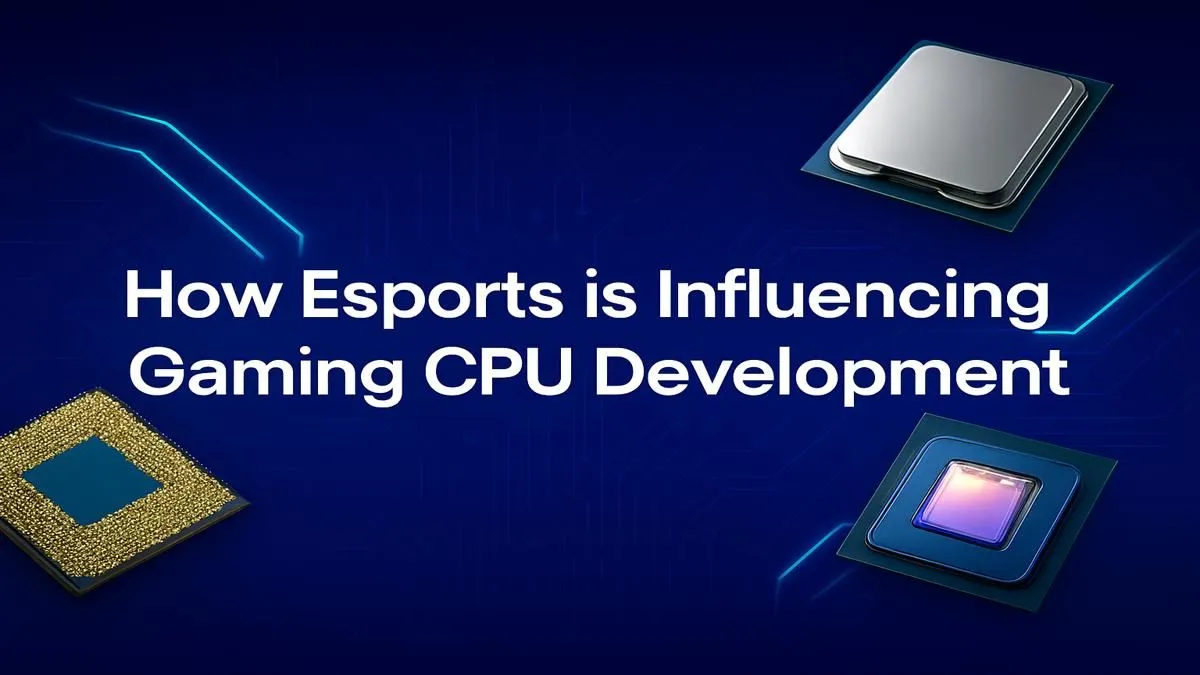
Ever wondered what separates a clutch victory from a frustrating loss in Valorant or CS:GO? It’s often measured in milliseconds. While your GPU gets the glory, the real MVP is your CPU… the silent brain processing every single move. The intense demands of professional play are pushing processor tech to its limits, and the innovations born in the esports arena are directly shaping the next esports gaming CPU you can buy right here in South Africa. 🏆
What Makes an Esports Gaming CPU Tick?
It’s easy to think "more cores, more power," but for competitive gaming, that’s not the full story. Many popular esports titles like Valorant, CS:GO, and League of Legends rely heavily on single-thread performance. This means the speed of one individual core is often more important than having a dozen of them.
Think of it like this: a CPU with many cores is like a massive truck, great for hauling heavy loads (like video rendering). An esports gaming CPU, however, needs to be more like a Formula 1 car… incredibly responsive and agile, capable of processing game logic and player inputs with zero delay. It's all about high clock speeds and low latency to ensure your actions translate to the screen instantly. A single stutter or frame drop at a critical moment is the difference between landing a headshot and staring at a respawn screen.
How Esports Pushes CPU Innovation Forward 🚀
The professional gaming circuit is the ultimate proving ground for hardware. When players are competing for prize pools worth millions of ZAR, every millisecond counts. This high-stakes environment creates a powerful feedback loop for manufacturers.
Pro teams and players provide data on what they need most:
- Sustained High Frame Rates: To match 240Hz, 360Hz, and even faster monitors, CPUs must consistently deliver hundreds of frames per second.
- Flawless Frame Times: It's not just about average FPS, but the consistency between each frame (the 1% lows). Smooth frame times mean a predictable, tear-free experience.
- Minimised Input Lag: The processor must handle game logic, physics, and user input almost instantaneously.
This pressure is why we see such rapid advancements in the world of CPU processors. The processor tech forged in the fires of competitive play quickly becomes the standard for all high-performance gaming rigs.
Decoding the Specs for Your Competitive Edge
So, when you're looking for your next competitive gaming CPU, what should you actually focus on? Let's break down the key specs that the pros obsess over.
Clock Speed: The Engine of Responsiveness ⚡
Measured in gigahertz (GHz), clock speed determines how many calculations a core can perform per second. For esports titles that can't use a high number of cores, a higher clock speed directly translates to faster performance and a more responsive feel. This is why a processor with blistering single-core speeds is a top choice for anyone serious about their rank. Many top-tier Intel CPUs are specifically engineered to hit incredible boost clocks for this very reason.
Cache Size: Your CPU's Secret Weapon 🧠
If clock speed is the engine, then cache is the high-octane fuel. L3 Cache is a small amount of super-fast memory built directly into the CPU. It acts as a buffer, storing frequently used game data so the processor doesn't have to wait for it to be fetched from your slower system RAM. A larger L3 cache can dramatically improve 1% low frame rates, leading to a much smoother experience. This is the magic behind the performance of many leading AMD CPUs, especially their X3D lineup, which has become an esports favourite.
System Optimisation Pro Tip 🔧
maximum esports performance, enable the 'Ultimate Performance' power plan in Windows. You can unlock it by opening Command Prompt as an administrator and typing: powercfg -duplicatescheme e9a42b02-d5df-448d-aa00-03f14749eb61. This minimises micro-latencies by keeping your CPU at a higher clock speed, ready to react instantly.
Ultimately, the perfect esports gaming CPU is a balanced machine. It’s a processor that doesn’t just chase the highest numbers on a spec sheet, but delivers the consistent, lightning-fast performance needed to compete at the highest level. The lessons learned from pro play have made modern CPUs better for everyone.
Ready to Unleash Your Potential?
Your journey to the top of the leaderboard starts with the right core hardware. An elite esports gaming CPU is the heart of any competitive rig. Explore our huge range of CPU processors and find the perfect engine for your victory.