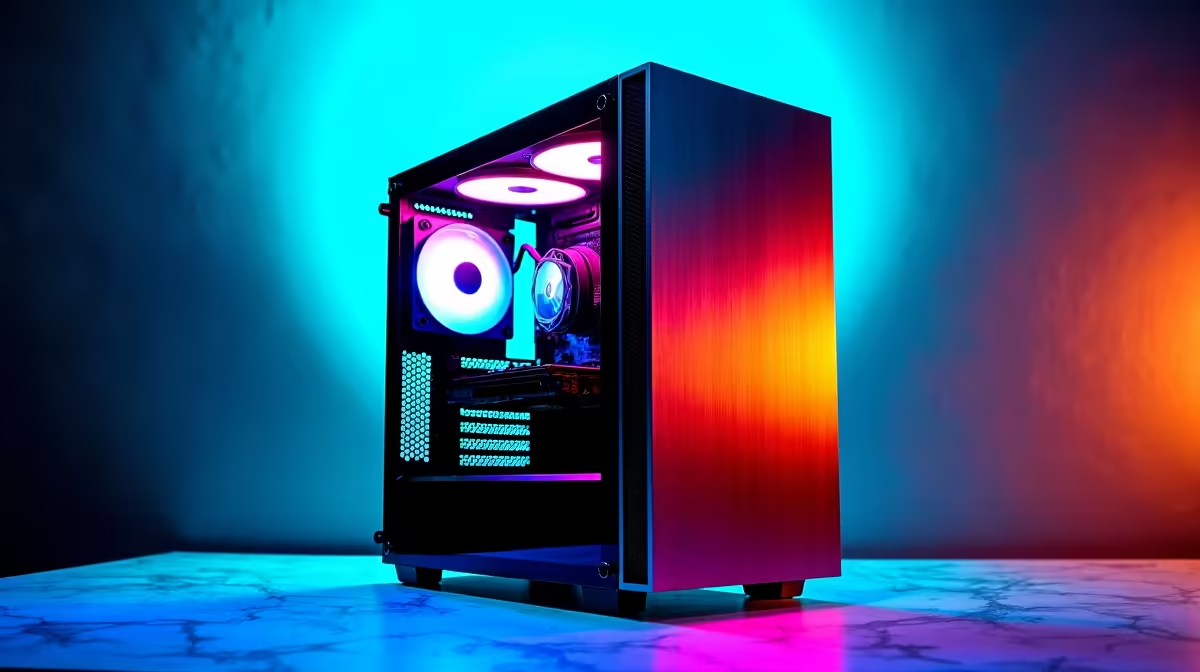
Is there anything more frustrating than this? You’ve got your snacks, your mates are waiting on Discord, but your PC is taking forever to boot. Those agonisingly slow boot times on your budget gaming PC can kill the vibe before you’ve even launched a game. It feels like an eternity… but it doesn’t have to. We’re here to help you diagnose the issue and show you how to get back into the action, fast. 🚀
Quick Software Fixes for Slow Boot Times
Before you start thinking about a pricey upgrade, let's tackle the low-hanging fruit. Often, the reason for a slow startup is software-related clutter that builds up over time. These simple, free tweaks can make a massive difference and are the first step to fix slow boot times on your budget gaming PC.
Tame Your Startup Programs
Every time you install a new app, many of them sneak into your startup sequence, adding precious seconds to your boot time. It's time for a cleanup.
- Press
Ctrl + Shift + Esc to open the Task Manager. - Click on the "Startup" tab.
- Look at the "Startup impact" column.
- Right-click and "Disable" any non-essential programs (like updaters for Spotify, Steam, or Discord… they'll still work perfectly when you open them manually).
Disabling just a few high-impact apps can shave a significant amount of time off your PC’s startup sequence. Many modern budget gaming PCs come with minimal bloatware, but it's always good practice to check this list every few months.
Pro Tip: Enable Fast Startup ⚡
Windows has a built-in feature called Fast Startup. It works by saving some system info to a file when you shut down, helping it boot faster next time. To check if it's on, search for "Power Options" in the Start Menu, click "Choose what the power buttons do," then "Change settings that are currently unavailable," and make sure "Turn on fast start-up" is ticked.
Update Your System and Drivers
Outdated drivers or a pending Windows update can cause unexpected slowdowns. Your system components—graphics card, motherboard chipset, and more—all need the latest software to run efficiently. Head to Windows Update and run a check, then visit your graphics card manufacturer's website (NVIDIA or AMD) to grab the latest drivers. A well-maintained system is a faster system. Sometimes, the simplest fix is the most effective one for a slow PC.
Hardware Upgrades That Annihilate Slow Startups
If you've tried the software fixes and your PC still feels sluggish, the bottleneck is likely your hardware. This is common in budget builds where a traditional Hard Disk Drive (HDD) is often used to keep costs down.
The SSD: The Single Best Upgrade for Boot Times
Moving your Windows installation from an HDD to a Solid-State Drive (SSD) is the most dramatic performance boost you can give any PC. An SSD reads and writes data exponentially faster than a mechanical drive, slashing boot times from minutes to mere seconds. ✨ It's a night-and-day difference. If you're considering a new rig, exploring pre-built PC deals that include an NVMe SSD as the primary drive is a fantastic investment.
Is It Time for a New Rig?
Sometimes, fixing a slow boot time is just the beginning. If your components are several years old, you might be facing a bigger issue where the CPU, RAM, and storage are all holding you back. Investing in one of today's powerful PCs under R20k can deliver a massive leap in overall performance, not just at startup. Of course, for those wanting to push frames at the highest settings, exploring machines above the R20k mark opens up a new world of speed and graphical fidelity.
Ultimately, whether you're optimising your current machine or planning your next big upgrade, tackling slow boot times is a worthy mission. A fast, responsive PC makes every single interaction better, from booting up to loading into your favourite game. Take a look at the best gaming PC deals in South Africa to see what a modern setup can do for you.