Chasing silky-smooth 240Hz gameplay but your rig is sweating? NVIDIA and AMD's Frame Generation promises god-tier FPS, turning mid-range cards into beasts. But here's the catch for competitive players… input lag. Is the trade-off worth it for high refresh rate gaming? We put this AI-powered tech to the test right here in our Evetech lab to give you the real story, so you can decide if it’s the right move for your setup.
What is Frame Generation, Really?
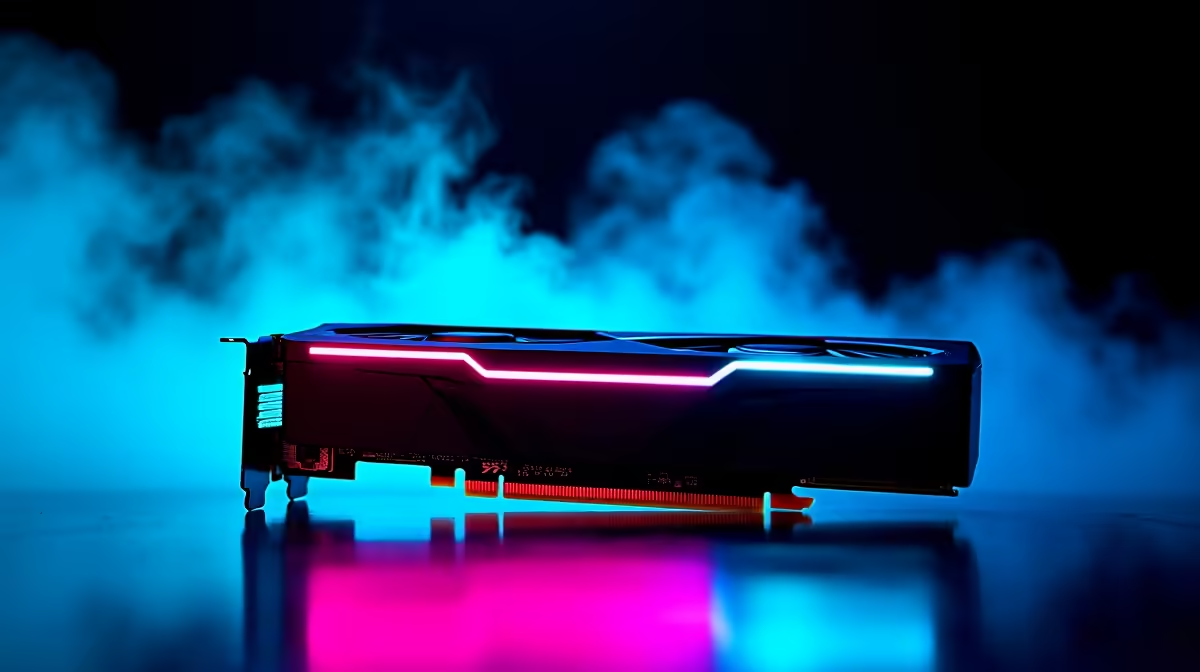
At its core, frame generation is a clever piece of tech, driven by AI, found in NVIDIA’s DLSS 3 and AMD’s FSR 3. Instead of your GPU rendering every single frame the traditional way, it analyses two sequential frames and then intelligently creates a new frame to slot in between them. The result? A massive, often doubled, frames-per-second (FPS) count on screen. This technology is a powerful way to get more performance out of your hardware, making visually demanding titles run beautifully on a wide variety of PC monitors.
The Big Question: Frame Generation and Input Lag
Here's the crucial part for any serious gamer. Because the AI-generated frames are created after the game engine has processed your last input, they don't contain any new information from your mouse or keyboard. This can add a small amount of latency, which is the delay between your physical action and the reaction on-screen. While technologies like NVIDIA Reflex and AMD Anti-Lag+ work hard to minimise this, the topic of frame generation for high refresh rate gaming always comes back to one question: can you feel the difference? For a competitive edge, every millisecond counts, making this a vital consideration when browsing all gaming monitors capable of pushing 144Hz and beyond.
Our Test Bench: Pushing Pixels in Mzansi ��
To get a real-world feel, we fired up a typical South African gaming rig: an NVIDIA GeForce RTX 4070, an AMD Ryzen 7 CPU, and a 240Hz 1440p monitor. We jumped into a few rounds of Apex Legends to see how frame generation holds up under pressure.
The Results: Native vs. Frame Generation
Without Frame Generation (Native 1440p): Our FPS hovered between a very respectable 150-170. Gameplay felt sharp, responsive, and exactly what you'd expect from a solid setup.
With Frame Generation On: The FPS counter shot up, consistently staying above 230 and often maxing out the monitor's 240Hz refresh rate. The visual smoothness was undeniable. It felt like playing on a much more powerful machine. However, for those of us used to competitive shooters, there was a tiny, almost imperceptible, feeling of "floatiness" in the mouse movement. It’s a trade-off between ultimate responsiveness and ultimate smoothness.
For single-player games, this tech is a revelation, allowing you to experience breathtaking worlds on immersive curved monitors or stunning high-resolution 4K screens without needing a top-of-the-line GPU. Even users with multi-monitor setups, including handy portable monitors for Discord, can benefit from the extra performance headroom.
Latency Tamer Tip ⚡
Always enable NVIDIA Reflex (set to 'On + Boost') or AMD Radeon Anti-Lag+ when using frame generation. These technologies work directly with the game engine to reduce system latency before the AI frames are added, making the experience feel significantly more responsive and minimising any perceptible input delay.
The Verdict: Who Should Use Frame Generation?
So, is using frame generation for high refresh rate gaming a good idea? It depends entirely on you.
- For Single-Player & Casual Gamers: Absolutely. The visual fluidity and higher frame rates are a massive win, especially in graphically intense titles. The minor latency increase is completely unnoticeable and the performance boost is incredible.
- For Aspiring & Competitive Gamers: It's a strategic choice. If your PC struggles to reach your monitor's native refresh rate, frame generation can be the tool that gets you there, providing a smoother picture. However, if you already have a high base FPS, you might prefer the raw, unfiltered responsiveness of native rendering for that split-second advantage.
Optimising Your Setup for High FPS Gaming ✨
Ultimately, frame generation is a powerful feature that helps your GPU push more frames. But to see and feel that performance, you need a screen that can keep up. A high-refresh-rate monitor is the final, essential piece of the puzzle. It's the canvas where your GPU's hard work comes to life. By pairing a capable graphics card with a fast monitor and the right monitor accessories for a comfortable setup, you create the ideal gaming environment. If your screen is the bottleneck, now is the perfect time to explore some of the best PC monitor deals in South Africa and unlock your rig's true potential.
Ready to Experience True Fluidity?
The right monitor doesn't just display your game; it unlocks its potential. To take full advantage of technologies like Frame Generation, you need a screen that can keep up. Explore our huge range of gaming monitors and find the perfect display to conquer your world.