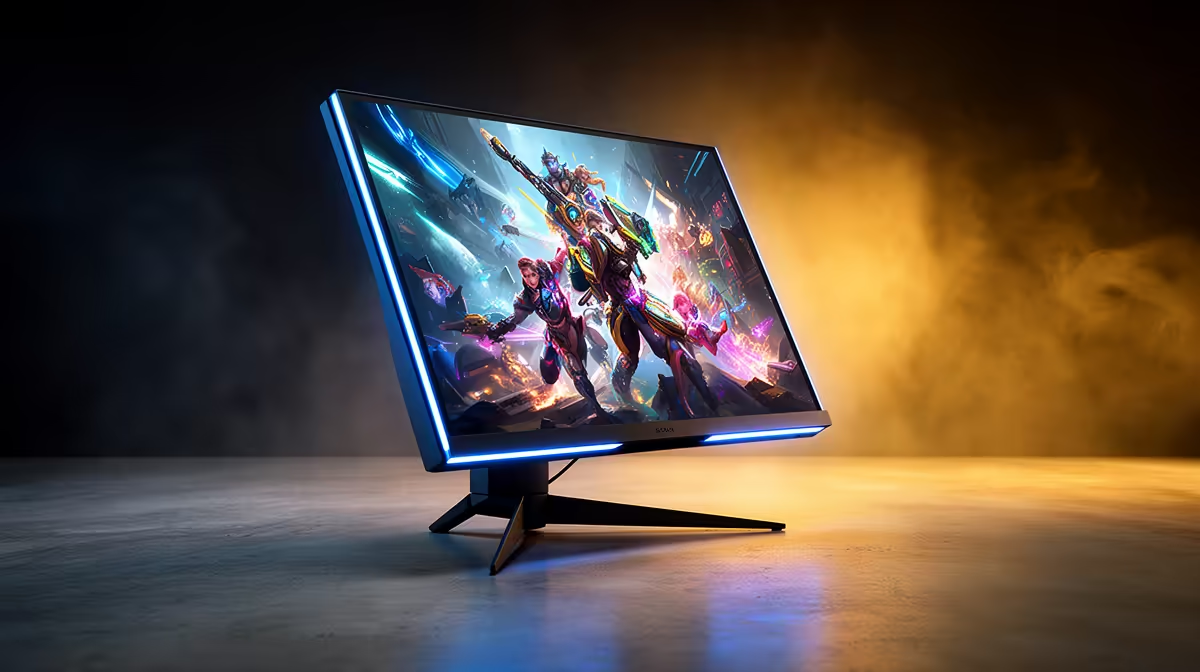
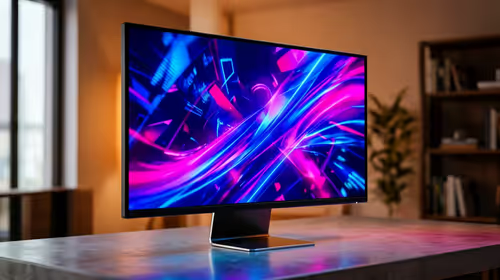
So, you’ve just unboxed a shiny new gaming monitor, plugged it in, and jumped straight into your favourite game. But something feels… off. The colours look washed out, movement feels blurry, and you’re losing gunfights you know you should be winning. Sound familiar?
The truth is, most monitors aren't perfectly set up out of the box. To truly get a competitive edge, you need to optimize your gaming monitor in SA, and this pro gamer's guide will show you exactly how. 🔧
First Things First: The Basics You Can't Ignore
Before we dive into the nitty-gritty settings, let's cover two crucial steps that even seasoned PC builders sometimes forget. Getting these right is the foundation for peak performance.
Check Your Cables and Windows Settings
Are you using the right cable? For high refresh rates (anything above 60Hz), a DisplayPort cable is almost always your best bet. While some modern HDMI 2.1 ports can handle it, DisplayPort is the industry standard for a reason.
Next, you need to tell Windows to actually use that speed.
- Right-click your desktop and go to
Display settings. - Scroll down and click
Advanced display settings. - Under "Choose a refresh rate," select the highest value your monitor supports.
It's a simple tweak, but countless South African gamers are unknowingly playing at 60Hz on a 165Hz screen. Don't be one of them! This single step is a core part of how to optimize your gaming monitor. If you're looking for a new screen, ensuring it has the right ports is key when browsing PC monitors.
Dialing In Your Core Gaming Settings ⚙️
With the basics sorted, it’s time to jump into your monitor’s On-Screen Display (OSD) menu. This is where you’ll fine-tune the visuals for your specific needs.
Refresh Rate & Response Time (Overdrive)
We've set the refresh rate in Windows, but your monitor has its own settings. The most important one is Response Time or Overdrive. This setting controls how quickly pixels change colour. A faster response time reduces motion blur and ghosting.
Most monitors have settings like 'Normal,' 'Fast,' and 'Fastest.' Start with 'Fast.' Pushing it to the highest setting can sometimes cause 'inverse ghosting'—a bright or dark trail behind moving objects. Find the sweet spot where motion is sharp without introducing new visual problems.
Adaptive Sync (FreeSync/G-SYNC)
This technology is essential for smooth, tear-free gaming. It syncs your monitor's refresh rate with your graphics card's frame rate. Make sure it's enabled on your monitor (in the OSD) AND in your graphics card's control panel (NVIDIA Control Panel or AMD Software). This is a non-negotiable part of any modern pro gamer's guide.
Quick Calibration Check 🎯
Use free online tools like the Lagom LCD test pages. They have simple patterns to help you check black levels, white saturation, and gradient banding. It’s a quick way to see if your settings are crushing important details or washing out colours without needing expensive calibration hardware.
Colour, Contrast, and Brightness
There’s no single "best" setting here; it depends on your room's lighting and personal preference. However, a good starting point for competitive games like Valorant or Apex Legends is to slightly increase the digital vibrance or saturation in your GPU control panel. This makes enemy models pop against the background. For brightness, set it high enough to see details in dark corners but not so high that it causes eye strain during long sessions. This balance is critical when checking out all our gaming monitors, as panel quality varies.
Advanced Tweaks for a Competitive Edge
Ready to go a step further? These settings can provide a tangible advantage.
Black Equalizer / Shadow Boost
This feature brightens dark areas of the screen without overexposing the bright parts. It's incredibly useful for spotting opponents hiding in shadowy corners in games like Call of Duty: Warzone or Escape from Tarkov. If your monitor has it, experiment with a low setting to gain visibility without making the image look flat. The visual clarity this provides is a major reason gamers look for stunning 4K monitors with high-end panel technology.
Immersion vs. Information
For story-driven games, the deep blacks and vibrant colours of a VA or OLED panel on one of our immersive curved monitors can be breathtaking. For competitive play, however, many pros prefer the raw speed of IPS or TN panels and a flat screen. Sometimes, having a second screen for Discord or streaming stats, even one of the handy portable monitors, can be more beneficial than a single ultrawide.
Is It Time for an Upgrade? 🚀
You can follow every tip to optimize your gaming monitor, but sometimes, the hardware itself is the bottleneck. If you’re still using an old 60Hz, 1080p monitor, you're at a significant disadvantage in modern, fast-paced games.
Upgrading to a monitor with a 144Hz (or higher) refresh rate, 1ms response time, and Adaptive Sync will have a more significant impact on your gaming experience than almost any other component upgrade. If you feel you've hit the limits of your current display, it might be time to check out some of the best PC monitor deals available right now in South Africa.
Ready for a Visual Upgrade?
A perfectly optimized monitor is your window to victory. Whether you're fixing your current screen or hunting for a new one, getting the settings right is key. Explore our massive range of gaming monitors and find the perfect display to conquer your game.