With PCIe 5.0 components slowly hitting the shelves in South Africa, a big question is popping up in every PC builder’s mind: is PCIe 4.0 still worth it? Or are you buying into old tech? For gamers and creators in SA watching their budgets, this isn't just about speed... it's about smart spending. Let's ditch the marketing hype and dive into real-world benchmarks to see if this data highway is still the best road for your rig. 🚀
Understanding the PCIe Lanes: Your PC's Data Highway
Before we talk benchmarks, let's have a quick refresher. Think of PCIe (Peripheral Component Interconnect Express) as the superhighway inside your computer. It connects the most important, high-speed parts—like your graphics card and NVMe SSD—to your processor.
Each new generation roughly doubles the bandwidth of the previous one.
- PCIe 3.0: ~1 GB/s per lane
- PCIe 4.0: ~2 GB/s per lane
- PCIe 5.0: ~4 GB/s per lane
More bandwidth means more data can travel at once. But the real question is, does your hardware actually need all that extra space?
PCIe 4.0 vs. The World: Does It Boost Your FPS?
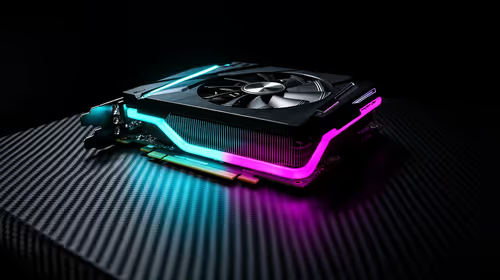
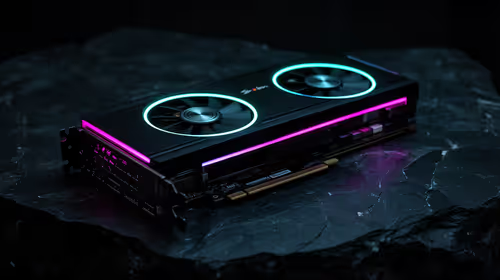
Let's get straight to the point for gamers: your graphics card. Does running a powerful GPU like an RTX 4070 on a PCIe 4.0 slot give you more frames than on a PCIe 3.0 slot?
The answer, for now, is... not really.
Countless benchmarks from reputable tech outlets show that even high-end graphics cards lose, at most, 1-3% of their performance when running on a PCIe 3.0 x16 slot compared to a 4.0 slot. This difference is practically unnoticeable during gameplay. While future GPUs might finally saturate a 4.0 lane, today's cards are perfectly happy. This means choosing from the wide selection of modern AMD motherboards gives you a solid platform without worrying you're leaving performance on the table.
The Need for Speed: Where PCIe 4.0 Really Shines
So if it's not about gaming FPS, why is PCIe 4.0 worth it? The answer is storage. This is where the upgrade provides a massive, tangible benefit.
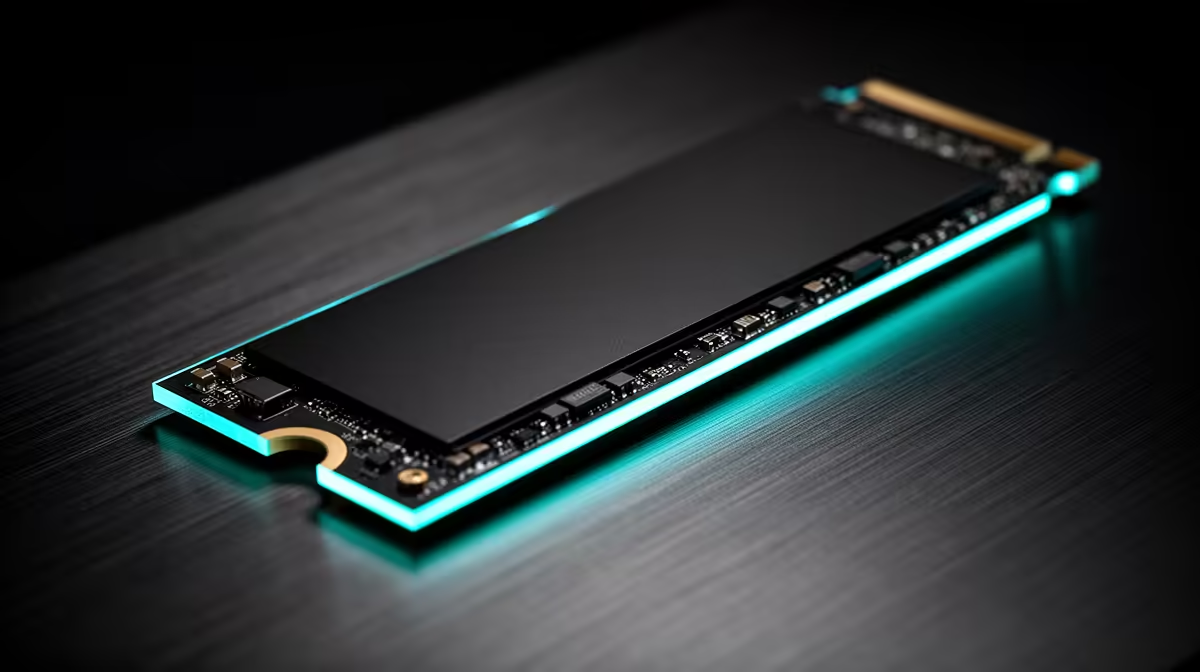
A standard PCIe 3.0 NVMe SSD tops out at around 3,500 MB/s. A PCIe 4.0 drive, however, can easily hit speeds of 7,000 MB/s and beyond. This translates to:
- Blazing fast game load times.
- Instantaneous application opening.
- Drastically reduced file transfer times for large video or project files.
As games start to implement technologies like Microsoft's DirectStorage, having a fast PCIe 4.0 SSD will become even more crucial for smooth asset streaming. This is a genuine quality-of-life upgrade you feel every day, whether you're gaming or working. When building a new rig, pairing a fast drive with one of the latest Intel motherboards ensures your system feels incredibly responsive.
Check Your M.2 Slots! 🔧
Not all M.2 slots on a motherboard are created equal. Some might be PCIe 4.0, while others on the same board could be PCIe 3.0 or run through the chipset with less bandwidth. Always check the motherboard's official spec sheet on Evetech before buying to ensure your lightning-fast NVMe drive gets the full-speed lane it deserves!
The Rand & Sense: Is PCIe 4.0 a Smart Buy in SA? 🇿🇦
In the South African market, value for money is king. PCIe 5.0 motherboards and SSDs carry a significant "early adopter" tax, demanding a premium price for performance that most users simply cannot leverage yet.
Meanwhile, PCIe 4.0 has become the mature, mainstream standard. The prices for both motherboards and NVMe drives have become incredibly competitive. You get a massive leap in storage performance over PCIe 3.0 for a very reasonable increase in cost. For anyone building a new PC today, it doesn't make financial sense to stick with PCIe 3.0, nor does it make sense to overspend on 5.0. You can find some incredible deals on cheap Intel and AMD based motherboards that deliver all the PCIe 4.0 goodness you need.
The Verdict: So, Is PCIe 4.0 Still Worth It? ✨
Absolutely, yes. For a new PC build in South Africa in 2024 and beyond, PCIe 4.0 is the undeniable sweet spot.
It provides a significant, noticeable upgrade in storage speed—the area where you'll feel it most—and offers plenty of bandwidth for any current-generation graphics card. It delivers future-proof technology without the hefty price tag of PCIe 5.0. The PCIe 4.0 value proposition is simply too good to ignore, making it the smartest choice for almost every gamer, creator, and power user.
Ready to Build on a Solid Foundation?
Deciding on the right platform is key to a powerful and future-proof PC. For the best balance of speed, features, and value in South Africa, a PCIe 4.0 motherboard is the undisputed champion. Explore our huge range of motherboards and find the perfect core for your next build.