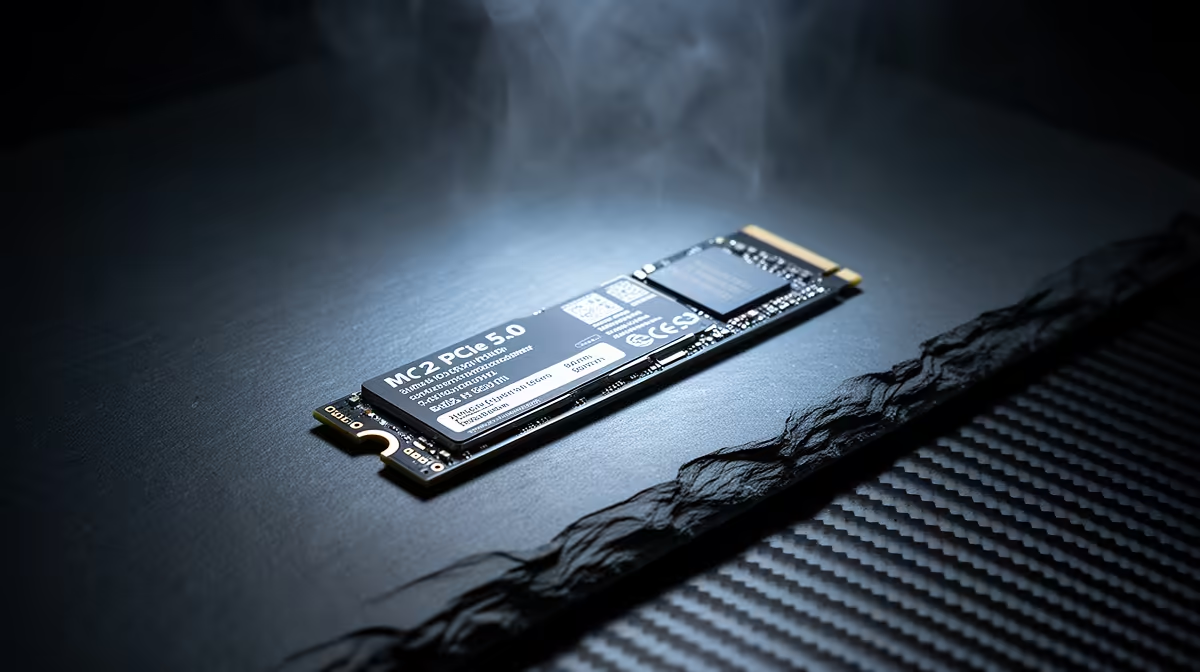
Staring at a loading screen while your mates are already dropping into the action? We've all been there. In the fast-paced world of PC gaming, every second counts. The big question on every builder's mind in South Africa right now is the PCIe 5.0 vs 4.0 SSD showdown. Is shelling out the extra Rands for the latest Gen 5 tech a massive upgrade, or just a way to burn cash? Let's settle the debate. 🚀
Understanding the PCIe 5.0 vs 4.0 SSD Speed Difference
Before we dive into gaming, let's break down the tech without the jargon. Think of PCIe (Peripheral Component Interconnect Express) as the highway connecting your SSD to the rest of your PC. Each generation effectively doubles the number of lanes on that highway.
- PCIe 4.0: The current champion, with top-tier drives hitting speeds around 7,000 MB/s.
- PCIe 5.0: The new contender, boasting insane theoretical speeds of over 12,000 MB/s and beyond.
On paper, the difference is massive. It's like comparing a superbike to a rocket ship. This raw speed is incredible for certain tasks, making the latest generation of NVMe SSDs a marvel of engineering. But does your game actually know how to drive a rocket ship?
PCIe 5.0 vs 4.0 SSD: The Load Time Reality Check
Here's the hard truth for gamers in 2024: the real-world difference in game load times is... minimal. While a PCIe 5.0 SSD is technically faster, most current games aren't designed to fully take advantage of that extra bandwidth.
In titles like Cyberpunk 2077 or Baldur's Gate 3, the difference between a top-end Gen 4 and a new Gen 5 drive might be a single second, or even less. Why? Games are complex. Loading involves the CPU, RAM, and GPU all working together. The storage drive is just one part of the puzzle. For now, the bottleneck isn't your SSD's raw speed. This makes a high-quality Gen 4 NVMe SSD the undisputed king for price-to-performance in South Africa. 🇿🇦
Check Your Motherboard! 🔧
Before you even think about a Gen 5 drive, check your motherboard's specs. You need a dedicated PCIe 5.0 M.2 slot to get those top speeds, typically found on newer high-end platforms like Intel's Z790 or AMD's X670E chipsets. Plugging a Gen 5 SSD into a Gen 4 slot will limit its speed, giving you no benefit.
When Does a PCIe 5.0 SSD Make Sense?
So, are Gen 5 drives just for bragging rights? Not at all. If your rig is more than just a gaming machine, the PCIe 5.0 vs 4.0 debate shifts dramatically.
For professionals and content creators, these drives are a revelation. Think about it:
- Video Editing: Scrubbing through 8K timelines becomes buttery smooth.
- File Transfers: Moving massive project files or game installs takes seconds, not minutes.
- 3D Rendering: Loading huge assets and textures into memory is almost instant.
If your workflow involves moving gigantic files regularly, a Gen 5 NVMe SSD can genuinely save you hours of waiting, making the investment worthwhile. It's also a great way to future-proof your build for upcoming games that might leverage technologies like Microsoft's DirectStorage more heavily.
The Final Verdict: Which SSD is Right for Your Rig?
So, who wins the PCIe 5.0 vs 4.0 SSD battle for South African gamers?
For the vast majority of us, a fast PCIe 4.0 SSD remains the smart choice. It delivers lightning-fast load times that are practically indistinguishable from Gen 5 in today's games, but at a much friendlier price point. You can use the Rands you save to upgrade your graphics card or grab more RAM.
However, if you're a content creator, a tech enthusiast who demands the absolute best, or you're building a top-of-the-line rig designed to last for years, a PCIe 5.0 SSD is an excellent, forward-thinking investment. Just be sure your other components can keep up! Whatever you choose, keep an eye out for the best SSD deals to get maximum performance for your budget. ✨
Ready to Kill Those Loading Screens?
Whether you need the incredible value of Gen 4 or the bleeding-edge speed of Gen 5, the right SSD is waiting for you. Explore our massive range of NVMe SSDs and give your PC the speed boost it deserves.