Staring at another loading screen in Starfield or Baldur's Gate 3? You're not alone. The promise of instant gaming is here, with PCIe 5.0 SSDs boasting mind-blowing speeds. But with a price tag to match, South African gamers are asking the big question: is the upgrade from a trusty PCIe 4.0 drive worth the extra rands? Let's cut through the hype and find out where your money is best spent.
Understanding the Speed: What's the Real Difference?
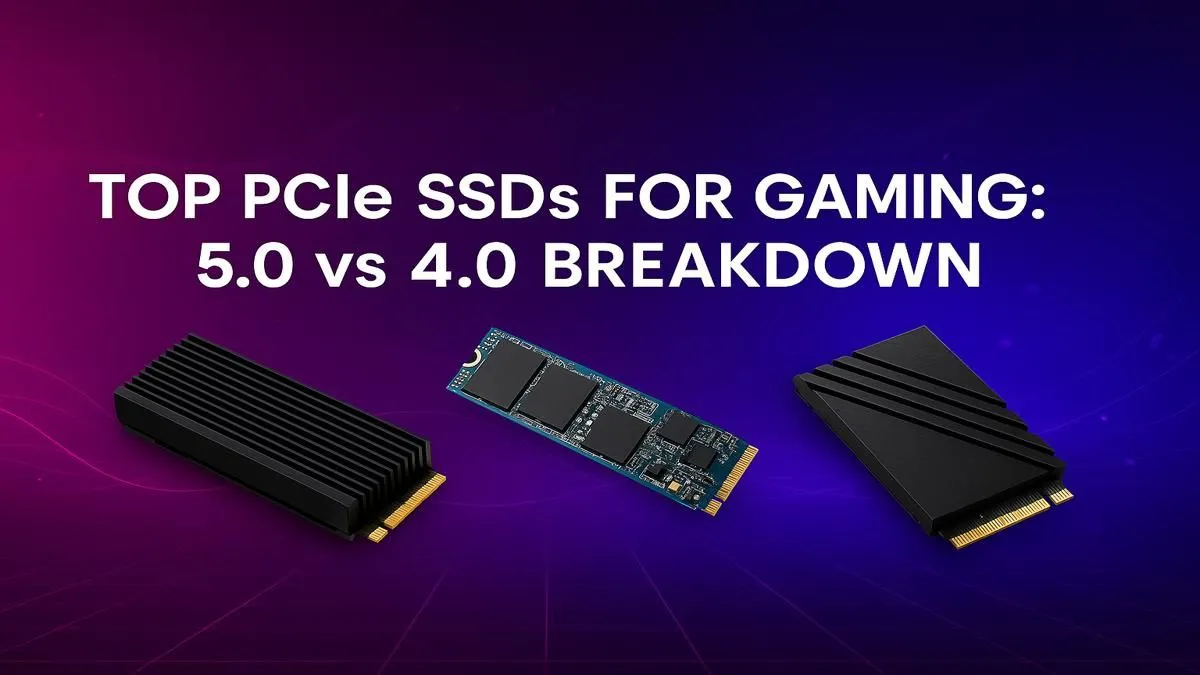
On paper, the battle of PCIe 5.0 vs 4.0 SSD for gaming seems like a knockout. A typical PCIe 4.0 drive tops out around 7,000 MB/s, which is already incredibly fast. PCIe 5.0 doubles that, pushing past 12,000 MB/s and beyond. 🚀
Think of it like a highway... PCIe 4.0 is a four-lane highway, and PCIe 5.0 is a new, eight-lane super-highway right next to it. While the potential for more traffic (data) is huge, it only matters if there are enough cars to fill it. For now, most games are still cruising comfortably on the four-lane road. The jump in raw bandwidth across all blazing-fast NVMe SSDs has been massive over the last few years.
PCIe 5.0 vs 4.0 SSD Performance in Today's Games
So, what does this mean for your in-game experience right now? Honestly... not as much as you'd think.
In most current titles, the difference in loading times between a high-end Gen 4 and a Gen 5 drive is often just a second or two. Your games won't magically load instantly. The bottleneck isn't just the drive speed, but how quickly the game engine can process and load all those assets.
The real potential lies in technologies like Microsoft’s DirectStorage, which allows the GPU to pull game assets directly from the SSD, bypassing the CPU. As more developers adopt this, the performance gap will widen. But for now, the superb performance from the best current-gen PCIe 4.0 drives remains more than enough for a top-tier gaming experience.
Who Should Buy a PCIe 5.0 SSD Today?
Despite the current gaming landscape, there are a few types of users who should seriously consider a Gen 5 drive:
- The Future-Proofer: If you're building a brand-new, top-of-the-line rig with the latest CPU and GPU, a PCIe 5.0 SSD ensures your storage won't be a bottleneck for years to come. You're buying into tomorrow's performance, today.
- The Content Creator: For professionals editing 8K video or working with massive 3D rendering files, those raw speed improvements translate directly into saved time and smoother workflows.
- The Enthusiast: Do you simply want the fastest hardware money can buy? If you're chasing benchmark records and zero compromises, then the latest Gen 5 NVMe SSDs are the only choice. ✨
Check Your Motherboard! 🔧
Before you splash out on a Gen 5 drive, double-check your motherboard's specifications. You need a dedicated PCIe 5.0 M.2 slot to unlock its full speed. Plugging it into a PCIe 4.0 slot will work, but it will be limited to Gen 4 speeds, meaning you've paid a premium for performance you can't use.
The Case for PCIe 4.0: The Smart Money Move
For the vast majority of South African gamers, a PCIe 4.0 SSD is the undisputed king of value right now. The performance is still absolutely phenomenal, slashing loading times compared to older SATA SSDs or hard drives.
With prices having dropped significantly, you can get a high-capacity 1TB or 2TB Gen 4 drive for a fraction of the cost of its Gen 5 equivalent. That extra cash can be better spent on a more powerful graphics card or a faster CPU... components that will give you a much more noticeable improvement in frame rates and overall gaming performance. It's the smart, budget-conscious choice that still delivers a premium feel. Checking Evetech's best SSD deals often reveals incredible value on these powerful drives.
The Verdict: Which Drive for Your Rig?
The debate over PCIe 5.0 vs 4.0 SSD for gaming comes down to your budget and goals.
If you're building a monster PC to last for the next five years and want the absolute pinnacle of technology, a PCIe 5.0 SSD is a worthy, forward-looking investment.
However, for everyone else seeking the best bang-for-your-buck upgrade, a quality PCIe 4.0 NVMe SSD is the champion. It delivers 95% of the real-world gaming benefit for a fraction of the price, making it the smartest upgrade you can make for your PC in 2024.
Ready to Obliterate Loading Screens?
Whether you're chasing future-proof performance with Gen 5 or grabbing unbeatable value with Gen 4, the right SSD is waiting. Explore our massive range of SSD deals and give your gaming rig the speed boost it deserves.