Just as you’re about to clutch the round, the power dies. What if your next GPU upgrade could not only boost your frame rates but also ease the strain on your inverter? While official specs are still under wraps, all signs point to the upcoming RTX 5070 power consumption being a massive win for energy-conscious South African gamers. 🚀
Decoding the Rumoured RTX 5070 Power Consumption
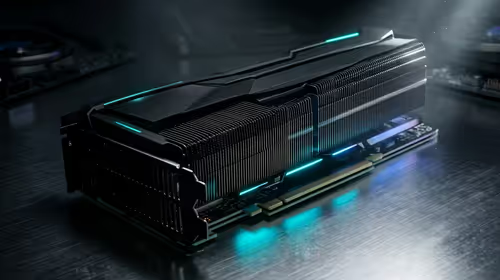
Whispers in the tech world suggest NVIDIA’s next-gen "Blackwell" architecture is heavily focused on efficiency. The goal? To deliver a significant performance leap over the RTX 40 series without demanding a beastly new power supply. For context, the RTX 4070 has a Total Graphics Power (TGP) of around 200W. Leaks suggest the RTX 5070 power consumption could target a similar, or perhaps even slightly lower, power envelope while offering a substantial generational performance uplift.
This focus on performance-per-watt is crucial. It means more frames for every rand you spend on electricity, a metric that hits close to home for anyone watching their prepaid meter. This efficiency is a far cry from some of the power-hungry older NVIDIA GeForce graphics cards that once ruled the market.
Electricity Use and Heat Output
For South Africans, a GPU's power draw isn't just a number on a spec sheet—it's a practical consideration for surviving Stage 6.
- Inverter & UPS Friendly: A graphics card with lower power demands is less likely to overload your backup power solution. This means you can game for longer during an outage without your inverter screaming for mercy.
- Cooler Operation: Less power consumed means less heat generated. Your PC will run cooler and quieter, a welcome bonus during our hot summer months.
- Lower Electricity Bills: While it might seem small, the savings add up. A more efficient GPU reduces your PC's overall energy footprint, saving you money over the card's lifespan.
When you're trying to squeeze every minute of gaming out of your battery backup, the efficiency of your components becomes paramount.
Power-Saving Tip for Your Current GPU 🔧
You don't have to wait for the 50-series to save power. Use a tool like MSI Afterburner to slightly "undervolt" your current graphics card. By lowering the voltage, you can often maintain the same performance level while significantly reducing power draw and heat. It's a free way to make your rig more outage-resilient!
Performance-Per-Watt: The New King of Metrics
For years, the race was about raw power. Now, it's about smart power. The energy efficiency of the RTX 5070 will be its defining feature in a market contending with high electricity costs. It's a trend we're seeing across the industry, with competing AMD Radeon graphics cards also making huge strides in this area. An efficient card ensures you get cutting-edge performance that’s sustainable, both for your wallet and your power grid.
As we await the official launch, expect to see board partners release their own versions. These custom-cooled MSI models and other variants often provide superior cooling and factory overclocks, further optimising the performance-to-power ratio.
While the final numbers are yet to be confirmed, the outlook for the NVIDIA RTX 5070 power draw is incredibly promising for gamers in South Africa. An energy-efficient powerhouse could be exactly what we need to keep gaming through anything. Until then, it’s a great time to browse our current range of graphics cards to find an efficient upgrade for today. ✨
Ready for an Efficiency Upgrade?
The next generation is exciting. Modern GPUs offer incredible performance-per-watt right now. Explore our massive range of graphics cards and find the perfect GPU to power your gameplay.