Staring at a stuttering screen while your opponent lands the winning shot is a special kind of pain. For South African gamers, lag spikes can feel like another form of an unexpected outage… especially in a heated multiplayer match on your new handheld PC. But what if the problem isn't just your fibre connection? The secret to truly smooth, lag-free multiplayer might be hiding in your Wi-Fi signal. Enter Wi-Fi 6E, the express lane for your gaming data.
Why Wi-Fi 6E is Your Secret Weapon for Handheld Gaming
You've probably heard of Wi-Fi 6, but that little "E" makes all the difference. Wi-Fi 6E adds an exclusive, brand-new 6 GHz frequency band to the existing 2.4 GHz and 5 GHz bands. Think of it like this: the old bands are the N1 highway at rush hour—crawling with traffic from your family's Netflix streams, work laptops, and smart home devices. The 6 GHz band, however, is a freshly paved, private toll road just for your compatible devices. 🚀
This is massive for Wi-Fi 6E handheld gaming. By moving your gaming traffic to this uncongested superhighway, you drastically reduce interference and latency. The result? A more stable, responsive connection that feels almost as good as being plugged directly into the router with an Ethernet cable. This means lower ping, zero packet loss, and a competitive edge when every millisecond counts.
Unlocking Peak Wi-Fi 6E Performance: Your Lag-Free Checklist
Getting the best Wi-Fi 6E handheld gaming experience isn't just plug-and-play. It requires a bit of optimisation to ensure you're getting every drop of performance. Follow these essential tips to turn your gaming space into a lag-free zone.
Get the Right Gear
First things first: you need both a Wi-Fi 6E compatible router and a handheld device that supports the standard. You can't access the 6 GHz highway without the right on-ramp. Luckily, the latest generation of handheld PCs is built for this. Powerhouses like the ASUS ROG Ally come equipped with cutting-edge Wi-Fi 6E chips straight out of the box, designed specifically for low-latency online gaming.
Router Placement is King
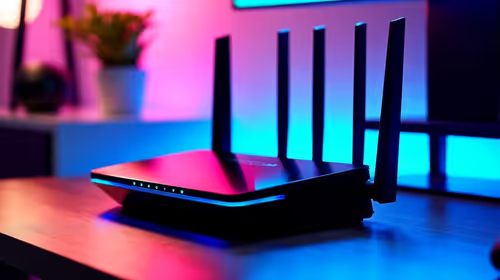
The 6 GHz signal is powerful but has a shorter range and is more easily blocked than 2.4 GHz or 5 GHz signals. For the best connection, your router should have a clear line of sight to your primary gaming spot. Avoid placing it inside a cabinet, behind a TV, or near thick concrete walls. Even a large fish tank can disrupt the signal. Elevating your router on a shelf can also significantly improve its coverage.
Pro Tip for a Stable Connection 🔧
For the ultimate Wi-Fi 6E setup, create a separate network name (SSID) just for the 6 GHz band in your router's settings. Name it something obvious like "MyGamingWiFi_6GHz". This allows you to manually connect your handheld device directly to the fastest, cleanest band, preventing it from automatically switching to the more congested 5 GHz band.
Configure Your Network Correctly
Diving into your router’s settings can seem daunting, but a few tweaks make a huge difference. Ensure your router's firmware is up to date, as manufacturers constantly release updates to improve performance and stability. When you have a top-tier device like the Lenovo Legion Go, pairing it with a finely-tuned network ensures you're not leaving any performance on the table.
Fine-Tuning Your Handheld for Flawless Multiplayer
Your network is only half the battle. Optimising the device itself is crucial for achieving that buttery-smooth online experience. These in-device tweaks are simple but incredibly effective.
Prioritise Your Gaming Traffic (QoS)
Most modern gaming routers have a feature called Quality of Service (QoS). This allows you to tell your router which devices or applications are most important. Go into your router's settings and set your handheld gaming console as a "High Priority" device. This tells the router to always give your game data first dibs on bandwidth, even if someone else starts streaming a 4K movie in the next room. ✨
Update Your Drivers and Firmware
This might sound basic, but it's the most common cause of mysterious connection issues. Manufacturers for devices like the new MSI Claw regularly release updates for Wi-Fi drivers and system firmware. These updates often contain critical performance improvements and bug fixes that can directly impact your network stability. Set a reminder to check for updates once a month.
Is Upgrading to Wi-Fi 6E Worth It for You?
If you're serious about competitive multiplayer gaming on the go, the answer is a resounding yes. The jump to a dedicated 6 GHz channel provides a level of wireless stability that was previously unimaginable. It’s the closest you can get to a wired connection without being tethered to a wall.
Investing in a proper Wi-Fi 6E handheld gaming setup eliminates one of the biggest variables in online performance. No more blaming your K/D ratio on a dodgy connection. Whether you're considering a device from ASUS, Lenovo, or MSI, pairing it with a Wi-Fi 6E network is the definitive way to conquer lag and dominate the lobby. The full range of handheld gaming consoles offers something for every player ready to make the leap.
Ready to Conquer Lag for Good?
A powerful handheld is only as good as its connection. Upgrading to a Wi-Fi 6E setup is the ultimate investment in your multiplayer career. Explore our complete range of handheld gaming consoles and find the perfect machine to win your next match.