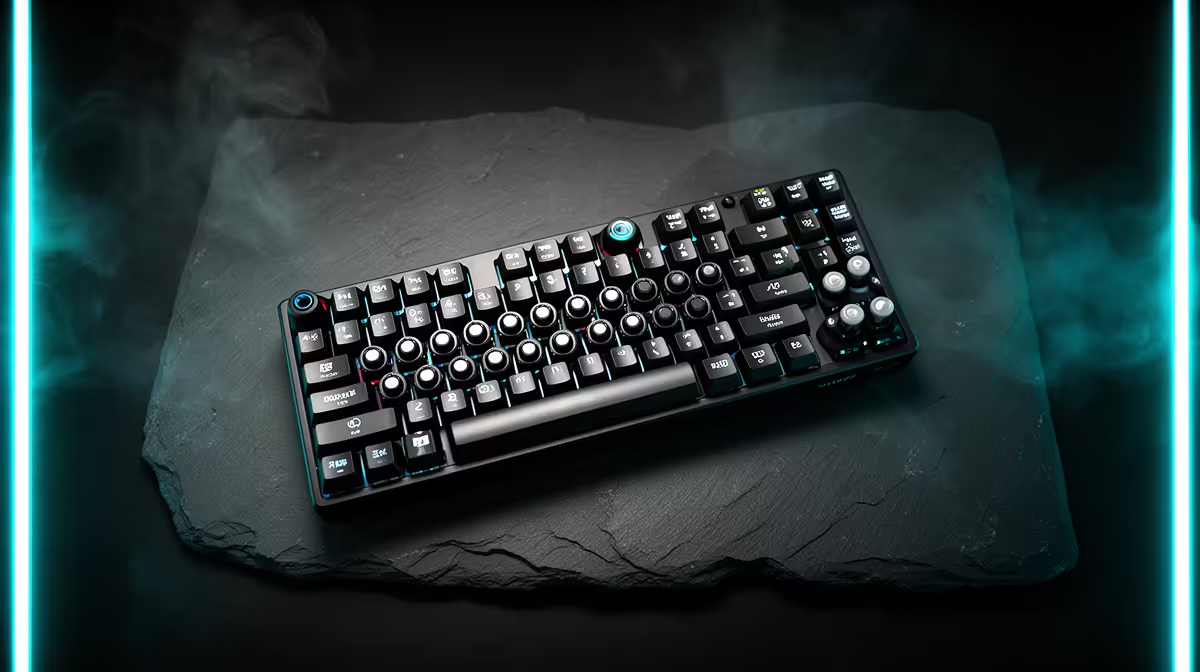
A keyboard key can report more than pressed or released when its sensor tracks the full stroke. Analog keyboard input can add gradual movement in supported games, though controller behaviour and software mapping decide whether it feels natural.
Quick Answer
An analog-capable keyboard can turn key travel into a variable value instead of one on-or-off press. Its software may map WASD to a virtual controller stick or expose another supported analog mode. That can give gradual steering, walking or throttle in games that accept the input. Compatibility is the catch: some games switch prompts, block simultaneous mouse and controller input or ignore the mapping. Check the exact title and competition rules, then keep a normal digital profile as a fallback.
Travel becomes a value
A magnetic sensor reads key position across the stroke. The keyboard controller converts that position into a range, then software maps the range to an axis or command.
A light press can mean slow walking and a deep press can mean full movement. In a racing game, A and D can become graduated steering rather than instant full lock.
The key still has less directional freedom than a thumb stick. One key moves along one path, and finger control takes practice.
Game support decides the feel
A title with clean simultaneous controller and mouse support can let analog WASD coexist with mouse aim. Another game can flip button prompts or stop accepting one input family.
Use the keyboard maker's current compatibility guidance and test a practice mode. Do not use remapping that violates anti-cheat or tournament rules.
Turn analog mode off for titles that behave poorly. A saved digital profile should restore ordinary key presses without rebuilding the board.
Test every movement state
Walk at the shallow end, hold half travel through a turn and press to full speed. Watch whether the game moves through those stages without a jump.
Add mouse aim. If prompts flicker between keyboard and controller or the camera stops accepting input, the title is not handling the mixed map cleanly. Try the game's supported simultaneous-input setting where one exists.
Test menus, vehicles and on-foot play. A map that feels good for steering can make character movement sluggish. Use separate profiles when the game and keyboard can switch them reliably.
Keep acceleration and curve changes at default until the linear test works. Several layers of response shaping make a deadzone harder to find.
Tune a usable curve
Start with a gentle linear curve and a small deadzone that removes resting noise. Test walking, turning and full-speed movement.
Save a digital fallback on the keyboard or a manual shortcut. You should be able to recover controls without opening software in the middle of a session.
Do not copy a racing curve into a tactical shooter. Each genre and key needs another balance.
Browse gaming keyboard deals for supported analog and profile features. The keyboard best-seller range helps compare complete boards, layouts and software.
FAQ
Does analog input work in every game?
No. The title must accept the mapped input and handle mixed controller and mouse use in a way you can play.
Which genres benefit?
Racing, driving, stealth and games with variable movement can gain. Test whether a keyboard key gives enough control.
Must keyboard software stay open?
It depends on the board and mapping. Check onboard profile support and test after closing the app.
Map one WASD profile in a practice mode, test mixed input and keep a digital fallback for every title that rejects the curve.