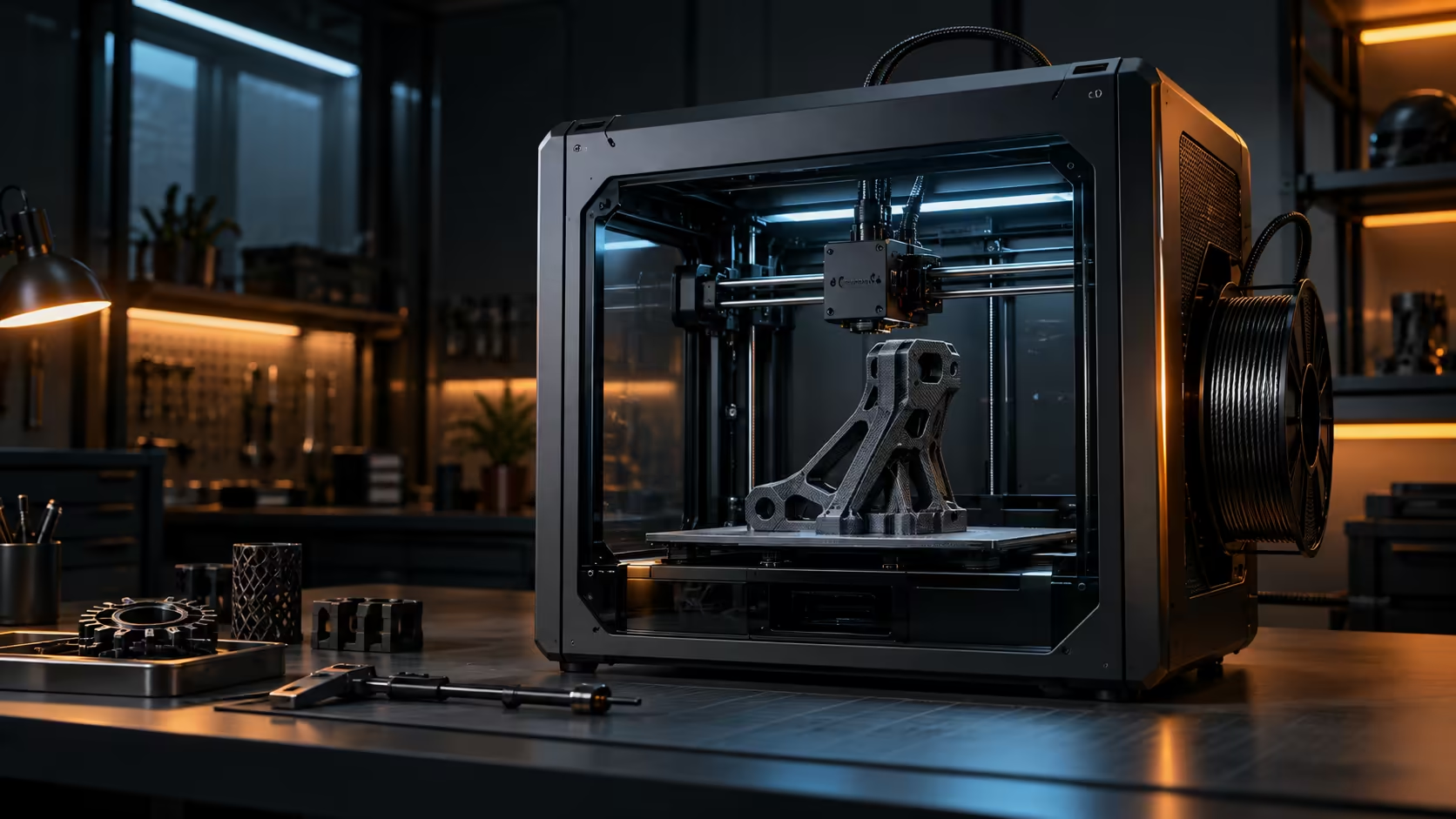
A weak grip on filament fails at the worst possible moment, exactly when a hotend needs consistent feeding most, not at some random point during a print. A 50N direct drive extruder exists specifically to keep that grip from ever becoming the limiting factor.
Quick Answer
Yes, a 50N drive force genuinely improves high-speed filament flow, because flow fails when the gears slip against the filament, not when the motor simply runs out of turns to spin. A stronger grip holds a stiff, filled strand firmly against the back pressure a hot nozzle creates, which is exactly the moment a weaker feed system starts skipping steps instead of pushing through. The Creality K1C uses a 50N direct drive extruder and costs R12,599.
🤝 Why grip matters more than raw motor speed
A stepper motor spinning fast at over 3000rpm means nothing if the drive gear cannot maintain traction against the filament passing through it. Back pressure from a hot, partially restrictive nozzle pushes back against the feed constantly, and at high flow rates that back pressure increases, since more plastic is being forced through the same small opening per second.
A weaker feed system starts to slip its gear teeth against the filament surface under that pressure, which shows up as inconsistent extrusion, under-filled lines, or a printer that seems to randomly lose flow mid-print for no obvious reason.
🔗 Where 50N actually pays off
This matters most in 3 specific situations: filled filaments like carbon-fibre or glass-fibre blends, which are stiffer and harder to grip reliably; flexible filaments like TPU printing at 20 to 40mm/s, which need a firm hold to avoid buckling; and simply printing fast, where flow demand per second is higher and any weakness in the feed system gets exposed sooner rather than later.
🧪 Spotting a feed problem versus a different cause
If a print shows inconsistent extrusion that comes and goes rather than a steady under-extrusion throughout, check for a clicking or grinding sound at the extruder, which usually indicates the drive gear slipping against the filament rather than a flow or temperature issue elsewhere in the system. That symptom points specifically at grip, not at the hotend or the slicer settings.
Check the extruder rating on a specific listing in the 3D printer range before assuming every machine grips filament the same way. Browse filament options with your extruder's capability in mind, and resin printers sidestep this whole question, since they cure liquid rather than push a strand of anything through a gear at all.
Frequently Asked Questions
What does a slipping extruder gear sound like?
A repetitive clicking or grinding noise near the extruder, which usually means the gear is losing traction against the filament rather than feeding smoothly.
Does higher drive force matter for standard filaments like PLA?
Less critically, since PLA is generally easier to feed reliably; the advantage of higher force shows up most with stiff, filled or flexible materials.
Can a weak extruder cause problems that look like a clogged nozzle?
Yes, inconsistent extrusion from a slipping gear can look similar to a partial clog, so checking for grinding sounds helps tell the two apart.
Is 50N considered a strong rating for a direct drive extruder?
It sits comfortably on the stronger end for consumer machines, well suited to filled and flexible filaments at higher print speeds.
Fighting inconsistent extrusion on fast or filled filament prints?
Check your extruder's grip before assuming the problem is somewhere else.