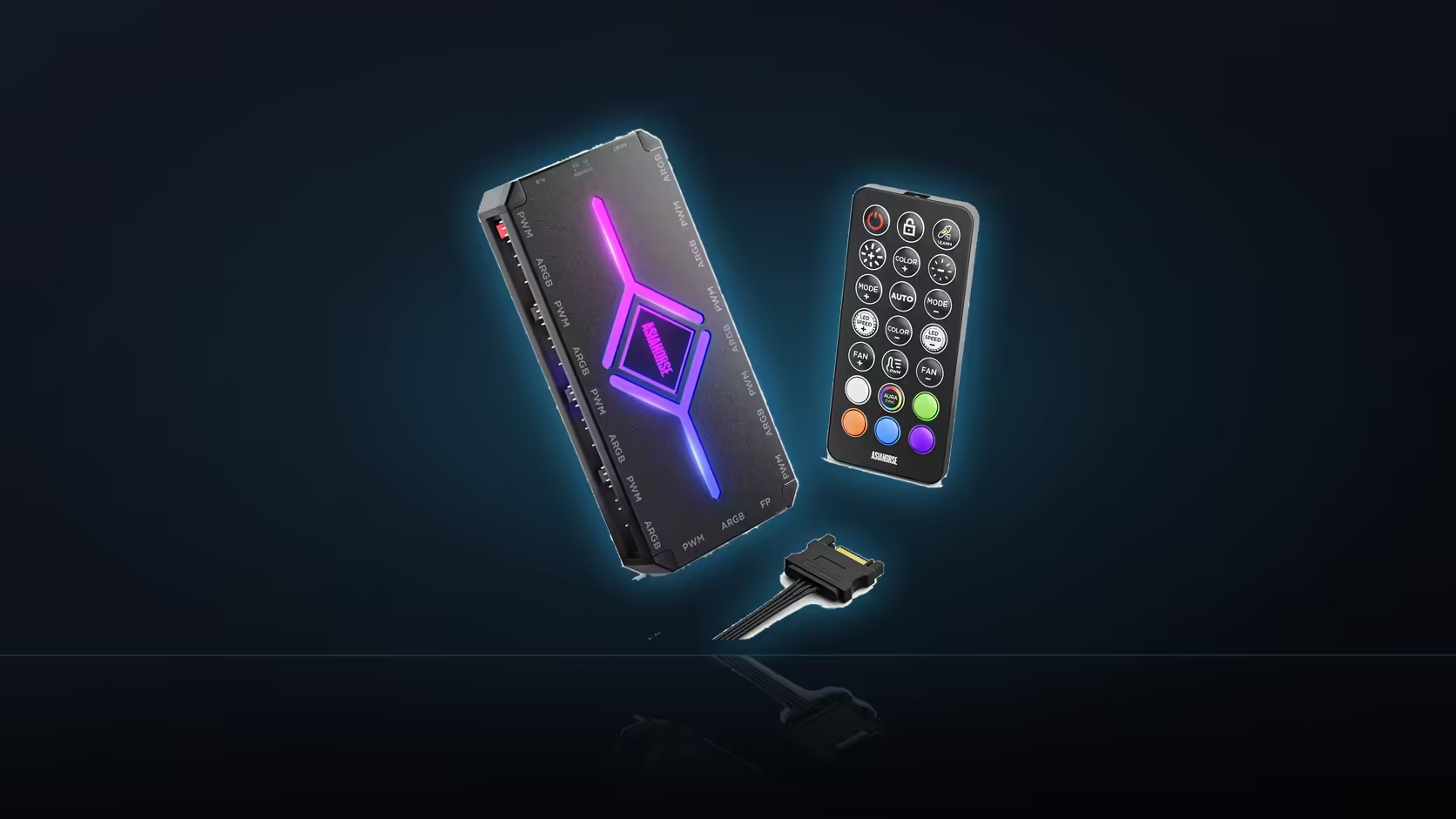
A magnet holding the ASH-S1 in place is only half the mounting decision - the other half is whether the case's side panel can close over it without pressing on the ports once everything is plugged in. Get that wrong and every panel removal puts strain on connectors that were never meant to take it.
Quick Answer
It can be, if the depth between the mounting surface and the side panel is not checked first, so this is a real risk worth testing before settling on a position. The magnetic mount makes repositioning free of cost, so the fix is simply to try a deeper spot while the panel is still off. The ASH-S1 costs R349 and needs a steel surface to mount against in the first place.
⚠️ Why this specific failure is easy to miss
A hub mounted somewhere that looked fine with the panel off can still end up under pressure once the panel goes on, because the hub body, its connectors and the bend in each cable leaving it all add up to more depth than the unit alone. The mistake is testing fit with the panel off and assuming that is representative - it is not, since the panel itself is what introduces the pressure. This kind of fault also tends to announce itself slowly, as connectors loosen or wear over repeated panel removals rather than failing outright the first time.
📏 Testing the clearance properly
The only reliable test is refitting the panel gently with the hub mounted and every cable connected exactly as it would be in daily use. Any resistance, or a panel that will not sit flush, means the position needs to move rather than being forced. This is worth doing once during the build and again any time cables are added or rerouted, since a position that cleared fine with six connections might not clear with all eighteen in place.
🔧 Where more depth is usually available
Not every part of a case tray has the same clearance - the channel behind the motherboard tray often varies in depth along its length, so a spot slightly further from the panel edge can solve the problem without needing a different case. Routing cables along the surface rather than straight out toward the panel also reduces how much depth the connectors themselves need. Cases with generous cable space behind the tray are worth seeking out in Evetech's case fan range, and for a case where panel clearance keeps being a recurring headache, the NZXT fan controller is worth a look as a lower-profile alternative.
Frequently Asked Questions
What is the risk of a tight mounting position?
Pressure on plugged connectors every time the panel closes, which stresses both the cables and the ports over time.
How much depth does the hub actually need?
Enough for the hub, its connectors and the cable bend leaving them, which is more than the hub body alone.
How do I test the clearance properly?
Refit the panel gently with everything connected. Any resistance means the position needs changing.
Is the magnetic mount an advantage for fixing this?
It is, since repositioning costs nothing and no fixing has to be undone to move the hub.
Which surfaces tend to have the most depth?
The tray channel usually varies, so a spot with a deeper gap is worth finding before committing.
Does cable routing help with clearance too?
Leading cables along the surface rather than straight out reduces the depth the connectors need.
Fitting a hub into a tight case interior?
Check Evetech's case fan range for models with generous tray clearance before you mount anything.