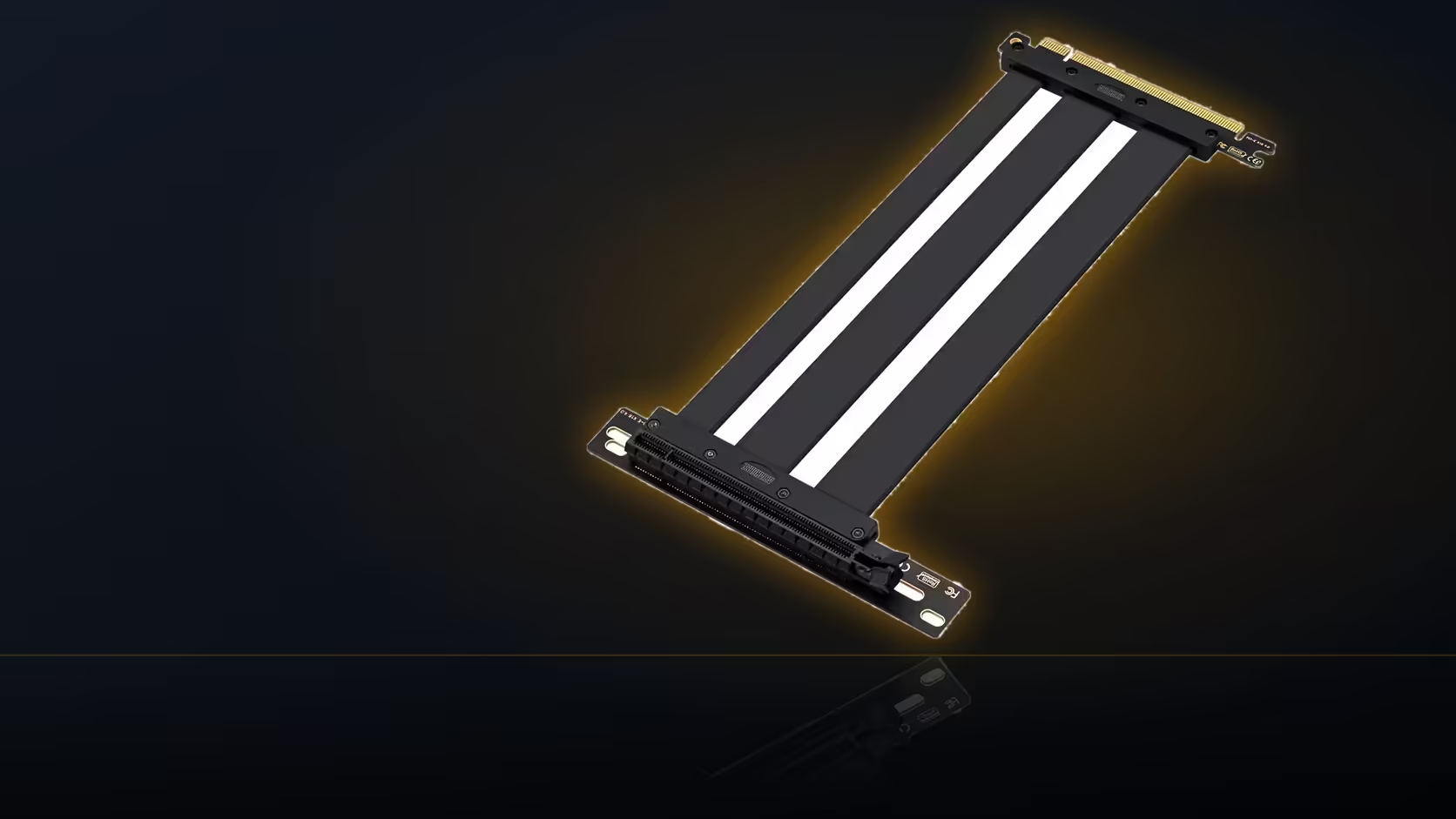
Somewhere in most conversations about riser cables, someone assumes the cable only works with a graphics card. It does not. A PCIe x16 riser is defined by the slot it connects to, not the card sitting on it, and that opens the door to relocating a capture card just as easily as a GPU.
Quick Answer
Yes. The AsiaHorse riser is a PCIe x16 slot extension, so any x16 card, including a capture card, can sit on it in place of a graphics card. At R1,299 including VAT, the physical mounting arrangement is what needs planning, not the type of card being moved.
🎥 Why a capture card ends up on a riser
Capture cards are usually the kind of hardware people want reachable rather than buried in the last slot on a board. Moving one to a more accessible position, or simply freeing up its original slot for something else, is a common reason to relocate it. Because the riser only cares about the slot format, not what plugs into it, a capture card makes the trip the same way a graphics card would.
The slot statement AsiaHorse publishes is specific: it works in PCIe 5.0, 4.0 and 3.0 slots. Nothing in that statement is card-type dependent, which is exactly why the riser is not limited to graphics cards in practice.
🧱 What still needs sorting for a relocated card
The electrical side is straightforward. The physical side is where the planning happens. A capture card, like any other x16 card, needs something to hold it in its new position once it is off the board. That could be a dedicated bracket, or in some cases a simpler mount depending on the card's size and weight.
The 200mm length still applies regardless of what is being relocated, so the route from the slot to wherever the card ends up has to fit inside that figure. The mounting hardware question is the same regardless of card type: case accessories covers brackets and mounts sized for this kind of relocation, and a scan through graphics card accessories turns up hardware that works just as well for a capture card as it does for a GPU.
🔧 Checking the fit before committing
Before ordering, confirm the capture card's physical dimensions against wherever it will sit once moved, and measure the cable route the same way you would for a graphics card. No transfer-rate figure appears in AsiaHorse's own listing for this cable, so neither a GPU nor a capture card gains a bandwidth guarantee from it either way.
Frequently Asked Questions
What does x16 refer to?
The physical slot format the riser connects to, the same full-length slot used by graphics cards and other expansion cards.
Can any x16 card use this riser?
Yes, as far as the electrical connection goes. Physical mounting is the separate question that needs sorting for whichever card is being relocated.
Does a capture card need a bracket too?
Generally yes, since something has to hold it once it is off the board, though the exact hardware depends on the card's size.
Is the 200mm length still the limit for a capture card?
Yes, the cable length is fixed regardless of what is plugged into it, so the route still has to fall within that figure.
Does AsiaHorse publish a transfer rate for this cable?
No. Only the PCIe 5.0, 4.0 and 3.0 slot compatibility is stated, and no bandwidth figure should be assumed from it.
Is the riser available to buy right now?
Not yet. It is hidden until the first trial shipment arrives, with no confirmed date at this stage.
Moving a card off the board?
Check Evetech's motherboard range to confirm your slot layout before planning a relocation like this.