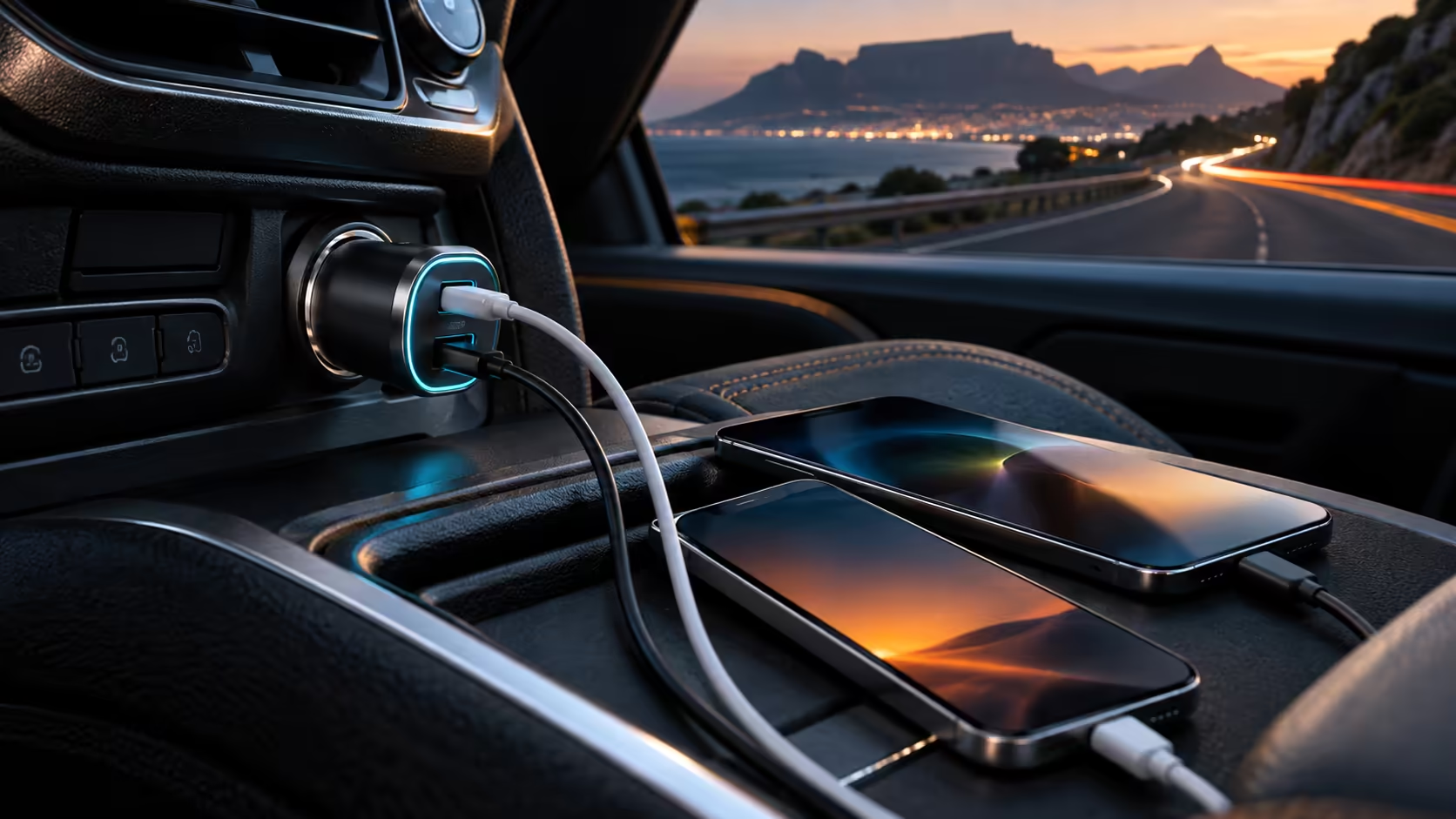
An iPhone never actually needs PPS to fast-charge; it needs Power Delivery, and PPS is simply an extra a compatible port can offer on top of that baseline. Confusing the two is where most of the "will my iPhone actually benefit" questions come from.
Quick Answer
Yes, through USB-C: that port runs Power Delivery at 30W, the path an iPhone uses in a car. PPS is a bonus rather than a requirement for Apple handsets, since a device that does not request it still charges on ordinary PD terms without any loss of function. It sits on Anker's R349 two-port charger, which also carries a 22.5W USB-A output alongside it.
⚙️ Two layers, one baseline
Power Delivery is the baseline every iPhone with USB-C relies on to charge quickly from any compliant source, this charger included. PPS sits above that baseline as an optional refinement: if the phone's own charging chip asks for it, the charger supplies it; if it does not ask, the session simply runs on ordinary PD without anything being lost.
Treating the two as separate layers rather than one combined feature clears up most of the confusion. A phone charging without PPS active is not charging on a lesser or broken mode; it is charging on the mode that has served phones perfectly well since Power Delivery first launched.
🌡️ Where PPS would actually show up, if it activates
On a phone that does request it, the difference from PPS shows up as heat, not top speed. The 30W wattage ceiling stays identical either way; what changes is how tightly the supplied voltage tracks what the battery wants moment to moment, adjusting in steps as fine as 20mV, which affects how warm the phone runs during a fast charge far more than how quickly it finishes.
That distinction matters on a long, hot drive more than a five-minute top-up, since a phone that has been sitting in a warm cabin starts a session with less thermal headroom to begin with, and any reduction in charging-side heat buys some of that margin back.
🔌 The e-marked cable question specifically
Some higher-wattage USB-C cables carry an embedded chip, called an e-marker, that identifies the cable's rated current to both ends of the connection. At 30W this chip is not required; a standard cable rated to the usual 3A ceiling comfortably carries the current this port negotiates without needing that extra identification step.
Where it starts to matter is much higher up the wattage scale, well beyond what this charger offers, so nobody buying a cable for this specific port needs to hunt for an e-marked one. A cable simply rated for USB Power Delivery, from the cable range or the Apple accessories range, covers what this charger asks of it.
Frequently Asked Questions
Is an iPhone missing out by not using PPS?
Not in terms of charging speed. The main thing PPS changes is heat during the session, so a phone charging without it reaches the same wattage ceiling by a slightly different route.
Does Apple support PPS on every current iPhone?
Support varies by model and region, so checking Apple's own specification page for a given phone is more reliable than assuming either way.
Do I need an e-marked cable for this charger?
No. That requirement applies much further up the wattage scale than the 30W this port offers, so a standard PD-rated cable is sufficient here.
Will an iPhone ever refuse to charge on a non-PPS charger?
No. An iPhone without a PPS request pending simply uses standard Power Delivery, which every current model supports as its baseline fast-charging method.
Ready to charge an iPhone properly in the car?
Take a look at the car charger range and check Apple's own page for your model's PPS support.