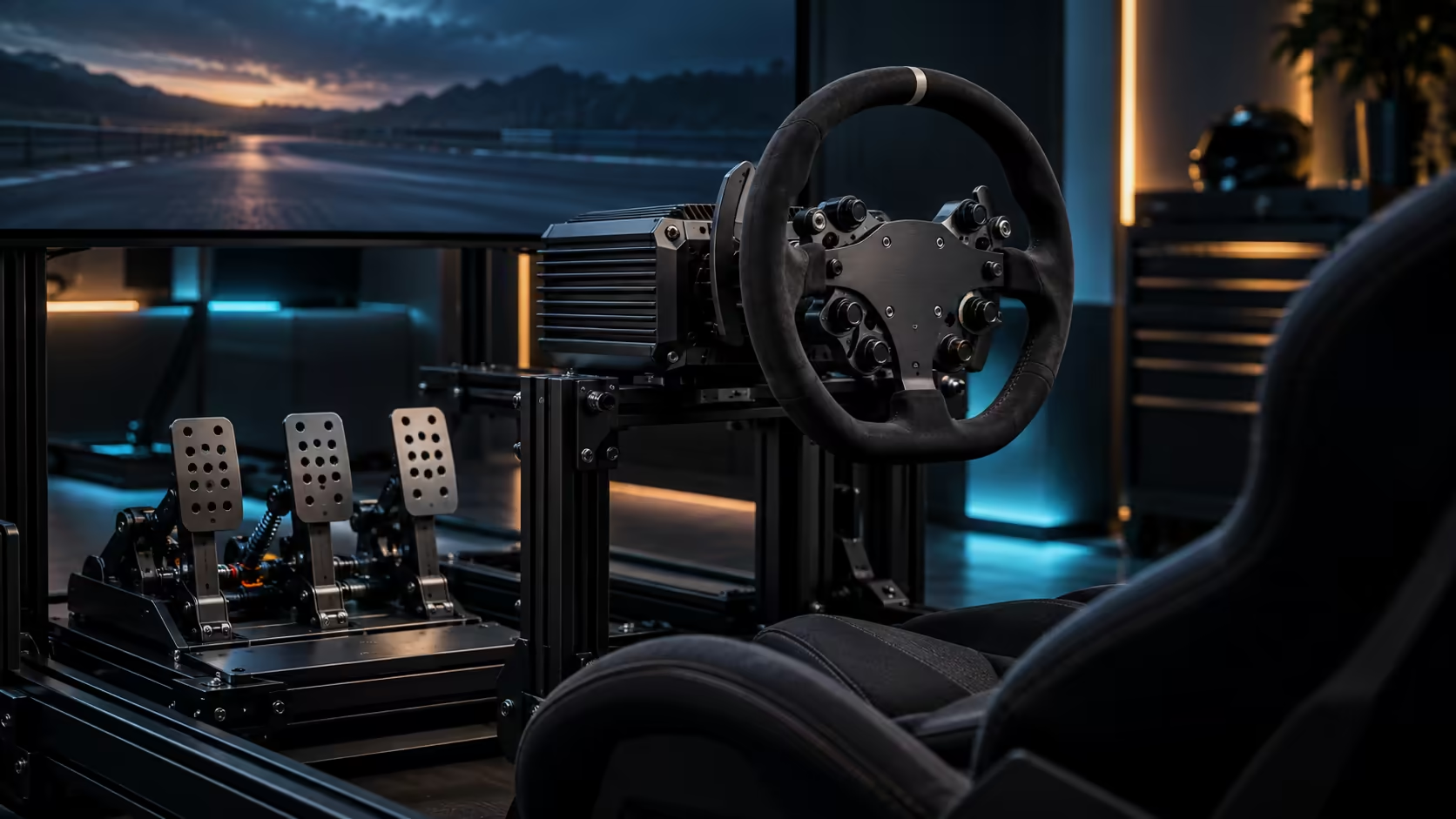
Every permanent magnet motor has a magnetic personality it would rather not have: a faint preference for certain rotational positions over others, caused by nothing more than how the magnets and the metal stator teeth are arranged inside it. Zero-cogging technology exists to design that preference out before it ever reaches your hands as unwanted texture in the wheel.
Quick Answer
Cogging is a small, repeating resistance caused by magnetic attraction between a motor's rotor magnets and its stator teeth as they align and separate through rotation. Zero-cogging design spreads that interaction more evenly through the full turn, typically by skewing the magnets or shaping the winding differently, so the R14,999 Green Flag bundle's Alpha EVO base delivers its full 9Nm without that stepping layered underneath it.
🧲 Where cogging actually comes from
Picture the rotor's magnets sweeping past the stator's teeth as the shaft spins. The pull between any one magnet and its nearest tooth strengthens as they line up and eases off as they part ways, and with a whole ring of magnets and teeth repeating that pattern many times over a single 360 degree turn, the sum feels like a faint, evenly spaced stutter under your fingers.
Nothing about this is a fault. Almost every permanent magnet motor behaves this way to some degree, and in a washing machine or a ceiling fan it never registers, since nobody has their hand wrapped around the actual shaft. A wheel base is unusual precisely because a human hand grips that shaft directly and constantly, which is the whole reason cogging becomes worth engineering against here and nowhere else.
🔧 How manufacturers design it out
Engineers have two main levers here. Angling the rotor's magnets along the length of the shaft, rather than setting them dead straight, means each magnet crosses a given stator tooth gradually rather than all at once, smearing the pull out over time instead of letting it spike. Reshaping how the stator is wound achieves a similar smoothing from the electrical side, changing the way the magnetic field itself rises and falls as current passes through.
Either way the destination is the same: the motor still hits its full 9Nm rated figure, but that output now arrives as one continuous push rather than a string of tiny highs and lows around the rotation.
🎮 What this actually changes while driving
The effect is most noticeable at slow, deliberate steering inputs, particularly right around centre where a driver is making fine corrections rather than large fast movements. At speed and full lock, the forces involved from the simulation itself are already large enough that a small cogging effect would be buried regardless, which is why the benefit of zero-cogging design shows up specifically in precision, low-speed corrections rather than in dramatic moments. That precision matters for smooth, controlled inputs where a driver is trying to feel exactly how much grip remains rather than reacting to a car already sliding. For the technology itself, sim racing and racing simulation both carry drive-type listings against price, and simulation accessories handles the mounting side that lets any base's output reach you cleanly.
Frequently Asked Questions
Is cogging a manufacturing fault?
No. It is a normal property of most permanent magnet motors and only matters in applications where a hand is in direct, constant contact with the output shaft, such as a wheel base.
Does zero-cogging design reduce the motor's maximum torque?
No. What changes is the smoothness of delivery through a turn, not the ceiling the motor can reach at full output.
When is cogging most noticeable while driving?
At slow, deliberate steering inputs, particularly near centre. At high speed and full lock, the forces from the simulation itself tend to mask a small cogging effect regardless.
Ready to feel a signal without the extra texture?
Compare drive technology on the Racing Simulation shelf and look specifically for zero-cogging design.