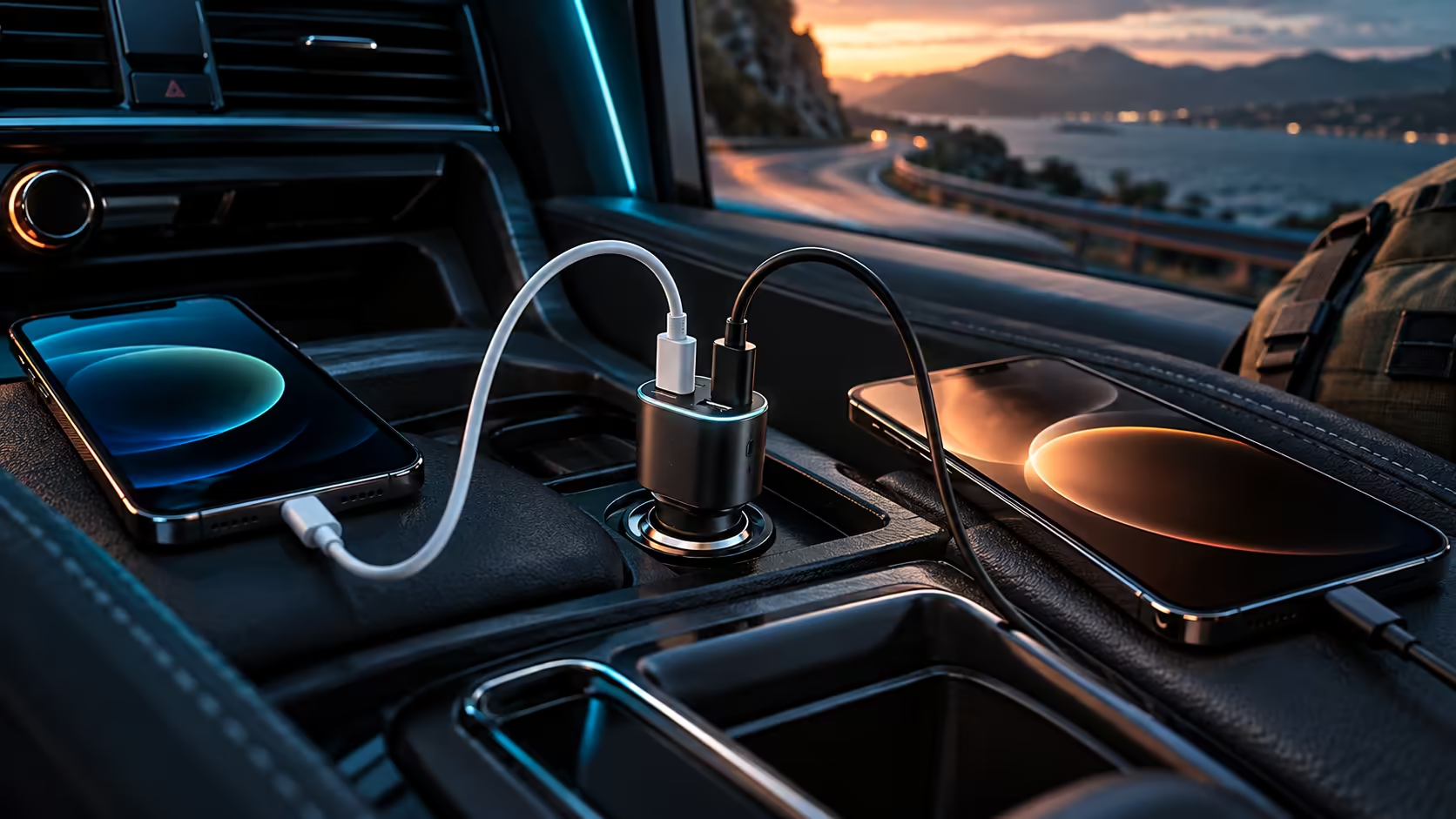
A 22.5W USB-A car charger port sounds modest next to a 30W USB-C headline, but it is worth comparing against what a second phone actually needs rather than against the bigger number sitting beside it. Here is where that figure lands relative to older sockets and to what most phones ask for when they are not the priority device.
Quick Answer
For a passenger's phone, 22.5W over USB-A is comfortably quick and far ahead of the plain 5V sockets many older cars shipped with. It is the secondary output on Anker's two-port charger, sitting alongside a 30W USB-C port with PPS, and leaves that faster port free for whichever phone is emptiest. The pair costs R349.
🔋 What 22.5W actually buys a second phone
A basic old-style car socket without any charging protocol delivers around 5V at 1 to 2.4A, which works out to roughly 5W to 12W depending on the adapter plugged into it, and often less once cable losses are counted. 22.5W sits well clear of that floor.
Most current phones without full USB-C Power Delivery support still fast-charge over USB-A through a proprietary or semi-standard scheme in the 10W to 18W range. A 22.5W ceiling comfortably covers that band, so a second phone on this port is not settling for a slow trickle; it is getting a rate close to what its own fast-charging cap would allow on a dedicated charger at home.
🚗 Why it is the second port, not the first
Putting the higher-wattage USB-C output first is a deliberate design choice rather than an oversight. USB-C carries the newer Power Delivery protocol, including PPS, which most current flagship phones are built to exploit fully; USB-A tops out at older, simpler negotiation schemes with a lower practical ceiling regardless of how much current the port could physically push.
Splitting the two this way means whichever phone in the car benefits most from the faster protocol gets it, while the second device still charges at a rate well above anything a socket without Power Delivery could offer. Earbuds and other small accessories that only ever draw a few watts barely notice which port they land on, since both ports comfortably clear what those devices ask for.
🔌 Cable matters as much as the port here
A 22.5W ceiling means very little if the cable feeding it cannot carry the current cleanly. An old or thin USB cable pulled from a drawer, built for a phone from years back, can cap the practical rate well below what the port itself supports, showing up as a slower charge with no obvious cause.
Matching a properly rated cable to this port removes that as a variable, and it is worth checking especially for a lead that lives permanently in a car and takes more physical wear than one used at a desk. The cable range covers options built for the current this kind of port actually pushes.
Frequently Asked Questions
Is 22.5W enough to fast-charge a modern Android phone?
For most models without full USB-C Power Delivery support, yes. It sits within the range those phones' own fast-charging schemes typically request over USB-A.
Why is the USB-A port rated lower than the USB-C one?
USB-C carries the newer Power Delivery protocol with PPS, which supports a higher practical ceiling than the older negotiation schemes USB-A relies on.
Does an old car cable slow down charging on this port?
It can. A worn or thin cable adds resistance that shows up as a lower real-world charging rate, independent of what the port itself is rated for.
Can both ports run at their full rating at the same time?
No, one shared internal converter splits its output between both ports whenever they are both drawing power, so each settles below its solo maximum.
Ready to get a proper charge into a second phone?
Have a look at the car charger range and pick a cable that matches the current it carries.