A B650 board sits comfortably inside the platforms a contact frame is built for, which answers the compatibility half of the question immediately. Whether it is worth the R299 outlay is a separate call, one that depends on the cooler already mounted and the temperatures the build is actually producing.
Quick Answer
B650 is one of the three AM5 chipsets - alongside X670 and A620 - that AsiaHorse names for the Pulsar frame, so a B650 build is fully within scope for compatibility. Whether it is worth adding comes down to whether the cooler currently in place is showing signs of uneven contact, which compatibility alone does not answer.
✅ Confirming the compatibility half first
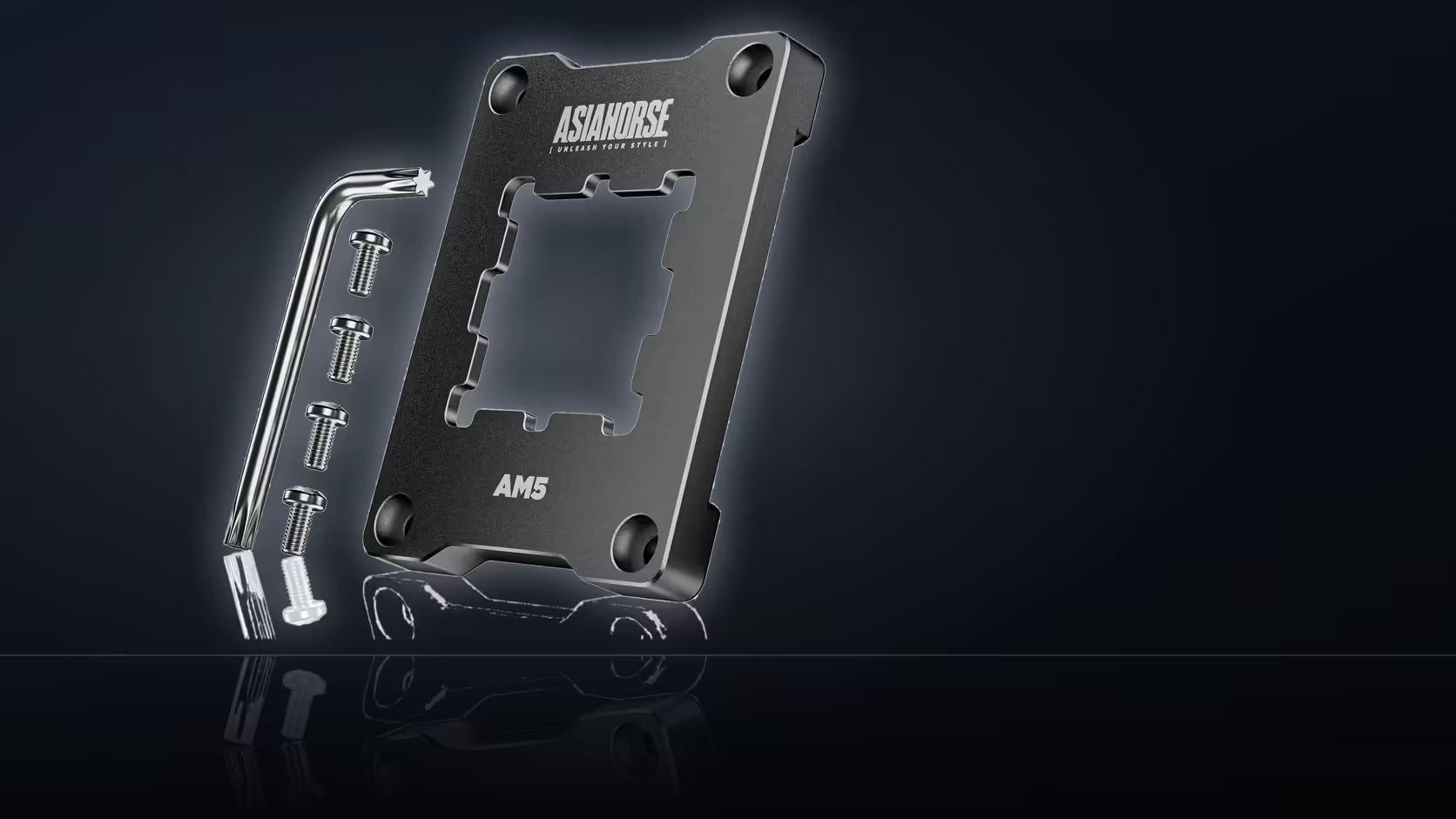
AsiaHorse lists the Pulsar frame for AM5 boards on the X670, B650, and A620 chipset families specifically. B650 sits squarely inside that list, so there is no platform mismatch to worry about here - the stock AM5 retention arms give way to an anodised aluminium piece, four screws, and a hex wrench included to fit it, and that process applies the same way regardless of whether the board underneath is X670, B650, or A620. Board tier does not change how the frame interacts with the socket, since it works at the retention-arm level rather than anywhere the chipset itself would matter.
🤔 Where the "worth it" question actually lives
Compatibility and benefit are two separate things, and it is easy to conflate them because the listing answers the first one so cleanly. The frame's stated purpose is spreading mounting pressure evenly across the chip so cooler contact stays consistent - a design claim rather than a measured guarantee of temperature improvement. Whether that matters on a specific B650 build depends on whether cooler contact is currently uneven, which is not something board tier or chipset reveals on its own.
🌡️ Signs it might genuinely help
A build showing temperature differences between individual cores, or a cooler base that shows a patchy contact pattern when removed and inspected, points toward the kind of uneven pressure the frame is meant to address. Recording temperatures under a fixed, repeatable workload before making any change is the only reliable way to know whether fitting the frame actually moved the number, rather than relying on a general impression that things feel better.
💰 Weighing the cost against the alternative
Trying the frame costs R299 plus thermal paste, since fitting it means removing the cooler and re-pasting on reassembly - what ships in the box is the frame itself, four screws, and a wrench to fit them, but no compound. A cheaper first step worth trying is fresh paste alone, using the same cooler-off effort to test a simpler and more common explanation before spending on hardware aimed specifically at mounting pressure.
Frequently Asked Questions
Is B650 explicitly supported?
Yes. The listing names X670, B650, and A620 as the AM5 chipset families this frame is made for.
Does that mean it will help?
Compatibility and benefit are different questions. The frame addresses mounting pressure, which may or may not be your limiting factor.
When is it most likely to help?
Where cooler contact is suspected to be uneven, which the frame addresses by spreading mounting pressure across the processor.
How would I know beforehand?
You would not with certainty, which is why recording temperatures under a fixed workload before fitting matters.
Does board tier affect the answer?
The frame works at the socket, so a B650 board is no different from an X670 one for this purpose.
What does it cost to try?
R299 plus thermal paste, plus the effort of a cooler removal and refit.
Is there a cheaper first step?
Fresh paste alone, which tests a simpler explanation using the same cooler-off effort.
Anyone weighing this up on a B650 build can browse Evetech's cpu coolers range alongside the thermal solutions shelf before committing to either change.
Weighing up a B650 cooling tweak?
Compare coolers and thermal compound options on Evetech before deciding where the R299 is best spent.