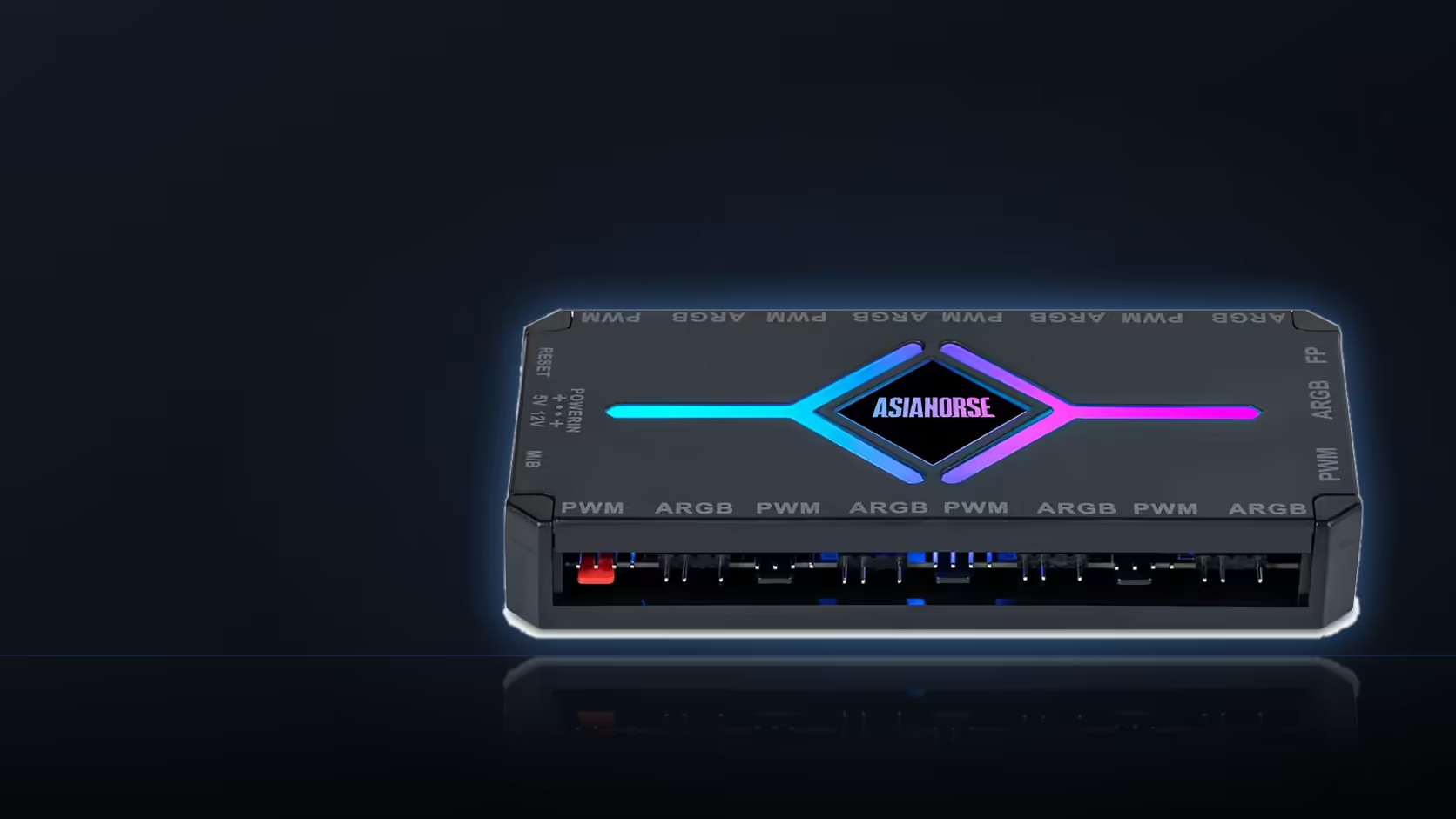
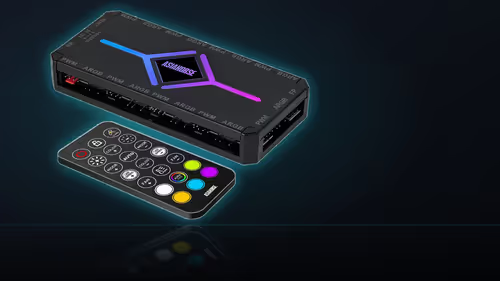
Nine PWM ports and nine addressable ports mean nothing if the hub itself never gets powered, and the ASH-S1 draws that power from a place a lot of builders forget to check ahead of time. SATA is the connection it needs, and confirming one is free belongs on the wiring plan before the case goes back together.
Quick Answer
The ASH-S1 draws power over a SATA connection from the power supply rather than a motherboard header, since running nine fans and up to 377 LEDs is more than a board header is built to supply. At R349, confirming a spare SATA connector exists on the build's power cabling is worth doing before the hub is mounted, not after.
🔌 Why SATA instead of a board header
A motherboard fan header is designed for a couple of fans, not nine PWM ports plus a full addressable lighting bank. Drawing that load through a board header would be asking more of it than it is rated for, which is why the ASH-S1 takes its power directly from the power supply over a SATA connection instead. That keeps the load off the board entirely and means the hub's own capacity is not constrained by whatever the motherboard's header circuitry can handle.
🔍 Finding a genuinely free connector
Most SATA power leads carry three or four connector positions spaced along their length, so a lead already feeding a drive or two often has a spare position further along it rather than needing its own dedicated lead. Worth tracing the leads already in the build and counting what is actually free, rather than assuming based on how full the cable routing looks. A modular power supply's accessory box is the other place to check - an unused SATA lead there is often the simplest way to add a connector without disturbing existing cabling.
📍 What this means for where the hub sits
The SATA lead's reach becomes one of the inputs into choosing where the hub is mounted, alongside clearance for its two banks of ports and the fan and lighting cables reaching it. A magnetic mount on a steel panel gives some flexibility here, since the hub can be repositioned without undoing any fixing if the first spot puts too much strain on the SATA lead. Plan the layout with Evetech's case fan range open alongside the power cabling, and if SATA routing turns out to be a genuine constraint in your case, the NZXT fan controller is worth weighing as an option with simpler power needs.
Frequently Asked Questions
Why does the hub need SATA rather than a board header?
Because it drives nine fans and up to 377 LEDs, which is more than a board header is designed to supply.
How many connectors does a typical SATA lead carry?
Commonly three or four along its length, so a lead already serving drives often has a spare position further along.
What if no SATA connector is free in the build?
A modular supply may have an unused SATA lead in its accessories, which is the simplest way to add one.
Where should the hub sit relative to the SATA lead?
Close enough that the lead reaches without tension, which is one input into choosing the mounting position.
Does the SATA lead carry any data alongside power?
No. It supplies power only, so the connection is purely about feeding the hub.
Can a SATA power connector share a lead with a drive?
Connectors on one lead are independent positions, so a spare beside a drive connection works normally.
Mapping out the power cabling for a new build?
Have a look through Evetech's case fan range while you plan where the hub and its SATA lead will sit.