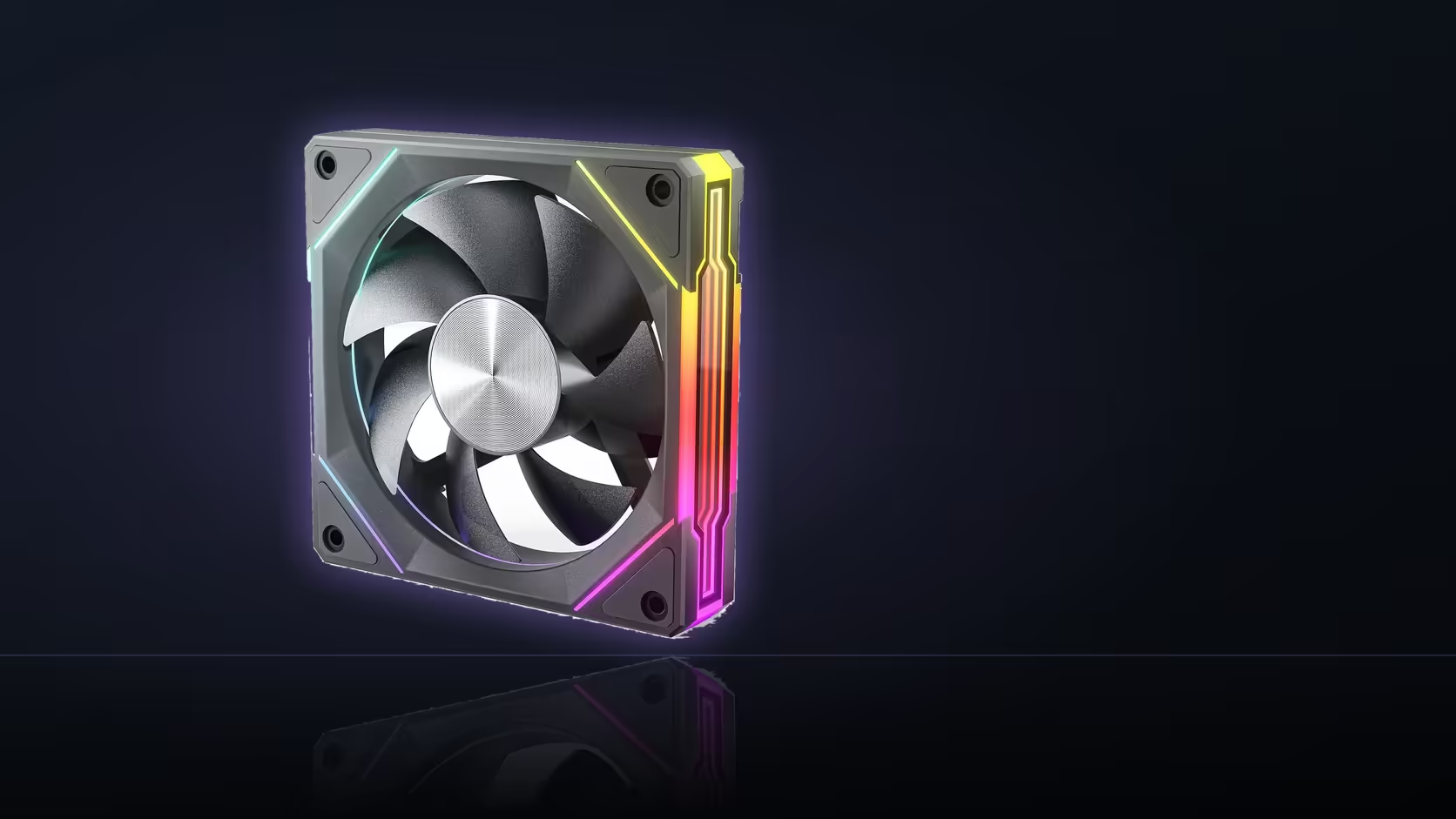
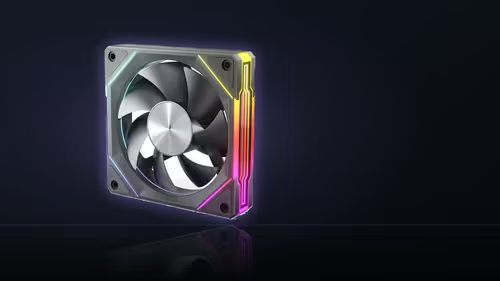
Spec sheets rarely tell the whole story, and the Amici Pro's listing is a useful example of that. It publishes a ceiling of up to 1800 RPM but says nothing about how slow the fan can actually spin, which matters if a very quiet build is the goal.
Quick Answer
The Amici Pro - a 3-pack priced at R399, VAT included, with that price subject to movement - lists a top speed of up to 1800 RPM under PWM control and up to 61.5 CFM at under 30 dBA, but no minimum speed figure appears anywhere in the description. The quiet end of the fan curve is simply not published for this model.
📈 What the listing actually states
Two figures anchor the published spec: a ceiling of up to 1800 RPM, and airflow of up to 61.5 CFM at under 30 dBA. Both describe the top end of performance under PWM control. Nowhere in the description does a floor speed appear, which leaves the bottom of the fan curve undefined from the spec sheet alone.
Why this gap exists
Case fan listings frequently focus on ceiling figures since that is what a headline spec comparison usually highlights, and a minimum speed is a less commonly advertised number across the category generally, not just on this specific model. It is not unusual, but it does mean a genuinely quiet build has to find that floor through testing rather than reading it off the box.
🔬 Finding the actual floor
Lower the fan curve step by step through your motherboard's fan control software and watch the reported speed as you go. At some point the reported RPM stops decreasing regardless of how far you push the curve down - that plateau is the fan's real minimum speed for your specific setup, which can vary slightly depending on the header and control method used.
Why this matters for a quiet build
The floor speed sets the genuine lower bound on how quiet a machine can get, however gently the fan curve is configured in software. A build targeting near-silent idle operation needs to know this number specifically, since a curve set below the fan's actual floor achieves nothing beyond the floor itself.
📊 How it compares elsewhere in the range
The Nyota A12 and the Nyota Ultra both publish a stated range of 800 to 2000 RPM, so minimum figures do appear on other models within the same AsiaHorse lineup - it is specifically this model's listing that omits one. Amici Pro's ceiling of 1800 RPM also sits below the Nyota models' 2000 RPM top end, though the airflow figure of up to 61.5 CFM matches across all three despite the lower ceiling. Compare the full case fans range if a published minimum speed matters to your decision, and check case accessories for any fan controller hardware your build needs.
Frequently Asked Questions
What speed figures does the Amici Pro listing publish?
A ceiling of up to 1800 RPM under PWM control, alongside airflow of up to 61.5 CFM at under 30 dBA.
Is a minimum RPM stated anywhere in the description?
No, no minimum speed appears for this model, leaving the bottom of the fan curve undefined from the spec sheet.
How can I find the fan's actual minimum speed?
Lower the PWM curve gradually in your motherboard software and watch until the reported RPM stops decreasing further.
Does this gap matter for a quiet build?
Yes, since the floor speed sets the real lower bound on how quiet the machine can get regardless of curve settings.
Do other AsiaHorse models publish a minimum speed?
Yes, the Nyota A12 and Nyota Ultra both state 800 to 2000 RPM, so the omission is specific to this model's listing.
Is the Amici Pro's ceiling lower than those Nyota models?
Yes, it tops out at 1800 RPM against their 2000 RPM, though airflow still matches at up to 61.5 CFM across all three.
Chasing a genuinely quiet build?
Browse Evetech's case fan range to compare speed and noise specs across models.