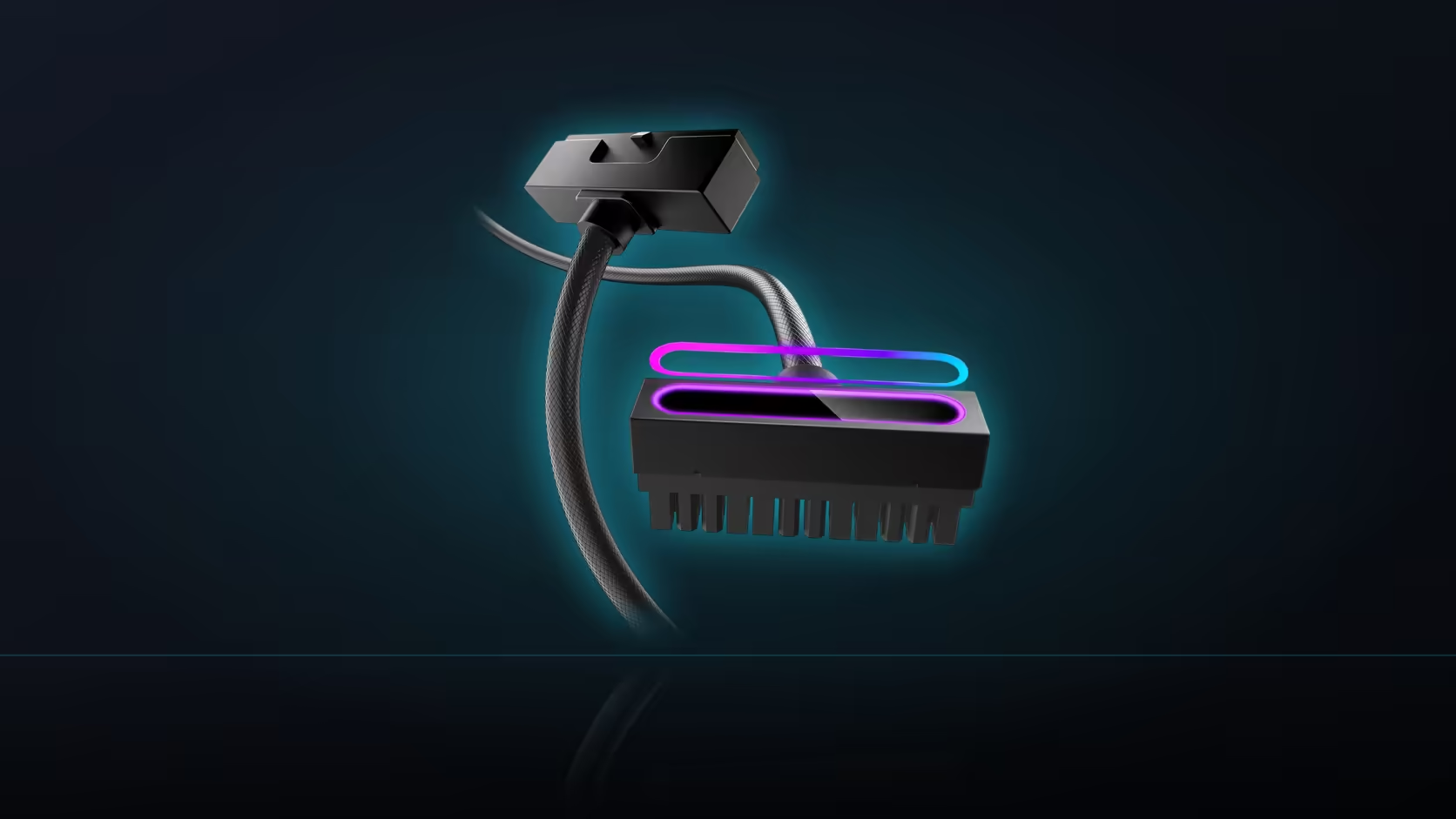
Buy an ITX parts list item before the case and board are actually settled, and there is a real chance it turns out unusable the moment it arrives. A side-exit cable is a textbook example of exactly that trap.
Quick Answer
Pick the case and board first. Side-exit fit depends on clearance beside the 24-pin socket, and that is set by the board you end up with. Adding it to a parts list before those choices are fixed risks a part that cannot be used.
❓ Why ordering this alongside everything else is risky
Whether a side-exit cable actually fits is decided entirely by the specific board you end up choosing, and AsiaHorse itself notes plainly that compatibility on these directional variants is limited rather than universal. That means the fit question genuinely is not knowable in advance, before a board has been settled on - ordering it alongside the rest of a parts list, at the same time as everything else, is placing a bet on compatibility information that simply does not exist yet.
🏗️ What needs settling before this decision can even be made
The board comes first in the decision order, since its specific layout around the socket - what heatsinks, headers or connectors crowd that space - is what ultimately decides available clearance. The case matters too, since it determines whether a sideways-routed cable run even has anywhere useful to go once it exits the socket in that direction. Both choices need to be locked in before a side-exit cable purchase can be made with any real confidence.
📐 Does a small case actually need one
Often, yes - compact ITX cases frequently leave very little room below the socket for a cable to drop straight down and curve away toward a grommet, which is precisely the constraint a side-exit head is built to solve. That said, the standard straight-down version can sometimes still work even in a small case, provided the tray cutout happens to sit close enough beneath the socket to accommodate a short, tight downward run - it genuinely depends on where that specific case places its openings relative to the board.
⏳ How late this decision can reasonably wait
This is a decision that can comfortably wait until the board is physically seated inside the case and you can see the actual available space with your own eyes, rather than guessing from spec sheets or product photos alone. At that point, taking the measurement is a quick, decisive step, and the answer about whether a side-exit head will fit becomes genuinely certain rather than a probability estimated from photos. Neither the left-exit nor the right-exit direction is inherently more compatible across boards in general either - it depends entirely on what specific components happen to sit to the left or right of your particular socket, so there is no universal recommendation to fall back on here. And if it turns out neither direction actually clears your board's layout, the straight-down version remains available at the identical R599 price point, meaning a lit ATX head is still very much an option for your build even when the side-exit route does not pan out. Check cable solutions for what else this piece pairs with, and other lighting worth weighing while the board decision stays open sits at NZXT case lighting.
Frequently Asked Questions
Why not order it with the rest of the parts?
Because whether it fits is decided by the board, and AsiaHorse notes compatibility is limited, so the answer is not knowable in advance.
What should be settled first?
The board, since its socket surroundings decide clearance, and the case, since that sets whether a sideways run has anywhere useful to go.
Is a side exit usually needed in a small case?
Often it helps, because there is rarely room below the socket for a cable to drop and turn. That is exactly the situation it targets.
Could the straight version work in an ITX build?
Sometimes, if the tray cutout sits close beneath the socket. It depends entirely on where the case places its openings.
How late can the decision be left?
Until the board is in the case and you can see the space. At that point the measurement takes a moment and the answer is certain.
Does either side-exit direction fit more boards?
Neither is universally better, since it depends what sits to the left or right of your particular socket.
What if neither direction clears?
The straight-down version remains available at the same R599, so the lit head is still an option even when side exit is not.
Building an ITX parts list around a lit ATX connector?
Browse Evetech's power supply range and settle your board choice before adding a side-exit cable to your cart.