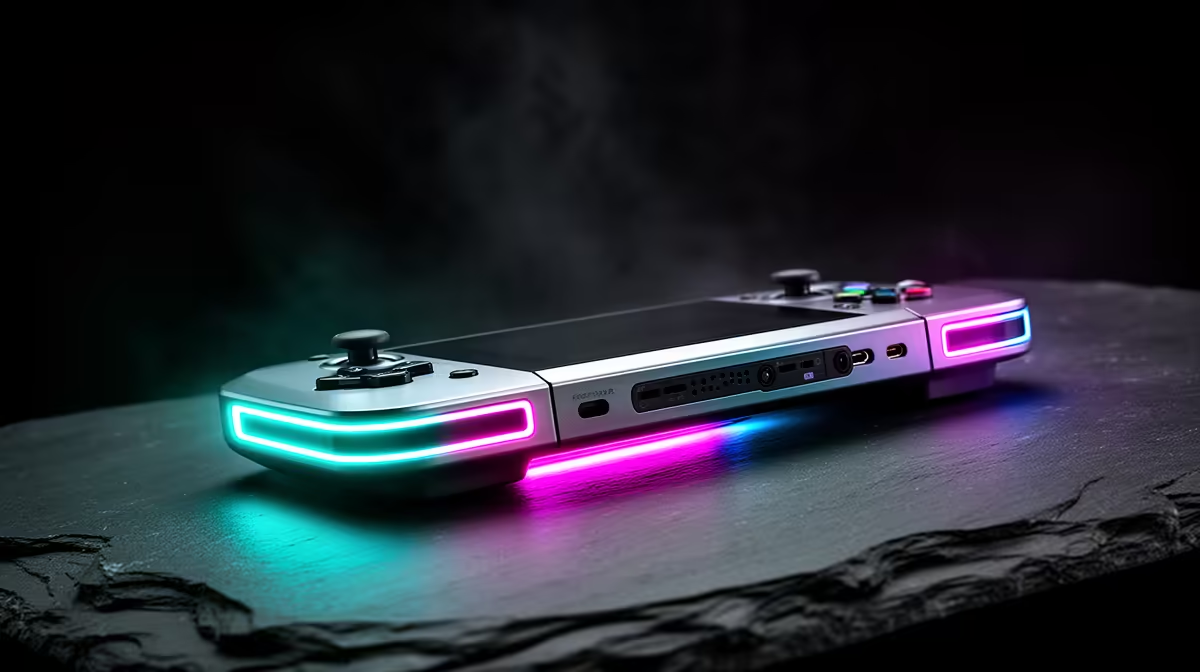
For low-latency online play, a handheld's spec floor is about more than fps: it needs a fast screen, Wi-Fi 6 and an APU that holds steady frames so your inputs land on time.
Quick Answer
The floor for competitive online play is a Z1 Extreme or Ryzen Z2-class APU, 16 GB LPDDR5, a 120 Hz VRR screen and Wi-Fi 6; that lands around R12,000 to R18,000 in SA. Steady 60 fps and a fast Wi-Fi link matter more than peak fps, since dropped frames and lag both cost you rounds.
The floor that keeps inputs sharp
A Z1 Extreme-class APU holds 60 fps in most competitive titles at sensible settings, which keeps frame times even and inputs responsive. A 120 Hz VRR screen smooths variable rates and lowers perceived input lag versus a 60 Hz panel. 16 GB RAM prevents the stutter that 8 GB models show, since stutter feels like lag in a fast game.
Network and battery realities
Wi-Fi 6 (or wiring through a dock's Ethernet) cuts the network jitter that wrecks ranked play, which matters as much as the chip for online games. Expect 1.5 to 3 hours of battery in competitive titles, so play near power or docked for long sessions. On SA fibre, a wired dock connection gives the most consistent ping, so a handheld dock with Ethernet is a smart companion buy.
FAQ
What frame rate do I need for competitive handheld play?
A steady 60 fps with even frame times beats a higher but unstable rate. A Z1 Extreme-class APU and a 120 Hz VRR screen keep inputs feeling responsive in ranked games.
Does Wi-Fi matter on a handheld for online gaming?
A lot. Wi-Fi 6 cuts the jitter that hurts ranked play, and wiring Ethernet through a dock is even better. Network lag costs rounds as surely as low fps does.
How much RAM does a competitive handheld need?
16 GB, since 8 GB causes stutter that feels like input lag in fast games. The APU shares memory with the GPU, so the extra RAM keeps frame times smooth.
play, dock the handheld and wire Ethernet over Wi-Fi where you can. A steady connection and a 120 Hz VRR screen matter more than chasing peak fps.