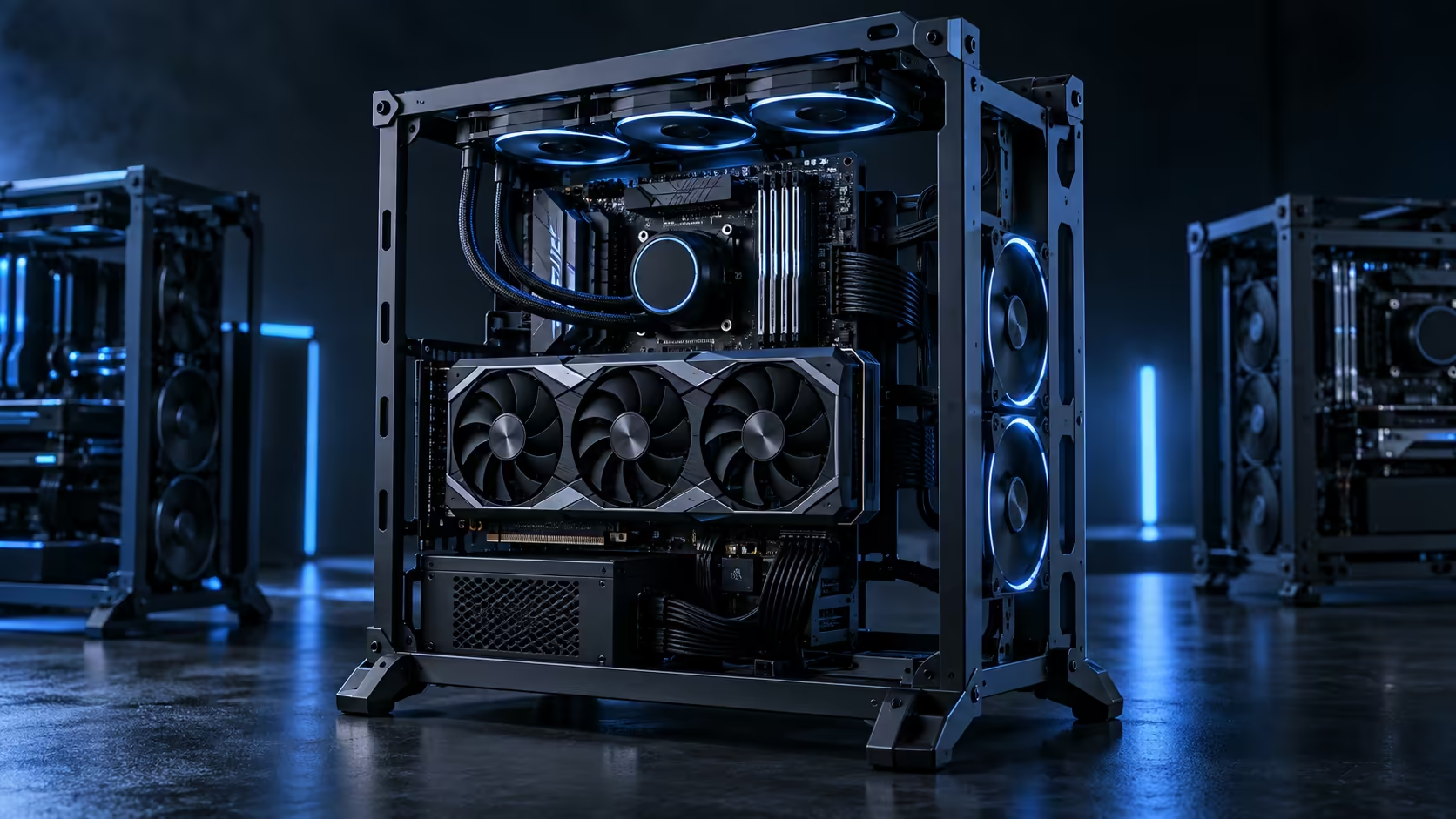
Take the two side panels off a normal case, keep only the structural skeleton, and you have the entire idea behind an open-frame PC case in one sentence. Everything else about the format follows from that single removal.
Quick Answer
An open-frame case is a rigid frame with no side panels, so components bolt to rails and sit in open air rather than inside a closed box. It suits builders who want the hardware visible, who upgrade or rebuild often, and who are prepared to clean more regularly in return. The ROG GR20 Edition 20 sells for R15,999 as one example of the format, with a 368mm GPU allowance and a full-size liquid-cooling bay.
🔍 What actually changes without the panels
Structurally, a case's rigidity normally comes from the whole assembled box: four panels screwed together brace each other against twisting. Remove the panels and the frame alone has to resist that twisting, which is why open frames typically use a section closer to 4mm thick in aluminium or steel, rather than the thinner metal an equivalent closed case gets away with.
Functionally, the panels were doing three jobs: filtering dust at the intake, damping fan and coil noise, and hiding the build. An open frame does none of those three, which is the entire trade being made. In exchange, every component sits in unrestricted room air and is reachable without removing anything first.
✅ Who this genuinely suits
Someone who rebuilds or upgrades more than once a year benefits the most, since there is no panel to remove before reaching a component, which turns a swap that takes 30 minutes in a closed case into a 2-minute job here. Someone whose machine sits somewhere it will be seen, rather than tucked under a desk out of sight, also gets real value from the format, since the visible hardware is the whole point.
It also suits a build using a graphics card near 368mm or a full 360mm radiator, since an open frame in the mid-tower range tends to offer more clearance than a similarly priced closed case built around one fixed board size.
❌ Who it does not suit
A household with young children or pets around the desk, where exposed fans and cabling at reachable height are a real concern, is better served by a closed case. Anyone sharing a room with someone sleeping, studying quietly, or on calls nearby should weigh the noise difference seriously, since there is no damping to soften fan and coil sound. And anyone who does not want to spend 10 minutes cleaning every few weeks should also look elsewhere, since there is no filter to remove that burden.
If an open frame does not suit your build, the computer case range covers filtered, closed alternatives at every size, and the Mini-ITX and Micro-ATX range is worth checking specifically if your board is smaller than a full ATX or EATX size, since compact closed cases are usually a better match for a small board than a larger open frame built with bigger boards in mind.
Frequently Asked Questions
What exactly makes a case "open-frame" rather than just open?
The absence of side panels entirely, with components mounted to a rigid rail structure rather than inside an enclosed box, is the defining feature.
Does an open frame need a thicker structural material?
Usually yes, since it cannot rely on assembled panels bracing each other for rigidity the way a closed case does.
Is an open frame a good first case for a beginner builder?
It can be, provided the extra cleaning routine and noise are acceptable trade-offs, since assembly itself is not meaningfully harder than a closed case.
What is the biggest downside compared to a closed case?
The lack of dust filtration and noise damping, both of which a closed case's side panels provide by default.
Ready to see if the open-frame trade-off suits your build?
Weigh visible hardware and easy access against the extra cleaning and noise.