Quick Answer
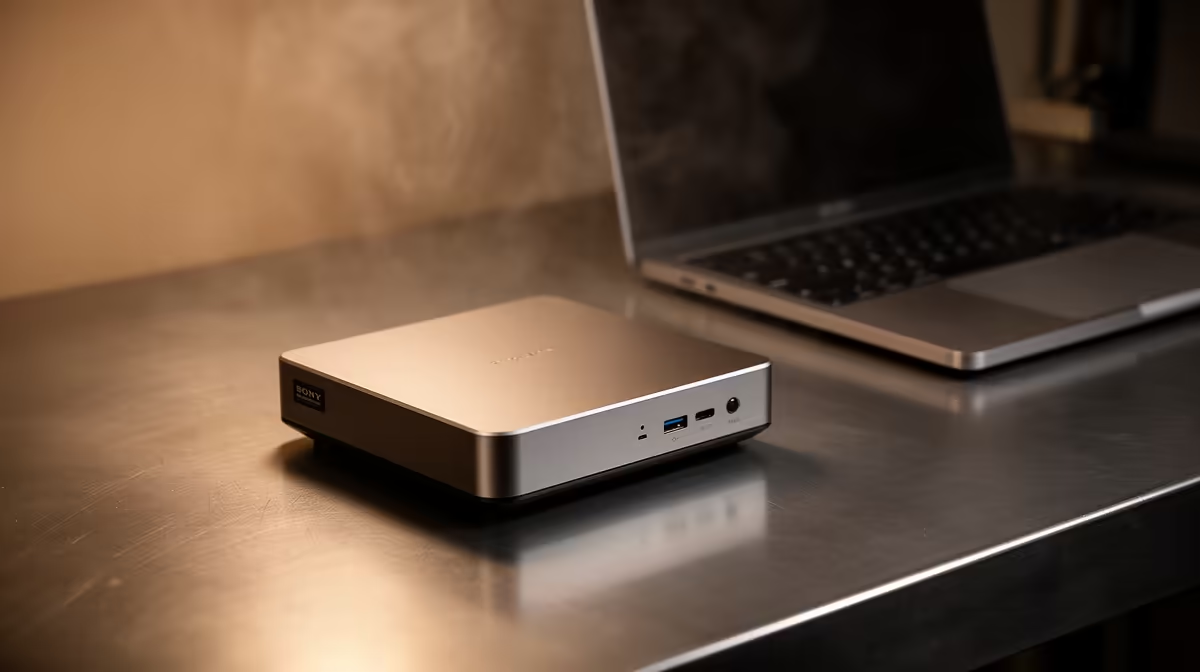
For travel-friendly study, the things that matter most in a mini PC are weight and size, ports, and quiet cooling. A Beelink SER-class unit around 0.5-0.7 kg and 12-13 cm square fits a bag easily; aim for a recent Ryzen or Intel chip, 16 GB RAM, a 512 GB SSD, and USB-C plus HDMI. Budget roughly R6,000-R12,000.
The Specs That Actually Matter
For a mini PC, judge it on the chip generation, RAM and storage you can actually use, plus the port mix. A recent Ryzen or Intel mobile chip with 16 GB RAM and a 512 GB NVMe SSD handles study, browsing and light creative work comfortably. Check for USB-C with video out, enough USB-A ports, and Wi-Fi 6, so you are not living off a hub. Cooling noise matters too; a good mini PC stays quiet under everyday load.
Built For The Bag
Travel use rewards a small footprint and a power brick you can live with; some mini PCs use a compact external adapter, others a larger one, so check before you buy. A 0.5-0.7 kg unit plus a folding keyboard travels far lighter than a laptop bag full of gear. The trade-off is you supply your own screen and input, so plan for a portable monitor or use whatever display you arrive at.
FAQ
Is a mini PC powerful enough for studying?
Yes. A mini PC with a recent Ryzen or Intel chip, 16 GB RAM and a 512 GB SSD handles documents, research, browsing and light creative work easily. It only struggles with heavy gaming or large 3D workloads.
How much should a good mini PC cost in SA?
Around R6,000-R12,000 buys a capable unit with 16 GB RAM and a 512 GB SSD. Below that you often get 8 GB RAM and slower storage; above it you are paying for higher-end chips most study use does not need.
Can a mini PC drive two monitors?
Many can, via HDMI plus USB-C DisplayPort. Confirm the exact video outputs before buying, since cheaper units sometimes cap at one external display or a lower refresh rate.
Compare mini PCs at Evetech by chip, RAM and port mix, and pick one sized for your bag or your desk.