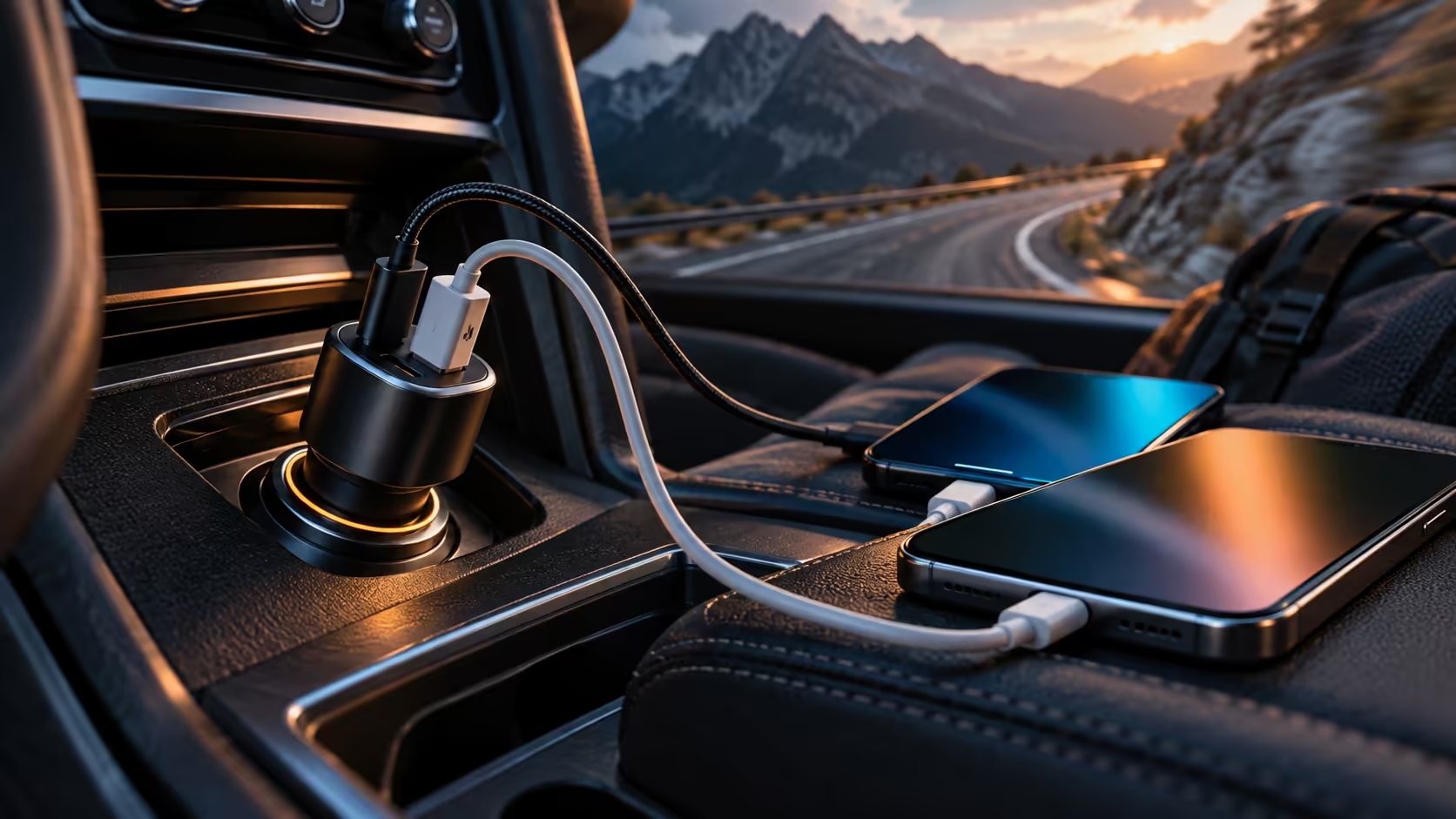
Whether a car charger stays put on a bad road has almost nothing to do with how small the charger is. The part doing the actual holding is inside the socket, not inside the plug, and that distinction explains why the same charger behaves differently from one car to the next.
Quick Answer
Retention comes from the socket's spring-loaded contacts and the plug's metal barrel gripping them, not from the charger's outer size. On South African gravel roads and pothole-worn tar, a socket that has taken years of cheap plugs being yanked out is the usual culprit, and dust in the barrel makes a marginal connection worse. Anker's two-port unit for this socket type is R349.
🔍 What is actually gripping what
A standard 12V accessory socket holds a plug through spring metal fingers lining the inside of the barrel, pressing inward against the plug's own metal sleeve. That spring pressure is what stops a plug rattling loose over a bump, and it is a property of the socket, built into the car, not of whatever charger happens to be plugged into it that day.
A smaller charger body does not change how hard those springs grip the barrel it slides into, because the part making contact is a standardised metal cylinder sized to fit the same socket regardless of what sits behind it. Two chargers with very different outer shapes can have identical barrels and identical retention in the same car.
🚗 Why the same charger feels loose in one car and solid in another
Spring contacts weaken with age and with how many plugs have been forced in and out of them over the years. A socket in an older vehicle, or one that has hosted a rotating cast of cheap accessories, often grips less firmly than a newer or lightly used one, independent of which charger is currently in it.
Dust and grit collecting inside the barrel compound the problem, sitting between the spring fingers and the plug's contact surface and reducing the pressure that would otherwise hold things in place. The accessory socket itself follows a standard barrel diameter of roughly 21.5mm across most vehicles, which is why the same plug moves between a console socket and a rear-seat one without issue, but that standardisation says nothing about how much spring tension is left in any one socket after years of use. On routes with loose gravel or badly broken tar, dust works its way into that barrel faster, and vibration from potholes is what turns a marginal connection into an intermittent one rather than a merely tight one.
🛠️ What actually helps
Cleaning the socket barrel occasionally, with a dry cloth or a shot of compressed air rather than anything liquid, removes the grit that reduces contact pressure. Checking that the plug seats fully home each time, rather than resting against the lip, also matters more than it seems, since a partial seat only engages part of the spring's travel.
Beyond that, there is little a charger's own design changes about socket-side wear. A cable that flexes near the plug under its own weight adds a second point of strain worth checking too, since a heavy or stiff lead can lever a marginal connection loose on its own. Other small accessories that live in the same socket day to day are worth the same occasional check.
Frequently Asked Questions
Does a smaller charger stay in a socket better than a bulkier one?
Not meaningfully. Retention depends on the socket's spring contacts and the plug's standardised barrel, not the size of the charger body behind it.
Why does a charger that worked fine last year now feel loose?
Spring contacts weaken with repeated use and age, and dust build-up inside the barrel reduces the pressure they can apply, both independent of the charger itself.
Can cleaning the socket actually fix a loose connection?
Often, yes, for a mild case caused by dust or grit rather than genuinely worn-out springs, which no amount of cleaning restores.
Does the cable affect how secure the plug feels?
It can. A heavy or stiff cable pulling on the plug adds leverage that can work a marginal connection loose faster than the socket alone would.
Ready to sort out a fiddly car charging setup?
Browse the car charger range and pick a cable that will not add extra strain at the plug.