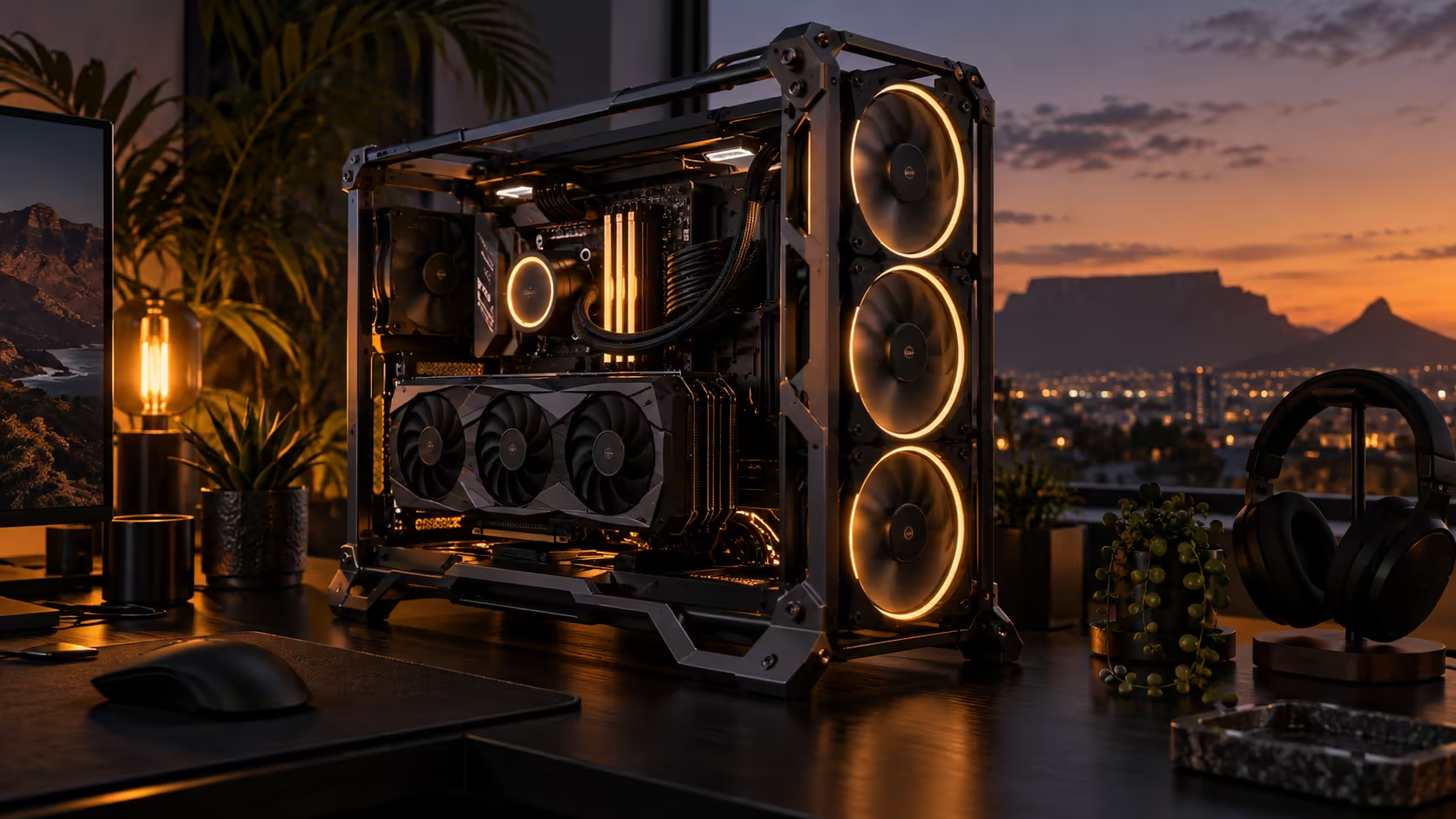
A 33C afternoon in Gauteng does not care what your cooler is rated for. Every fan curve, every radiator, every claim on a box is measured against a lab's cooler air, and the honest way to plan an open-frame gaming PC for a South African summer is to plan for the gap above room temperature, not a fixed number a spec sheet gives you.
Quick Answer
Aim to keep your CPU roughly 40C to 50C above whatever the room actually reads that afternoon, because that delta, not an absolute number, is what a cooler can control. An open frame's biggest summer advantage is drawing intake straight from the room rather than through a warmed front panel, which is worth several degrees before you have spent a rand on extra cooling. The R15,999 GR20 Edition 20 takes that advantage further with a full 360mm radiator position and a bundled crossflow fan for the board itself.
🌡️ Why "room temperature" is the number that actually matters
A cooler rejects heat into the air around it, so its final result is always room temperature plus some delta the cooler design determines. A good air cooler or all-in-one loop might hold a gaming load at 40C to 50C above ambient. On a 22C evening that puts the CPU in a comfortable range. On a 33C Highveld afternoon with the same load, the same cooler, the same delta, the CPU sits ten degrees higher purely because the starting point moved.
This is why chasing a specific target temperature from a review done in a cooler climate misleads more than it helps. Plan around the delta your cooling setup achieves, and accept that South African summer afternoons will add to whatever baseline number you are used to seeing.
☀️ Where the open frame genuinely helps
A closed case draws intake through a front panel that has already picked up some heat from the room and, in a poorly ventilated spot, from the case's own internals recirculating slightly. Nothing on an open frame stands between the room and the components, so every side works as intake at whatever the room's actual temperature happens to be, with nothing warming the air first.
That advantage is real but it is not magic. If the room itself is at 33C, the open frame gives you 33C air instead of 35C or 36C air a restricted front panel might supply, which is a genuine few degrees, not a rewrite of the laws of thermodynamics. Combine it with actual room cooling, not just case design, for the bigger win.
🏠 Placement decisions that cost nothing
Where the machine sits changes its effective room temperature more than most people expect. A window that catches direct sun for hours through the hottest part of a Gauteng afternoon can leave the air within a metre of it running 3C to 5C above the rest of the room by the time you sit down to game after work. Moving the desk, or simply the machine, out of that direct path is a free fix that no cooler upgrade replaces.
A closed door and curtains during the hottest hours, opened again once the sun has moved off that side of the house, does more for a summer gaming session than an upgraded fan curve. An open frame benefits from this kind of room management more visibly than a closed case does, precisely because it has no panel standing between the components and whatever the room is doing.
🌬️ Setting the cooling for the season, not the spec sheet
Set your fan curve against a system or CPU sensor with the season in mind: a curve tuned quiet for a mild evening can leave the machine running warmer than it needs to on a 33C afternoon if the fans never ramp enough to compensate. Check your curve on the hottest day you actually use the machine, not the mildest one, and adjust the ramp points up rather than assuming one setting suits every month.
The 360mm radiator mounting position on the mid-tower cases built for it and the bundled crossflow fan both exist to move more air across more surface than a smaller cooling setup can, which matters more, not less, once summer adds its own baseline to every reading. Compare cooling options in the CPU cooler range with your worst-case room temperature in mind, not the mild evening you tested on, and check the wider case fan range if the board itself, rather than just the CPU, is what runs hot in your specific build.
Frequently Asked Questions
What CPU temperature should I expect on a hot South African day?
Expect roughly the same delta above ambient your cooler always achieves, applied to whatever the room actually reads that afternoon, rather than a single fixed number.
Does an open frame really help in summer?
It helps by drawing intake straight from the room instead of through a pre-warmed front panel, worth a genuine few degrees, though room temperature itself still sets the floor.
Does desk placement really make a measurable difference?
Yes. Direct afternoon sun through a nearby window can leave that corner of the room noticeably hotter than the middle by evening, and repositioning the desk costs nothing compared to upgrading cooling hardware.
Should I set my fan curve differently for summer?
Test it on the hottest day you actually use the machine and adjust the ramp points up if a curve tuned for a mild evening leaves it running warmer than expected.
Ready to plan cooling around your actual room, not a lab test?
Check your temperature delta on the hottest day you use the machine, then adjust from there.