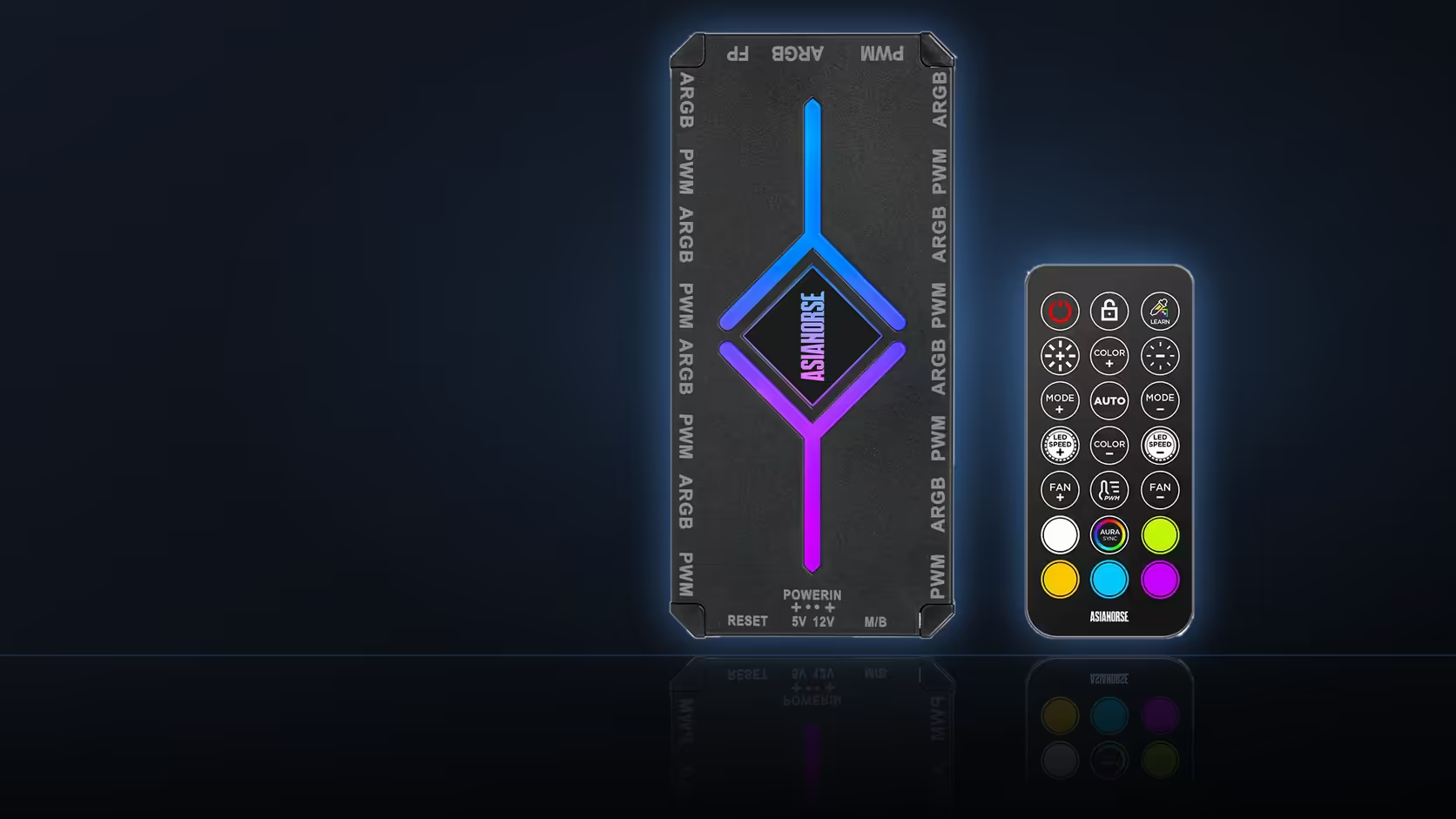
A build sitting comfortably under the ASH-S1's 377-LED ceiling can cross it with a single addition, and a lit cable cover is exactly the kind of part that does it - not because it looks like heavy lighting, but because covers of this type routinely carry LED counts in the eighty-to-a-hundred range, which is enough to matter against a total that felt settled before it was added.
Quick Answer
Recalculate the full LED sum across everything connected to the ASH-S1 before adding a lit cable cover, since the 377-LED rating covers every device plugged into the hub, not fans alone, and covers of this kind can carry a substantial LED count on their own. A build that sat comfortably inside the limit can pass it with one addition if the recalculation is skipped and the cover's LED count is assumed to be negligible.
🧮 Why a cover changes the sum more than it looks like it should
Cable covers are, by function, a tidiness accessory - something to hide a bundle of wires behind a clean panel, which is not the kind of part that naturally reads as significant lighting hardware. That framing is exactly why it gets left out of a lighting recalculation, and it is also exactly wrong. Lit cable covers exist specifically to be a visible feature rather than a hidden one, and the LED strips built into them are often continuous runs along the cover's full length, which adds up to a meaningfully higher count than a single fan ring or a short accent strip.
A build's original lighting plan - a handful of fans, maybe a strip - can sit at, say, two hundred LEDs, comfortably under the 377 ceiling with what feels like plenty of headroom. Adding one cover at a count in the eighty-to-a-hundred range closes most of that gap in a single step, and a second addition after that, however modest, can be the one that actually crosses the line.
🔌 The port question, separately from the LED question
A cable cover also occupies one of the nine addressable ports, which is a separate consideration from its LED contribution and worth checking on its own. A build that has used seven of nine lighting ports for fans and strips has two spare positions left for a cover - fine on the port count, but that says nothing about whether the LED total still has room, since the two limits are independent of each other. Both need checking before the cover goes on the order.
⚖️ What to do if the recalculated total goes over
If adding the cover pushes the total past 377, the options are straightforward even if none of them is free: remove or scale back one existing device to make room, move a device that has a motherboard-header alternative off the hub and onto the board directly if the board can supply it, or accept that a second hub is needed to split the lighting across two SATA-powered units. None of these is a reason to skip the calculation - better to know before the cover is fitted than to discover inconsistent lighting behaviour afterwards and have to work backwards to find the cause.
🧾 Making the recalculation a habit, not a one-off
The broader lesson here extends past cable covers specifically - any addition to an already-wired build, whether it is a fan with a ring, a strip, or an accessory like a cover, deserves the same full-list recalculation rather than an assumption that "it's probably fine." Builds accumulate lighting gradually, one purchase at a time, and it is precisely that gradual accumulation that makes a running total easy to lose track of. Keeping the original list from the build and updating it with each addition, rather than recalculating from memory, is the more reliable habit. Check LED counts on lit fan options in Evetech's case fan range before adding one to an already-populated build, and where the total is already close to the ceiling, the NZXT fan controller might suit a smaller-capacity addition better.
Frequently Asked Questions
Why does adding a cable cover require recounting the whole total?
Because lit cable covers carry their own LEDs, and the hub's rating is a total across everything connected to it.
How many LEDs might a cover realistically add?
Enough to matter - cable covers of this kind commonly carry counts well into the eighties or higher across their length.
Does adding a cover change the port count too?
A cover occupies one addressable port, which is a separate consideration from the LEDs it contributes.
What if the recalculated total goes over the 377 limit?
It is beyond the stated capacity, so either a device has to come off the hub or the lighting has to be split differently.
Can some devices be moved off the hub to make room?
Yes. Moving one device to a board header frees hub capacity, provided the board header can supply it.
Should headroom be planned from the very start of a build?
It helps, since builds tend to gain lighting over time and recalculating from scratch each time is tedious otherwise.
Which devices are easiest to overlook when totalling lighting?
Strips and covers, since fan counts are usually front of mind while other lit items get added later without a recount.
Adding a lit cover to an already-wired build?
Recheck your LED total against Evetech's case fan range before the order goes in.