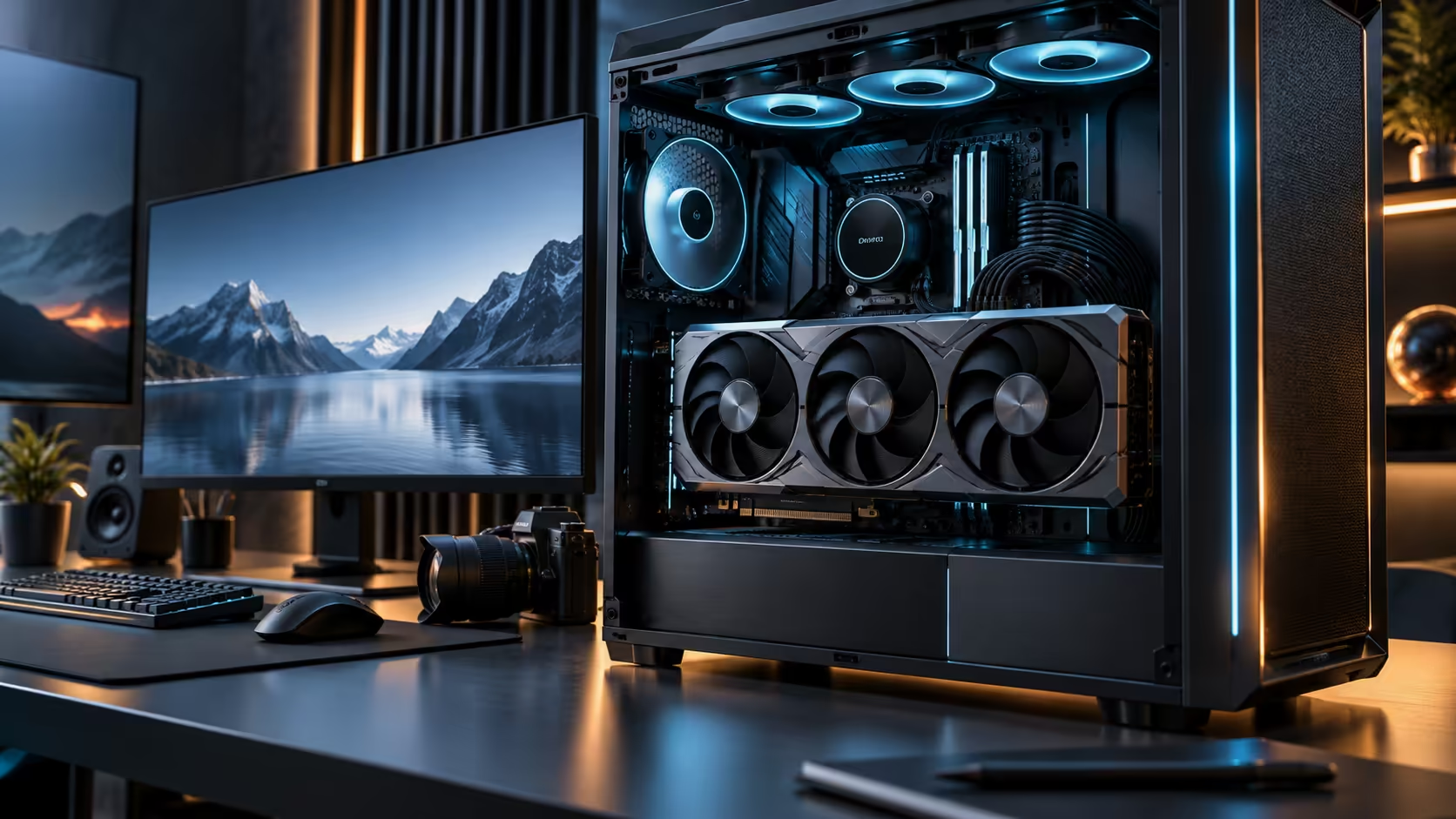
Three separate decisions get bundled into one purchase when you buy a card at this level, and treating them as one is how a build ends up mismatched. Choosing a premium GPU in South Africa means deciding on VRAM for your workload, a power supply for the card's draw, and a case for its footprint, in that order.
Quick Answer
Decide how much memory your work actually needs, then buy the power supply and case that let the card run at its full potential rather than fighting either one. A R119,999 flagship is only as good as the 230V power path feeding it and the airflow moving heat away from it, and in a warm South African home office that airflow is not a detail to leave until last.
🧠 VRAM: size it to your workload, not to the biggest number
Capacity needs differ sharply between gaming, content creation and AI work, and buying the largest available figure regardless of your actual use is not the same decision as buying the right figure for it. For gaming and general creative work, 32GB is comfortable headroom that carries you through several years of increasingly demanding software. For heavier professional rendering or AI work, check your specific project's real memory footprint rather than assuming any consumer card's capacity automatically covers it.
⚡ Power supply: South Africa's stable grid, your build's real headroom
The local 230V mains supply is stable, so the actual engineering question is giving the power supply room above the card's stated draw rather than running it near its ceiling continuously. This specific model draws through a 16-pin cabled connector and a slot-based GC-HPWR contact together, so the cabling has to satisfy both rather than one wattage figure alone.
🏠 Case: clearance and airflow for a South African room
Beyond simply clearing the card's physical dimensions, a case's airflow matters more in a warm home office than published lab-condition reviews will suggest, since a card drawing this much power heats the surrounding room as well as itself. A case with unobstructed front intake generally outperforms a sealed, style-first design once room temperature climbs past 30 degrees, so prioritise genuine airflow over looks alone.
Compare current power supply options rated with headroom for this tier of card, and check the case range for models rated for both the card's physical size and genuine airflow, not just one or the other.
🧭 A sensible order for making the three decisions
Decide VRAM first because it is workload-specific and effectively fixed once the card ships, since memory cannot be added to a graphics card the way it can to a motherboard. Decide the power supply second, since its connector requirement and wattage headroom are dictated entirely by whichever card the first decision produced. Decide the case last, since case clearance and airflow needs are dictated by both the card's physical dimensions, 361mm on this model, and the power supply's own size, particularly in a compact build where every component's footprint competes for the same limited space.
Working through the three in this order, rather than shopping for all three simultaneously, avoids the common mistake of buying a case or supply that later turns out to constrain which card actually fits, when the card was meant to be the starting decision all along. Check the graphics card lineup first, before pricing anything else on this list.
Frequently Asked Questions
How much VRAM do I actually need for my specific use?
It depends on your workload: 32GB is comfortable headroom for gaming and general creative work, while heavier professional rendering or AI work should be checked against your specific project's real memory footprint.
Does South Africa's power grid need special consideration for this build?
The mains supply itself is stable at 230V. What actually needs planning is enough headroom between the supply's rated output and the card's draw that it never sits near its ceiling for long stretches.
Why does case airflow matter more here than in a review lab?
Reviews are typically conducted in climate-controlled conditions, while a South African home office runs warmer during summer, so airflow margin that looks unnecessary in a lab test can matter in practice.
Is it worth waiting for a sale on a card this expensive?
If your build timeline allows it, waiting for a genuine promotion is reasonable, though avoid delaying a purchase indefinitely chasing a lower price while your current setup already struggles with your workload.
Does a bigger case than strictly necessary help with heat?
Some, since a roomier interior generally supports better airflow, but a well-ventilated compact case can still outperform a poorly ventilated large one, so airflow design matters more than sheer internal volume alone.
Should I prioritise VRAM, power supply, or case first?
VRAM first, since it is workload-specific and fixed once the card is chosen, followed by a power supply matched to the card's exact connector, and a case sized and ventilated for both.
Ready to choose a premium GPU as three connected decisions, not one?
Size memory to your workload, then match power and case to the card you land on.