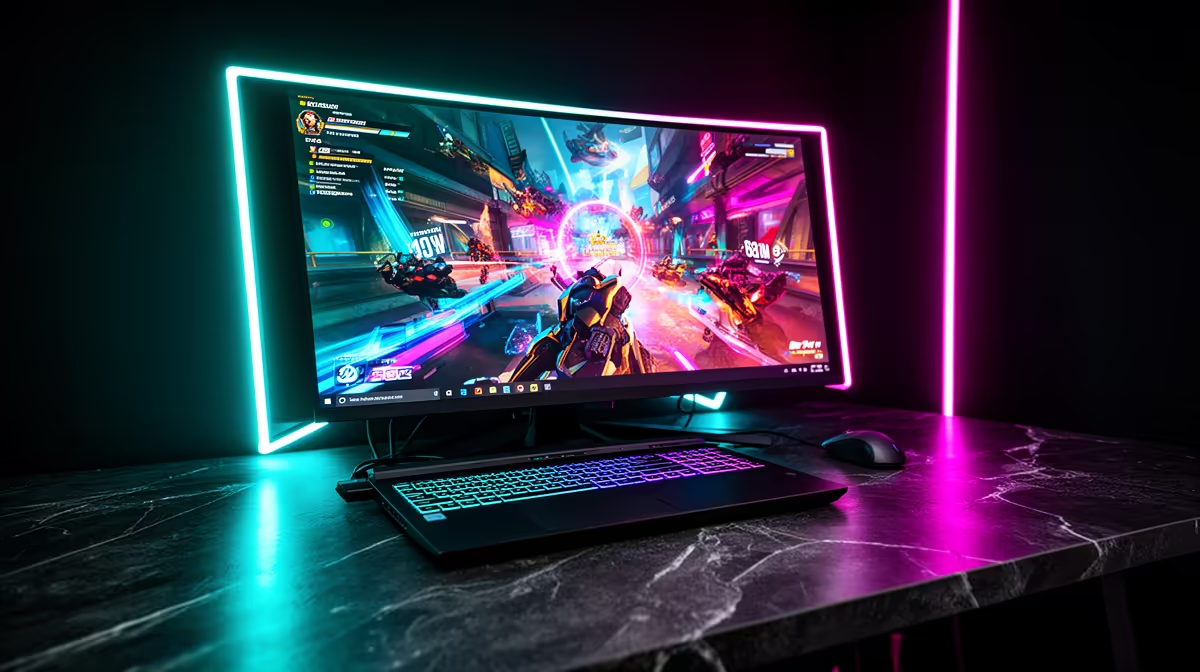
External Monitor Refresh Rates for Gaming Laptops Explained
Quick Answer
A monitor reaches its advertised refresh only when the laptop output, cable, adaptor and monitor input support the chosen resolution, colour depth and timing. The weakest part of that path sets the limit.
Do not rely on the connector shape or a version number alone. HDMI implementations vary, and USB-C can carry different DisplayPort lane configurations or no video at all. Read the laptop manual and monitor input table for the exact mode.
Connect directly before adding a dock. A dock can share bandwidth across displays, USB devices and networking, which may reduce refresh.
Step 1: Define the Mode You Want
Write the complete target: resolution, refresh, colour depth, HDR state and adaptive sync. "High refresh" leaves too much unanswered.
For example, 1920 x 1080 at 240Hz needs less video bandwidth than 3840 x 2160 at 144Hz. Raising colour depth or chroma quality adds demand.
The monitor manual should list supported timings per input. A screen may reach its top mode over DisplayPort while HDMI stops lower.
Step 2: Map Every Laptop Port
Identify each HDMI, USB-C, Mini DisplayPort or full-size DisplayPort output. Read the laptop specification and manual for their supported video modes.
USB-C is a shape. Video needs a supported alternate mode or Thunderbolt or USB4 display path. The number of DisplayPort lanes and the link rate influence the result.
Two USB-C sockets on the same laptop can differ. Use the port markings and diagram rather than trying cables at random.
Step 3: Check Which GPU Drives It
A gaming laptop can wire one output to the dedicated GPU and another through integrated graphics. That changes adaptive-sync support, available settings and performance.
Use the maker's topology diagram, GPU control panel or a model-specific review. A MUX switch may change the internal panel route without changing every external port.
If a game runs slower on the external screen, check resolution before blaming routing. A move from 1080p to 1440p adds about 78 percent more pixels.
Step 4: Understand HDMI Limits
HDMI capability depends on the transmitter, receiver and supported signalling mode. A product described with a broad HDMI generation may not implement every optional feature or maximum rate associated with it.
Read the exact maximum resolution and refresh from the laptop maker. Then confirm the monitor reaches that mode on its HDMI input.
Features such as variable refresh, HDR and display compression need support at both ends. A suitable certified cable completes the path.
Step 5: Understand USB-C and DisplayPort
DisplayPort over USB-C can carry high-resolution, high-refresh video, but available bandwidth depends on link rate and how lanes are shared with USB data.
A USB-C dock may reserve lanes for Ethernet, storage and other ports. Some docks use display compression or a USB display technology with another performance and compatibility profile.
For the cleanest gaming test, use a direct USB-C-to-DisplayPort cable when the laptop supports the required mode. Add the dock after the direct result is known.
Step 6: Account for Display Stream Compression
Display Stream Compression can fit a higher display mode into the available link when GPU and monitor support it. The standard is designed for visually lossless output.
Do not assume DSC is active because a port generation can support it. Check the exact laptop GPU path, driver and monitor input.
When a top refresh option is missing, review the manual before dropping colour settings or installing unofficial tools.
Step 7: Choose the Right Cable or Adaptor
A cable can be the bottleneck. Use the monitor-supplied lead or a suitable certified cable rated for the required link.
Passive and active adaptors serve different conversions. An adaptor may cap resolution, refresh, HDR or adaptive sync even when its connectors fit.
Keep the first setup simple: laptop, one cable, one monitor. Add KVM switches, capture devices and docks after the mode works.
Step 8: Set Refresh in the Operating System
Windows can default a new display to 60Hz. Open advanced display settings and select the intended refresh.
Then check the GPU control panel. PC-resolution and television timing sections can expose different colour and refresh choices.
Use the monitor information menu to confirm the incoming signal. A desktop that feels slow may be receiving 60Hz despite a 165Hz panel.
Step 9: Test Adaptive Sync and HDR
Turn on adaptive sync in the monitor and graphics software. Confirm that the chosen connection supports it through the desired range.
HDR can change colour depth and bandwidth. If the maximum refresh disappears when HDR is enabled, check the documented mode combination.
Watch for blanking, sparkles or wake failures. Those signs can point to a marginal cable, adaptor or unsupported timing.
Step 10: Decide Whether a Dock Belongs
A dock is convenient for keyboard, network and charging. It is not a refresh-rate booster.
Choose one only after matching its upstream link, display outputs and multi-monitor limits with the laptop. Check whether it supports the gaming features you need.
Some laptops cannot accept their full gaming power through USB-C charging. Keep the approved high-power charger connected when required.
Shop From the Full Connection Plan
Browse current PC monitor options around the resolution and refresh your laptop can output. Compare popular monitor choices, then open each exact specification for input limits and sync support.
Do not pay for 240Hz when the laptop tops out at 144Hz for that resolution, unless the monitor is intended for a future machine. A good 165Hz panel can be the better complete desk fit.
Keep stand depth, height adjustment and warranty in the decision. Bandwidth gets the image to the screen; ergonomics determine how it feels all day.
Troubleshoot a Missing Refresh Option
Confirm native resolution, direct connection and correct monitor input. Try the certified cable supplied for that mode.
Update GPU drivers and laptop firmware through official sources. Reset monitor input settings only after recording the current configuration.
Test without the dock or adaptor. If the mode appears, you have found the limiting part of the path. If it remains absent, compare the laptop and monitor timing tables again.
FAQ
Why can a laptop port cap refresh?
The video link carries a fixed amount of data. Resolution, refresh, colour and display features share that capacity.
Is HDMI or USB-C faster?
Neither connector name wins by itself. The exact HDMI mode or DisplayPort-over-USB-C implementation decides the available link.
How do you check actual bandwidth?
Use the laptop manual's supported display modes, the GPU path and the monitor input table. A version label alone is incomplete.
Can a dock raise refresh?
No. It can expose a compatible output, but it cannot create bandwidth beyond the laptop link and dock design.
Does resolution affect achievable Hz?
Yes. More pixels per frame consume more link capacity, leaving less room for refresh and colour depth.
Write down the full display mode, verify it in both manuals, and prove it with one direct certified cable before adding a dock.