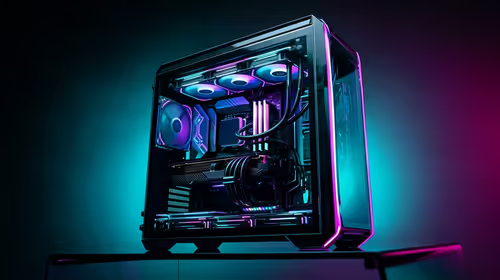
Staring at a render bar crawling across your screen is a special kind of pain for any creator. That’s precious time and creative momentum… gone. What if your machine could keep up with your ideas? Building a future-proof video editing PC isn’t about buying the most expensive parts; it’s about making smart, strategic choices. This guide will walk you through crafting a powerhouse rig that will crush 4K timelines today and be ready for tomorrow’s 8K challenges. 🚀
The CPU: Your Editing Rig's Engine
The Central Processing Unit (CPU) is the heart of your video editing workflow. It handles tasks like decoding footage, running software, and, most importantly, encoding your final export. When building a PC for video editing, the debate often comes down to core count versus clock speed.
More cores help your PC multitask and blaze through rendering, while a higher clock speed makes the software itself—like scrubbing through your timeline—feel snappier. For a modern future-proof video editing PC, you need a healthy balance of both.
Fortunately, both sides of the aisle offer incredible options. Team Blue provides fantastic single-core performance which is great for timeline responsiveness, and you can explore some powerful Intel PC deals to see what fits your budget. On the other hand, Team Red is famous for its multi-core dominance at great value, making their chips render monsters. Checking out the latest AMD Ryzen PC deals is a must for any serious editor.
The GPU: The Visual Accelerator ⚡
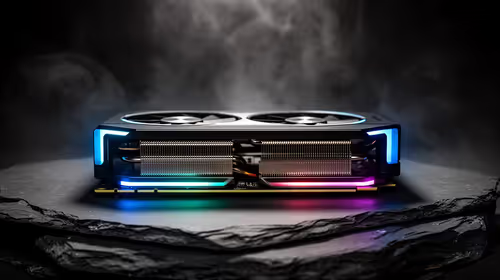
While the CPU is the engine, the Graphics Processing Unit (GPU) is the turbocharger. Modern editing software leverages the GPU to accelerate colour grading, apply effects, and stabilise shaky footage in real-time. Without a capable GPU, you'll be staring at a "Media Pending" screen far too often.
The most critical spec here is VRAM (video memory). For 4K editing, 8GB of VRAM is a good starting point, but aiming for 12GB or more is a key step toward future-proofing your build.
NVIDIA's CUDA cores are exceptionally well-supported in the Adobe Creative Suite, giving them a strong edge for many professionals. You'll find these powerful cards in many of our top-tier NVIDIA GeForce gaming PCs, which double as incredible creative workstations. However, don't overlook AMD's offerings; their recent GPUs deliver amazing performance in programs like DaVinci Resolve, and our selection of AMD Radeon gaming PCs offers fantastic value for money.
RAM & Storage: The Unsung Heroes
You can have the best CPU and GPU in the world, but without enough fast RAM and storage, your system will feel sluggish. These components are crucial for a smooth, frustration-free editing experience.
How Much RAM Do You Need?
For video editing in 2024 and beyond, 16GB is the absolute minimum, but 32GB is the real sweet spot. It allows you to comfortably edit 4K footage while running other applications like After Effects or your web browser. To truly build a future-proof video editing PC, consider 64GB. This gives you massive headroom for complex timelines, 8K footage, and demanding visual effects work.
Storage Speed Pro Tip 🔧
Dedicate a separate, fast NVMe SSD just for your project files, media cache, and scratch disks. In apps like Adobe Premiere Pro or DaVinci Resolve, this prevents your OS drive from becoming a bottleneck. Your timeline will feel incredibly responsive, especially when scrubbing through 4K footage. You can set this up in your project settings!
A Smart Storage Strategy
The ideal setup uses a multi-drive solution to optimise speed and organisation:
- Drive 1 (OS & Apps): A fast NVMe M.2 SSD (500GB - 1TB). This ensures your PC boots in seconds and your editing software loads instantly.
- Drive 2 (Active Projects & Cache): A second, even faster NVMe M.2 SSD (1TB - 2TB). This is where you store your current project files and media cache. It’s the secret to seamless timeline scrubbing.
- Drive 3 (Archive & Storage): A large Hard Disk Drive (HDD) or SATA SSD (4TB+). Once a project is complete, move it here for long-term storage, keeping your lightning-fast SSDs free for active work.
Putting It All Together: Balance is Key
The final piece of this ultimate build guide is synergy. A powerful system is more than just a list of expensive parts; it's about how they work together. A capable motherboard, a reliable power supply unit (PSU), and effective cooling are essential to ensure your components run at their peak without throttling.
For professionals whose livelihood depends on performance and stability, investing in one of our purpose-built dedicated Workstation PCs can be the smartest move. These machines are designed and tested for maximum uptime in demanding creative workflows.
If you love the idea of a perfectly balanced machine without the headache of building it yourself, exploring our expertly configured pre-built PC deals is the perfect solution. You get a powerful, future-ready rig, built by pros and ready to go right out of the box. ✨
Ready to Build Your Creative Beast?
Crafting the ultimate editing rig is a journey. Whether you're a seasoned pro or just starting, having the right hardware makes all the difference. Explore our massive range of PC deals and find a machine built to bring your vision to life, render-free.