Quick Answer
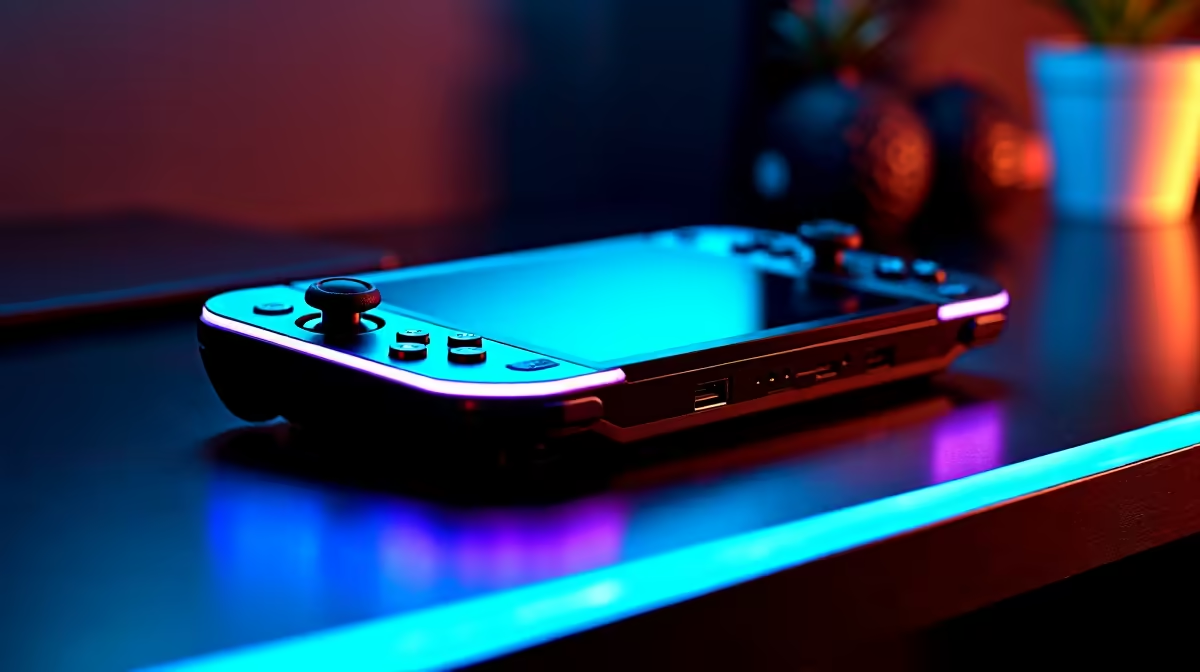
For an RGB-led setup, compare handhelds on the chip, screen and cooling that drive frames, not the lighting: a Ryzen Z1-class device with a 7-inch 1080p screen hits a smooth 50-70 fps in most titles for R14,000-R18,000. RGB is cosmetic, so let performance and battery life decide, then enjoy the lights as a bonus.
What to actually compare
Ignore the glow and weigh the APU first: a Ryzen Z1 Extreme or equivalent with 16GB LPDDR5 pulls clearly ahead of older or cut-down chips in demanding games, often the difference between 45 fps and 70 fps at the same settings. Then the screen, where a 7-inch 1080p 120Hz panel benefits from the extra frames a stronger chip provides, and finally the cooler, since a thin chassis throttles a sustained 30W APU and erases the on-paper advantage. RGB accents draw a watt or two and change none of this.
Match the device to how you play
If your RGB rig is mostly a docked living-room machine, prioritise a handheld that outputs cleanly to a TV and pairs with a controller; if it travels, favour battery life and weight. A 16GB-32GB RAM spec and a 512GB NVMe keep modern titles and shaders loading without stutter. Treat lighting as the tiebreaker between two devices that already perform the same, never as a reason to pay more.
Buying it in South Africa
Evetech ships handhelds nationwide, and the value bracket is R10,000-R14,000 for capable units, rising to R16,000-R20,000 for flagships. Add a 512GB microSD rather than the most expensive internal storage tier, and confirm the warranty path before you buy. Spend on the APU and cooler, not on whichever device has the flashiest LEDs.
FAQ
Does RGB affect handheld gaming performance?
No. RGB lighting draws about a watt and has zero effect on frame rates, thermals or battery beyond a tiny drain. Buy the handheld for its chip, screen and cooling, and treat the lights as decoration.
Which handheld chip should I prioritise?
A Ryzen Z1 Extreme-class APU with 16GB LPDDR5 leads in demanding games, often turning 45 fps into 70 fps versus weaker chips. The processor and cooler matter far more than any cosmetic feature.
How much storage does a handheld need?
A 512GB NVMe plus a 512GB microSD comfortably holds modern games with shader caches. That combination is cheaper than the top internal storage tier and easy to expand later.
Compare handhelds by chip, screen and cooling, then add the best performer for your setup to your cart at Evetech.