A DDR5 Windows 11 build can hitch when memory runs at JEDEC defaults, when XMP or EXPO is off, or when ranks are mismatched. The fix is in BIOS memory setup far more often than in the GPU.
Quick Answer
Enter BIOS and enable the XMP or EXPO profile so DDR5 runs at its rated DDR5-6000 instead of a slow 4800 fallback. Matched speed and timings remove the memory-bound stutter that plagues fresh DDR5 builds, at no extra cost.
Confirm DDR5 is actually at speed
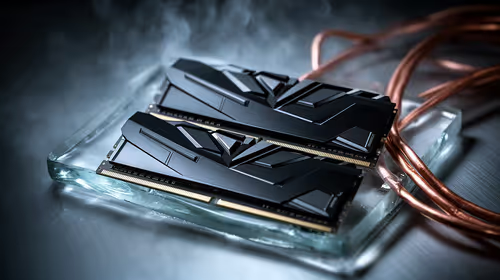
Fresh builds boot DDR5 at a safe 4800 until you enable the profile. Check the speed in Task Manager; if it reads 4800, your kit is loafing. Enabling XMP or EXPO restores the rated speed and steadier frame pacing. A 32GB DDR5-6000 CL30 kit is the value sweet spot, typically R1,500 to R2,500 in SA.
Timings, ranks and capacity
Two single-rank sticks at DDR5-6000 CL30 hit the sweet spot for gaming. Mixing kits or four dual-rank sticks can force slower training and hitching. Keep 32GB across two matched modules for a smooth, future-proof setup.
Stability and background checks
After enabling the profile, run a short memory test to confirm stability, since an unstable kit causes random stutter. Then disable overlays, update the GPU driver, and keep 15% free on the NVMe so caches do not stall. Run a quick memory test after enabling the profile so an unstable kit is caught before it causes random stutter.
FAQ
Why is my DDR5 running at 4800?
That is the JEDEC default until you enable XMP or EXPO in BIOS. Switch the profile on to reach the rated DDR5-6000 and smoother pacing.
Does mixing DDR5 kits cause stutter?
It can, because the board may train to slower shared timings or struggle to boot. Use a single matched 32GB kit for reliable speed.
How much DDR5 do I need for gaming?
32GB across two sticks is the current sweet spot. It avoids paging stutter while keeping memory training simple and fast.
Match a fast DDR5 kit to a board that posts it reliably.
Run DDR5-6000 CL30 on two matched sticks for smooth, stutter-free gaming.