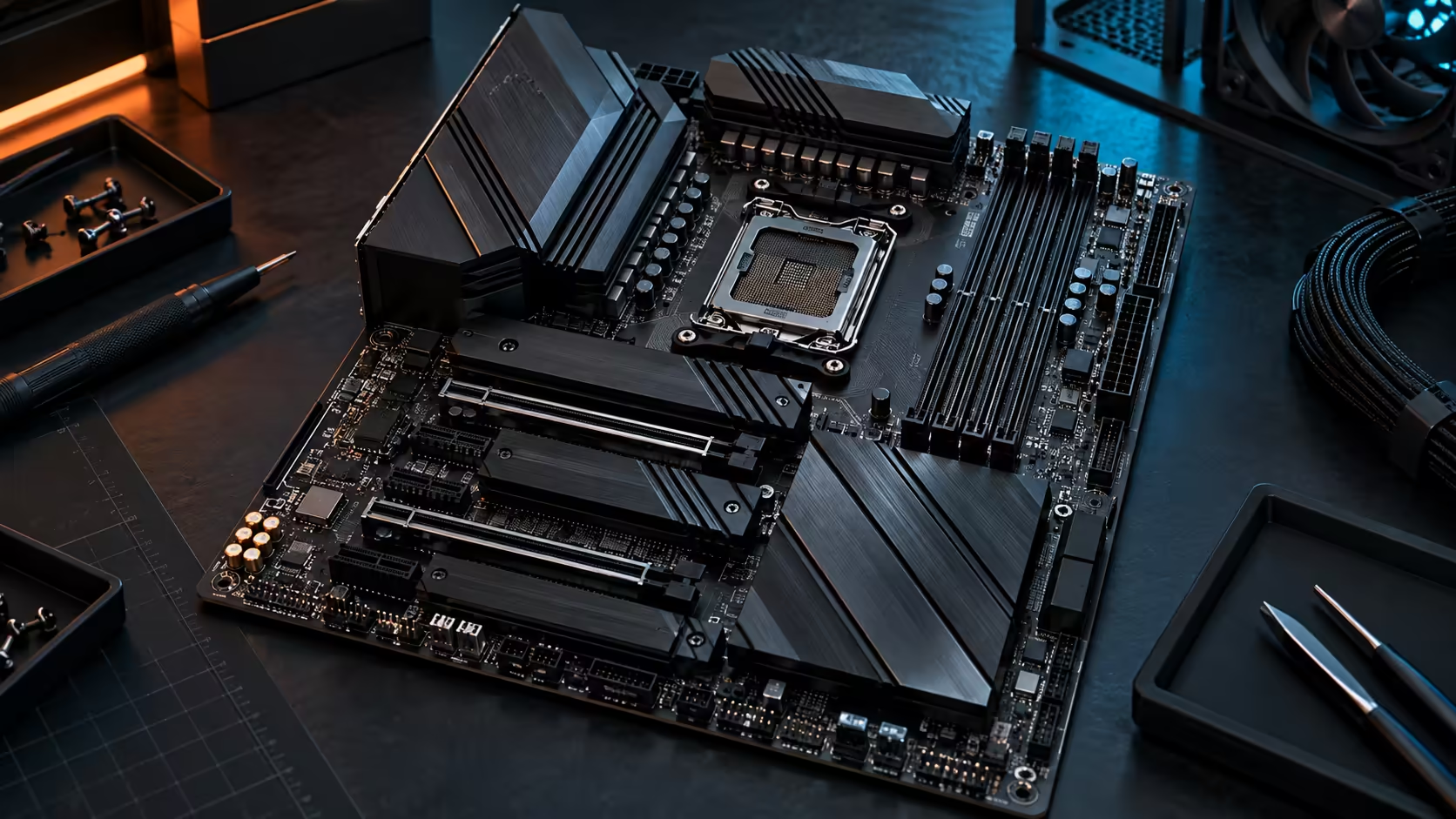
Most build guides put the graphics card at the top of the shopping list and the case at the bottom, which is backwards for anything wider than ATX. Planning an AM5 E-ATX PC build around a 360mm radiator means the case decision comes first, because a roof that will not clear the radiator and its fans makes every other choice academic. The ROG Crosshair X870E Edition 20 removes one variable from that puzzle by arriving with its own Ryujin 360 Edition 20 cooler already matched to it, for R54,999.
Quick Answer
Pick the case before the board: confirm E-ATX tray support and roof clearance for a 360mm radiator plus fans, which usually needs 55-80mm of depth depending on whether the fans sit inside or outside the roof. The R54,999 ROG Crosshair X870E Edition 20 arrives with its Ryujin 360 Edition 20 AIO already fitted to the socket, so cooling is one less line item once the case is confirmed. After that, RAM height and cable routing behind the tray are what decide whether the build looks planned or improvised.
🏗️ The case decision comes before the parts list
An E-ATX board runs close to 305mm wide against roughly 244mm for standard ATX, and that extra width has to clear the drive cages, front cable channels and PSU shroud that a case designs around the narrower standard. Buy the case first and measure the motherboard tray's stated E-ATX width against the dimensions listed for whichever model you pick from the AMD motherboard range, before anything else goes in the cart.
Roof clearance is the number that catches people out. A 360mm radiator is roughly 396mm long once the end tanks are included, and that has to run across the case roof without hitting the top of the RAM slots or a reinforcement bar. Push-only mounting, radiator plus one set of fans, needs about 55mm; push-pull with fans on both sides needs closer to 80mm. Check which the case roof actually supports before assuming push-pull is available.
🧊 Cooling is already decided, which frees up budget elsewhere
Most E-ATX builds spend real money working out which 360mm cooler suits a high-core Ryzen chip. This board removes that decision: the Ryujin 360 Edition 20 ships fitted to the Crosshair X870E and is priced into the R54,999 total, complete with its swivel dual 6.67-inch curved AMOLED display on the pump block.
That changes the order of spending. With cooling settled from the box rather than shopped for separately in the liquid cooler range, the next real decision is the graphics card, and the board's two PCIe 5.0 x16 slots mean a full-length card is never a fit problem, only a case-length one. Confirm the case's stated maximum card length against the card you actually want before finalising the full tower case, because a 360mm roof radiator and a 340mm card both compete for the same internal depth.
🧩 Assign your storage and memory slots before the board goes in
Five onboard M.2 slots come with the board, and deciding which drive goes where matters more once the graphics card is fitted, because the primary slot usually sits directly under it. Map boot drive, active project drive and game library to specific slots using the manual's block diagram before you have a card blocking the view.
Memory goes in next, and DDR5 modules on a board rated for 8600+MT/s often carry taller heatspreaders than budget kits. Measure the gap between the DIMM slots and the radiator's mounting rail before buying RAM, since a 360mm roof radiator on some E-ATX layouts sits closer to the top DIMM slot than a smaller radiator would.
🔧 A build order that avoids redoing work
Fit the board and its bundled cooler as a single unit onto the tray first, since the Ryujin 360 arrives pre-mounted and only needs its tubing routed to the roof. Install the case fans and confirm the radiator clears everything before locking it down. Route the 24-pin and CPU power cables behind the tray next, while access is still open.
Fit RAM and the M.2 drives before the graphics card goes in, not after. A GPU installed early blocks the lower-board M.2 slots and the memory clips on many boards, turning a two-minute job into a card removal and reinstall. The card goes in last, once everything under it is already seated and cabled.
Frequently Asked Questions
Does an E-ATX board fit in any case labelled "full tower"?
Not automatically. Check the case's stated E-ATX tray width against the board, since some full towers support ATX only despite the taller chassis.
How much roof clearance does a 360mm radiator actually need?
Around 55mm for radiator plus one set of fans, and closer to 80mm if you want fans on both sides of the radiator for push-pull airflow.
Do I still need to buy a cooler for this board?
No. The R54,999 price includes the Ryujin 360 Edition 20 AIO, already sized and mounted to the socket.
Should the graphics card go in before or after the cables are routed?
After. Route power and case cables while the tray is still open, then fit RAM and M.2 drives, and leave the graphics card for last.
What is the main risk of buying the case last?
A confirmed-but-unmeasured roof clearance or tray width, which turns a finished parts list into a return once the radiator will not fit.
Ready to plan an E-ATX build that goes together in the right order?
Confirm your case's radiator clearance first, then build the rest of the list around the board and cooler you already have settled.