A mini PC can make a tidy home server because it sips power at idle, fits beside a router and still has enough CPU performance for backups, media and small self-hosted services. The catch is expansion. Before you buy, decide where the storage will live and how many jobs the box must run at once.
Quick Answer
Choose a mini PC for a quiet file server, home dashboard, media library or a few containers. Give it enough memory for the services you plan to run, use wired networking and keep important files on redundant storage with a separate backup. A tower remains the easier route when you need several internal drives, a discrete GPU or lots of PCIe expansion.
Start with the server's jobs
Write a short workload list. File sharing and automated backups ask little from the processor. A media server becomes heavier when it must transcode video for devices that cannot play the source format. A local game server or several virtual machines can consume memory and CPU threads for hours.
Avoid buying around a vague idea of "future proofing". Two clear jobs give you a useful starting point. You can add a service later after measuring headroom.
A modern four-core or six-core processor is enough for many homes. Hardware video support can matter more than core count for media. Check that your chosen server software can use the processor's media engine before relying on it.
Memory, storage and networking
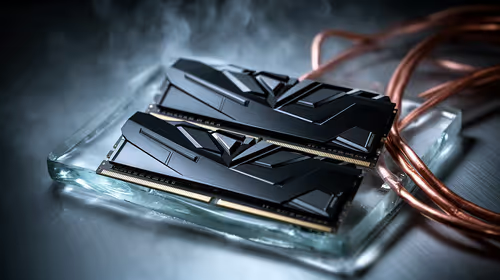
Eight gigabytes can handle basic file sharing and a light service stack. Sixteen gigabytes gives containers and caching more breathing room. Virtual machines, local databases and a busy game server may need more. Upgradeable SO-DIMM slots are valuable because soldered memory fixes the limit on day one.
The boot drive can be a modest SSD. Store replaceable media on an external drive or network enclosure, and keep irreplaceable files in more than one place. RAID can keep a service running after one drive fails, but it does not protect you from deletion, corruption or theft. A separate backup still matters.
Gigabit Ethernet is a sensible minimum. Faster networking helps when several PCs move large backups or edit files across the network, but every switch and client in the path must support it. WiFi is convenient for management; a wired link is the better backbone for an always-on box.
Browse compact gaming PC options and popular complete PCs as hardware references. Check the dimensions and expandability of each system rather than assuming every compact PC is a mini PC.
Plan for 24-hour duty
Low idle power is useful because a server spends much of its life waiting. Measure at the wall after setup if running cost matters to you. Disable unused lighting, choose a balanced power profile and let drives sleep only if that behaviour suits the workload.
Give the vents space. A small fan clogged with dust can become noisy and hot, so put the box where you can clean it. An inexpensive surge-protected UPS can give the server time to shut down during an outage, provided the operating system can receive its status.
Remote access needs care. Keep the operating system updated, use strong unique passwords and expose as little as possible to the public internet. A VPN into the home network is easier to control than forwarding several service ports.
A practical first build
For a first server, install the operating system on an SSD, connect one data drive and configure automated backups to a second destination. Add one service at a time. Watch memory use, storage temperature and network throughput for a week before expanding.
This approach shows you the real bottleneck. If media playback triggers transcoding, CPU or hardware video support may need attention. If backups crawl, inspect the network and drive before replacing the whole box.
Frequently Asked Questions
Keep recovery separate from uptime.
Write down how the server rebuilds after its boot SSD fails. Store configuration backups away from the box and test that a fresh installation can see the data. A server that runs for years but cannot be restored is fragile.
Use a second device to monitor whether services respond and whether backups complete. A quiet mini PC can fail without anyone noticing until the next time a file is needed.
Can a mini PC run all day?
Yes, if it has clear ventilation, stable storage and an operating system configured for unattended use. Check the individual model's cooling and support.
Do I need a powerful gaming GPU?
Most file, backup and home-automation servers do not. A discrete GPU is useful for specific compute or media workloads that support it.
Is an external USB drive safe for server storage?
It can work for media and backups. Use a good enclosure, monitor drive health and keep another copy of important data.
Compare compact PCs by idle-friendly hardware, memory upgrades, wired networking and the storage your home server needs.