When SA gamers ask about the AM5 platform, the useful answer is grounded in local pricing and real use, not hype.
Quick Answer
An AM5 motherboard showing freezing most often points to BIOS, memory training or driver issues rather than a dead board. Update to the latest BIOS, re-seat the RAM and reapply your EXPO profile. Work through these before an RMA. Most AM5 boards train a 32GB DDR5-6000 kit cleanly once the BIOS is current.
Common causes of freezing
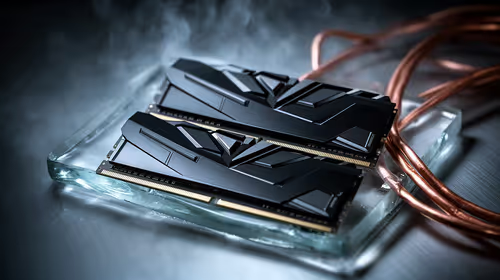
AM5 boards train memory on first boot, which can take a minute. Flash the newest BIOS, re-seat the DIMMs in slots A2 and B2, and reapply EXPO. Note whether the fault appears at idle, under load, or only during boot.
Memory and BIOS checks
Unstable EXPO timings cause many AM5 quirks. Try the default JEDEC speed to confirm stability, then reapply EXPO. A current BIOS often fixes display ghosting and boot issues outright. Keep one known-good RAM stick handy to isolate a faulty module.
Power and cooling
Confirm the 8-pin CPU power is fully seated and the PSU is sized for your GPU. Overheating VRMs on a budget board under a hot Ryzen can trigger shutdowns, so ensure airflow over the socket area. If issues persist after BIOS and driver work, log it for warranty.
When in doubt, put the spare budget toward the part that limits you most.
Keep your eye on real frame rates and daily comfort rather than spec-sheet bragging rights.
Plan a touch of headroom so the build still feels good a couple of years on.
FAQ
Why is my AM5 motherboard freezing?
Usually BIOS version or memory training. Update the BIOS, re-seat RAM in A2/B2, and reapply EXPO to stabilise the board.
Should I reset the BIOS?
Clearing CMOS to defaults is a quick, safe test. It rules out a bad setting, after which you reapply EXPO and your fan curves.
Is one RAM stick worth testing with?
Yes. Booting with a single known-good stick isolates a faulty module or slot, which is a common cause of AM5 instability.
the GPU or panel first; trim the case and peripherals to fit the budget.