Quick Answer
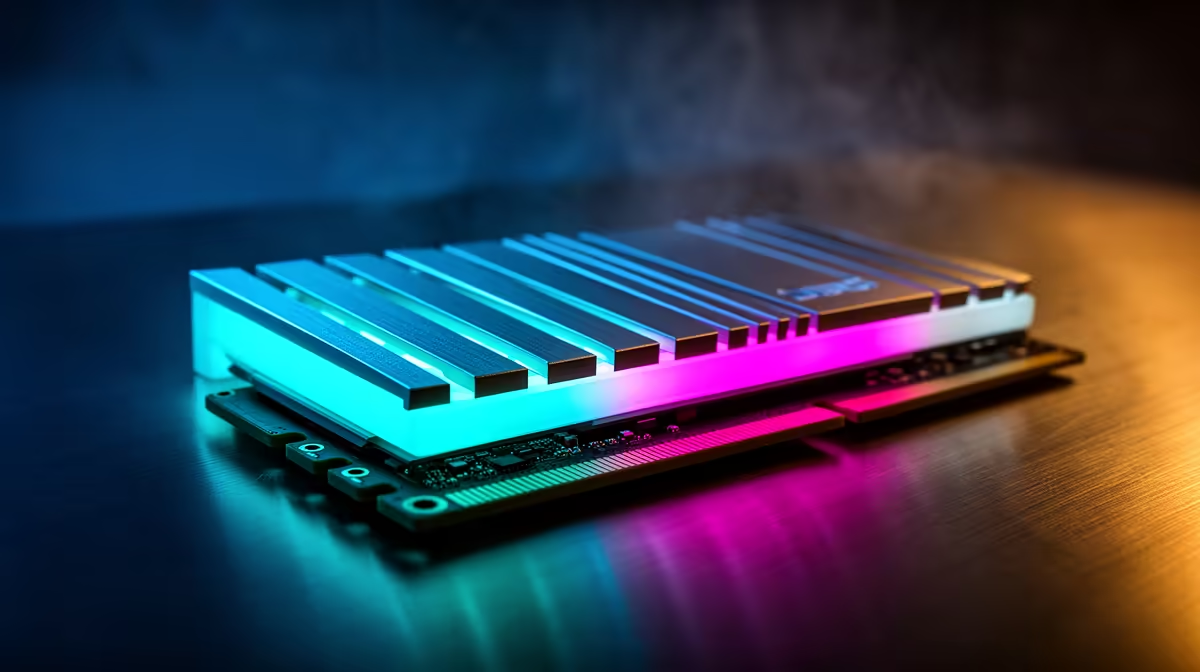
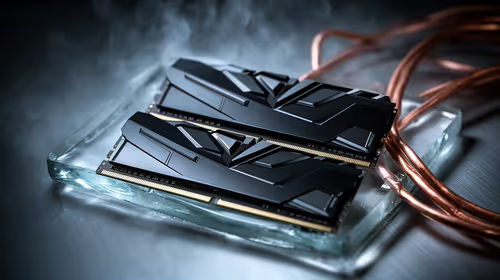
For a DDR5 build showing loud fan noise, start with evidence rather than a parts swap. Loud operation usually means heat, aggressive fan curves, dust, poor cooler contact, or a small cooler working too hard. Check temperatures and fan speed before replacing parts. a 32GB DDR5 gaming kit often sits around R1,800-R3,500, with high-speed RGB kits costing more, so a measured fix can prevent buying the wrong component.
Match Noise To Heat
If fans ramp while temperatures stay low, tune the curve. If noise rises with CPU, GPU, or SSD heat, fix airflow and cooler contact. Use named parts in your notes, such as Kingston FURY Beast DDR5-6000 32GB or G.Skill Trident Z5 DDR5 kit, so BIOS, driver, and support checks stay specific. For SA buyers, DDR5 stability is worth proving before buying another kit because mixed memory is harder to support.
Practical Noise Fixes
Clean filters, set a smoother fan curve, and keep cables away from fans. A 360 mm liquid cooler should not run flat out during basic browsing. Use concrete checkpoints such as 32GB capacity, 5600-6400 MT/s speeds, and EXPO or XMP profiles. If the issue began after a Windows update, test defaults and the same workload before calling hardware faulty.
Buy Or Repair Decision
Do not treat the category name as the diagnosis. A display symptom needs display testing, a stop code needs driver and memory checks, and a power-off event needs heat and PSU checks. For this DDR5 build, replace parts only when the same fault repeats at stock settings after driver, cable, heat, RAM, and storage checks.
FAQ
Is loud fan noise dangerous?
Not always, unless it comes with high temperatures, rattling, grinding, or sudden spikes.
Can updates make fans louder?
Yes, if background tasks or power profiles keep the CPU active.
What upgrade reduces noise?
Better cooling, smoother fan curves, and case airflow usually help most.
Practical check
Before spending on a DDR5 build, write down the trigger, temperature readings, driver version, BIOS profile, and one repeatable pass or fail result.