Quick Answer
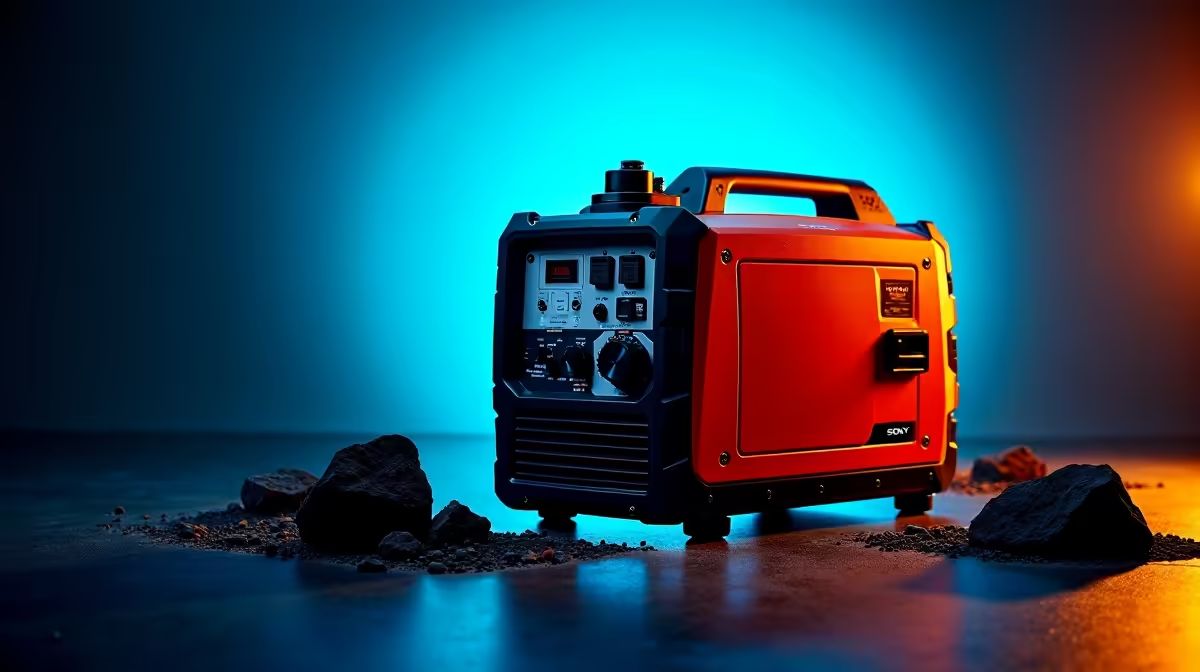
For use during an unexpected outage in South African municipalities, a petrol or inverter generator rated between 2kVA and 5kVA is the most practical choice for home use. Inverter generators are quieter, more fuel-efficient, and safer for sensitive electronics like PCs, monitors, and routers. Match the generator's continuous wattage rating to your actual load rather than just buying the biggest unit available.
Power Efficiency and Running Costs
This context shapes what kind of generator makes sense. You are not running a generator continuously for days, which means fuel cost and noise matter as much as raw power output.
For a typical SA household wanting to power lights, a router, a TV, and a laptop or desktop gaming PC during an unexpected outage:.
- A 2kVA petrol inverter generator handles most basic loads. A desktop PC, monitor, router, and a few lights will typically draw under 800W, well within a 2kVA unit's continuous output.
- A 3.5-5kVA unit is appropriate if you also want to run a fridge or a second appliance simultaneously.
- Above 5kVA is typically for workshop tools or larger homes with multiple rooms and appliances.
The inverter generator distinction matters specifically for gaming PCs. Standard generators produce power with inconsistent frequency and voltage fluctuation. Inverter generators produce clean, stable sine wave output, equivalent to utility power, which is safe for electronics. Running a high-end gaming PC or monitor off a dirty generator output is a risk not worth taking.
UPS vs Generator: Which Makes More Sense for SA Gaming?
For use during an unexpected outage specifically, a UPS (uninterruptible power supply) or a lithium power station often makes more practical sense for a gaming and home office setup than a petrol generator. Consider:
- UPS: Provides instant switchover with zero interruption. Ideal for protecting your PC during power cuts shorter than 30-60 minutes. No noise, no fuel, no fumes. The right choice for Stage 2-4 an unexpected outage where cuts are 2-4 hours and you want protection, not extended runtime.
- Petrol generator: Better for extended outages (Stage 6+, or municipality-specific extended cuts). Requires outdoor placement, produces fumes, needs fuel storage and management. More complex to run safely.
- Lithium power station: A silent, indoor-safe alternative to generators for medium loads. Can power a PC and monitor for 3-6 hours depending on capacity. More expensive per watt-hour than a petrol generator but far more convenient.
For SA gamers, a quality UPS handles the majority of an unexpected outage scenarios. A generator is the backup for extended cuts or for powering the whole home.
Electricity Use and Heat Output
A few critical safety and legal points for South African generator users:
- Never run a generator indoors or in an attached garage. Carbon monoxide poisoning from generator exhaust is a preventable tragedy that occurs every periods of unreliable mains power in SA.
- Do not back-feed the grid. Connecting a generator directly to your home wiring without a transfer switch is illegal and dangerous to Eskom workers doing maintenance during outages.
- Fuel storage: Store petrol in approved fuel containers away from the home. Petrol shelf life is limited, so only store what you will use within 1-2 months.
- Start the generator before your PC is connected: Let it stabilise for 60 seconds before plugging in electronics, even with an inverter generator.
FAQs
How Does Power Efficiency Affect Running Costs?
A 2kVA inverter generator is sufficient for a mid-range gaming PC, monitor, router, and a few lights. High-end builds with multiple monitors and RGB peripherals may draw closer to 600-800W, still within a 2kVA unit's continuous rating.
What Power Protection Does This Setup Need?
For most SA gamers and home office users, a UPS or lithium power station is more practical than a generator. If a UPS is required, size it for a controlled shutdown against the measured load of the complete setup. Generators make more sense for extended outages or whole-home power needs.
What Power Protection Does This Setup Need?
A 2kVA inverter generator at 50% load typically consumes 0.8-1.2 litres per hour.
Ready to Find Your Perfect Match?
Protect your gaming setup and home office from an unexpected outage with a quality UPS. Shop UPS Units at Evetech