Cable waste is driven far more by how often a cable gets thrown away than by what it happens to be made from, which changes where the real environmental lever sits for anyone actually trying to reduce it.
Quick Answer
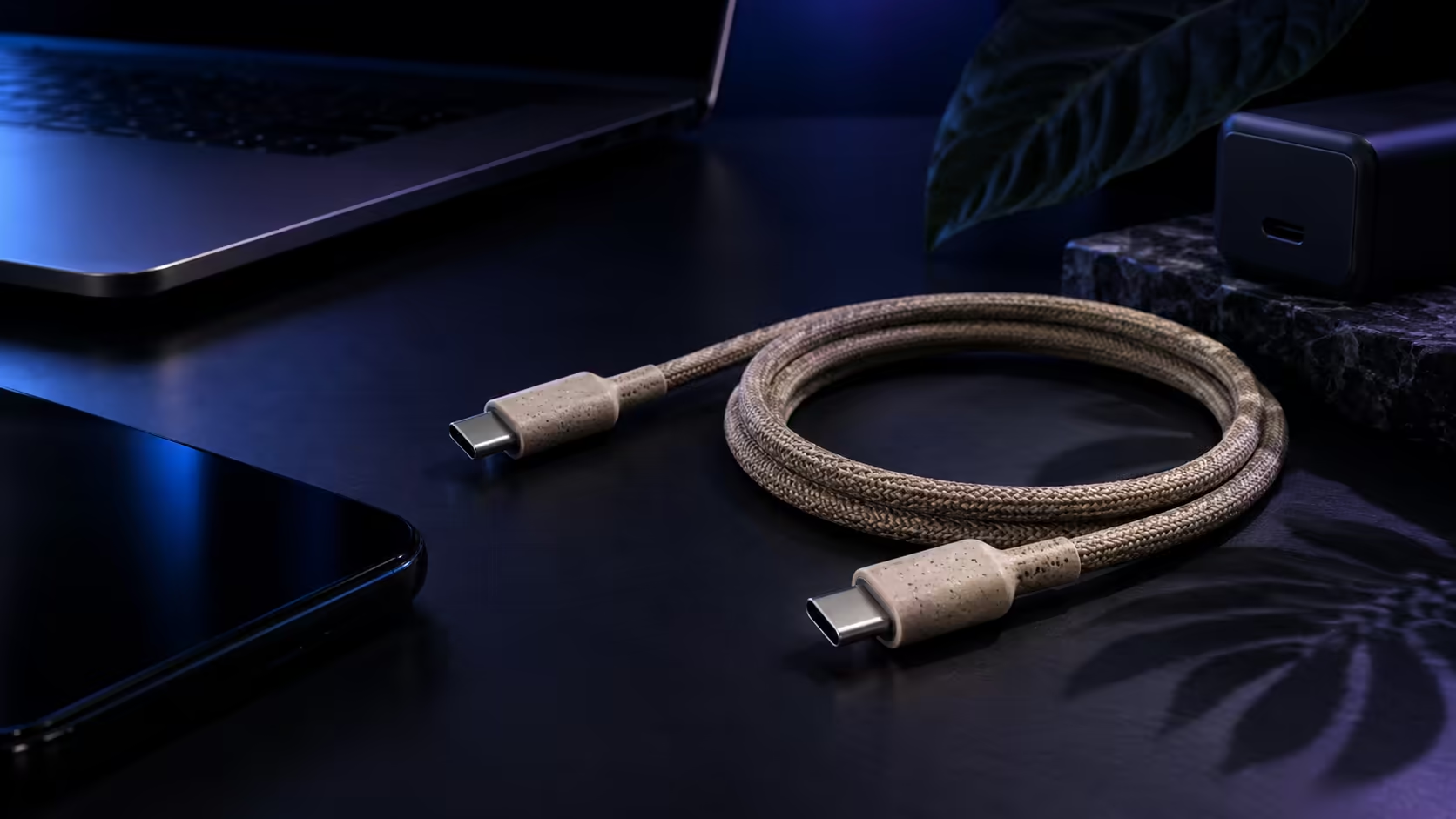
Cable waste is a replacement-rate problem, so a jacket rated to 30,000 bends does more for it than any recycling bin. Bio-nylon shifts part of the feedstock away from fossil sources too, and the Anker 544 puts both into one R399 cable.
♻️ Why replacement rate matters more than material choice
A USB-C cable that survives 4 years instead of 1 year prevents three entire units from ever needing to be manufactured, shipped and eventually discarded, which outweighs almost any material substitution made to the cable that does get thrown away. This is the uncomfortable arithmetic behind cable waste: buying fewer cables, by buying ones that actually last, does more environmental work than any single material choice on its own.
🌱 What bio-nylon changes, and what it does not
Bio-based nylon replaces part of the petroleum feedstock that goes into a standard nylon braid, shifting the material's origin without changing its mechanical performance. The Anker 544's exterior is 46% bio-based nylon, which is a genuine reduction in fossil-derived material for the portion of the cable it covers, though on its own it tells you nothing about how many years the finished cable will actually hold up under real use.
🧵 Durability is the bigger lever, and this cable pairs both
The Anker 544, from the comprehensive cable range, combines that 46% bio-nylon content with a published 30,000-bend rating, addressing both halves of the waste problem at once: a lower-impact material for the portion that matters, and a durability figure aimed at extending the cable's working life well beyond what an unrated, frequently replaced cable manages. Anyone clearing out a whole drawer of tired old cables in one go, rather than swapping them individually as each one fails, will find our accessories range and gaming accessories collection cover the rest of the list.
Frequently Asked Questions
Does bio-nylon cost more than a standard nylon braid?
Generally the difference is modest, since the change affects the source of the raw material rather than the manufacturing process itself.
Is a bio-nylon cable recyclable at the end of its life?
Recyclability depends on local facilities and the specific materials used throughout the cable, including the internal conductors, so check what recycling options exist in your area rather than assuming bio-based content alone solves disposal.
Does buying one durable cable really reduce waste more than buying recyclable ones?
Yes, in most realistic comparisons, since preventing a replacement cable from being manufactured at all avoids more material and energy use than recycling an equivalent cable after it fails.
Should I prioritise bend rating or bio-based material when choosing a cable?
Bend rating first, since it determines how many replacement cables you avoid needing altogether, with bio-based material as a genuine but secondary benefit on top.
Ready to cut down on cable waste at the source?
Buy fewer, longer-lasting cables rather than chasing material claims alone.