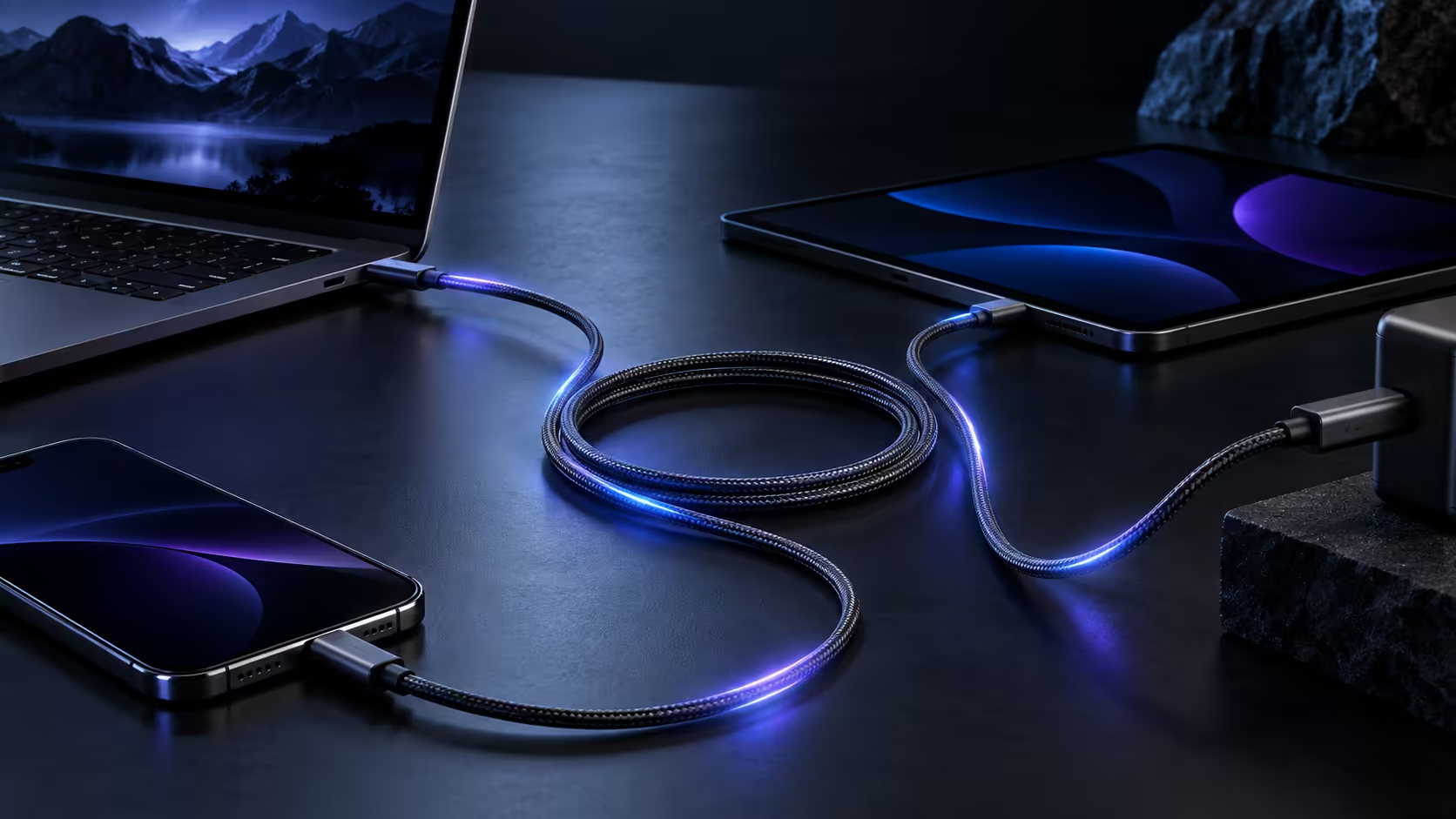
140W USB-C charging cables get treated as a single category, but the actual experience differs sharply depending on whether a laptop, a tablet or a phone ends up on the other end of the connection.
Quick Answer
A 140W rating is a ceiling that suits a large laptop and simply goes unused by a tablet or a phone. Nothing needs configuring: the R399 Anker 544 carries 140W and above, and each device asks for the voltage and current it wants when it is plugged in.
💻 Laptop compatibility: where the full rating matters
A demanding laptop, such as a 16-inch MacBook Pro, is the one device category that genuinely needs the full 140W a properly 5A-rated cable, the sort listed in the comprehensive cable range, is built to deliver, since many current large or workstation-class machines draw anywhere from 96W up to that ceiling to charge at their fastest rate. Anything less than a genuine 5A cable caps that connection at 60W regardless of how capable the laptop's own charger is.
📱 Tablet compatibility: comfortably covered, rarely maxed out
Most tablets on our tablets range, even fast-charging ones, request somewhere well below the 140W ceiling this class of cable offers, typically in a range a standard 3A cable could already handle. A 140W cable works perfectly with a tablet, it simply carries far more headroom than the tablet will ever actually use, which is not a problem, just an unused capability.
📞 Phone compatibility: the ceiling barely gets touched
Phones request the least power of the three categories, usually well under 30W even at their fastest charging speed, so a 140W cable is comfortably overqualified for this specific use. The advantage here is not speed, since the phone itself sets its own ceiling, but simplicity: the same cable serving a laptop can charge a phone without any need to check compatibility first.
🔋 Why the underlying negotiation makes this all possible
None of this cross-device compatibility would work without USB Power Delivery's handshake process running fresh at every single connection, checking what the source can supply, what the cable can carry, and what the device actually wants before any real current flows. It is this ongoing negotiation, rather than anything especially special about the 140W rating itself, that makes it safe and genuinely sensible to use one capable cable across an entire household's worth of devices without a second thought.
🏠 What this looks like across a real household
Picture a home with a large workstation laptop, a mid-range tablet used for reading and video calls, and a couple of phones charging overnight, all served by identical 140W-rated cables from the same drawer. The laptop pulls its full rate, the tablet settles somewhere well below the ceiling, and the phones request less again, each without a single setting changed on any of the three device types. This is exactly what a shared drawer of identical high-rated cables buys a household: nobody has to remember which specific cable was meant for which specific device.
🛒 What buying to the top of the range actually saves
Beyond the convenience of not checking labels, standardising on 140W-rated cables across a household means a single restock decision covers every future purchase too. Whenever a cable needs replacing, whether it frayed, went missing, or simply wore out, the replacement decision is already made: buy the same 140W-rated option again, confident it will work with whatever gets plugged into it next, laptop included, without needing to reconsider the class each time.
🔄 What happens if devices are swapped between cables
Moving a cable from the laptop to a phone and back again the next day changes nothing about how either device charges, since the negotiation process runs fresh every single time a connection is made. There is no need to "reset" a cable or worry that it has somehow become optimised for one device over another; a 140W cable behaves identically on its hundredth connection as it did on its first, regardless of which specific device happened to be on the other end each time.
Frequently Asked Questions
Will a 140W cable charge a phone faster than a lower-rated one?
No, provided the lower-rated cable already meets the phone's own maximum charging speed. The phone's own hardware sets the ceiling for it, not the cable's unused extra headroom.
Is there any risk in using a 140W cable across laptops, tablets and phones interchangeably?
No risk at all. Each device negotiates its own appropriate power level during connection, regardless of how much more the cable is capable of carrying.
Does a 140W cable ever fail to work with a lower-power device?
No, the negotiation process is designed to scale down safely to whatever a connected device actually requests, with no compatibility issue at the lower end.
Should I buy separate cables for my laptop, tablet and phone?
Not necessarily. One 140W-rated cable comfortably serves all three, which is generally simpler than managing several different cables rated for different devices.
Does a 140W cable ever run warmer when charging a low-power phone?
No noticeably. A cable's temperature during use is driven by the actual current flowing through it, which for a phone stays low regardless of the cable's much higher theoretical ceiling.
Is a 140W cable overkill for a household that only owns phones and tablets?
For that specific household, yes, a standard 3A cable already covers everything comfortably. Buying the higher class only pays off the moment a laptop or another demanding device eventually joins the mix in that same house.
Does a visiting guest's laptop create any issue plugging into a household's shared 140W cable?
No, the negotiation process works identically regardless of who owns the laptop, so a guest's machine charges at whatever rate its own charger and the cable's rating together allow, exactly as it would at home.
Is it worth labelling household cables by device type even if they are all rated the same?
Not really, since the whole point of standardising on one high-rated class is removing the need to sort or label cables by which device they are meant for in the first place, freeing everyone in the house from a small habit they never actually needed to build in the first place.
Ready to simplify charging across every device you own?
One 140W cable covers a laptop, a tablet and a phone without any compatibility checks needed.