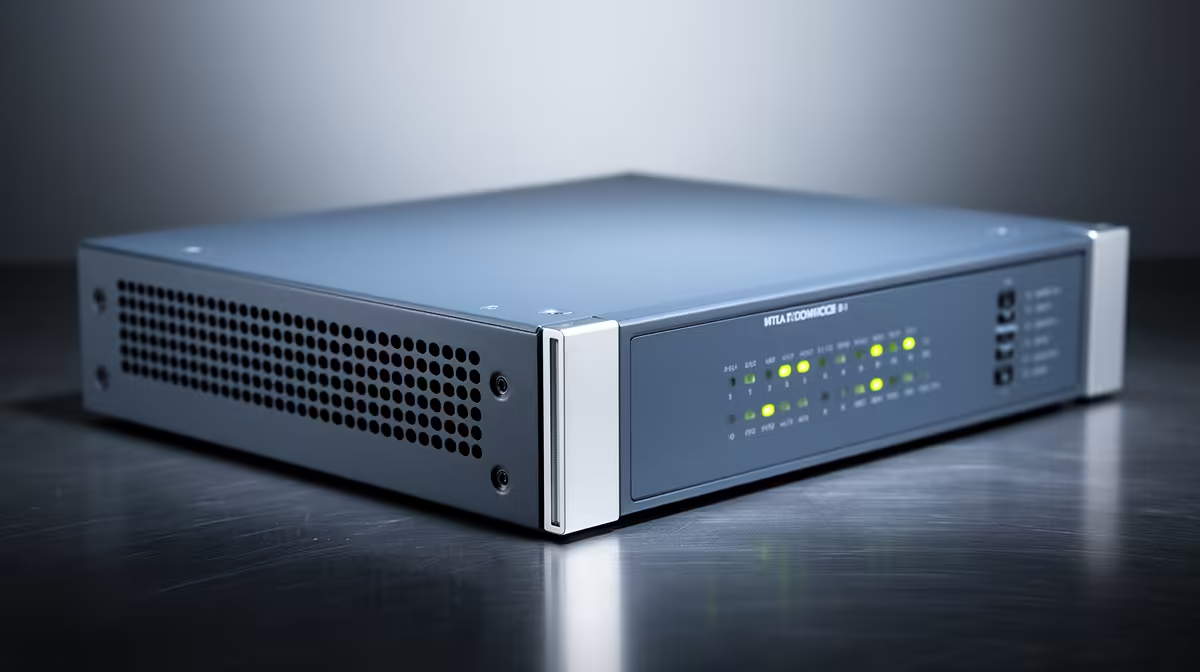
A 2.5GbE switch is rarely necessary for a small-business POS because transaction traffic is modest. It becomes worthwhile only when the same network moves large local backups, camera footage or other data between devices that all support faster Ethernet.
Audit every port and workflow
List tills, payment devices, access points, cameras, servers and uplinks with their actual port speeds. Time a business backup and observe transaction stability during the busiest period. Confirm whether internet speed or Wi-Fi coverage, rather than local switching, is the bottleneck.
No 2.5GbE switch has confirmed pricing in the verified facts. The Cudy WR6500H Wi-Fi 7 2.5G router at R1,394 is a separate network reference and does not provide the required switching plan by itself. Check prospective switches for port speeds, uplinks, management, VLAN support, PoE needs, cooling, power, dimensions and warranty.
Use unique administrator credentials, supported firmware and network separation for payment systems where required. Label ports, document the layout and retain a tested business-continuity route. Obtain appropriate professional support for payment-security obligations.
Buy faster switching only when the port audit identifies compatible endpoints and measurable local transfers. For a basic till, dependable standard Ethernet, secure configuration and backup connectivity matter more than headline speed.
Document a standard-speed fallback configuration before changing the live till network.
Reviewing a POS network? > Compare Evetech routers and networking gear after completing the port audit.