Endurance racing rewards a comfortable, repeatable setup through long stints more than a pile of unused accessories. A Le Mans Ultimate starter setup should secure the seat, controls and display before decorative upgrades.
Quick Answer
Start your Le Mans Ultimate setup with a stable wheel and pedals, a seating position you can hold for an hour, and a PC that keeps frame pacing steady. Endurance racing exposes every small irritation. A chair that rolls backwards, pedals that creep across the floor, or a wheel clamped too high will bother you long before you need a shifter or a wall of screens.
Your first budget should therefore go into the contact points: wheel, pedals, mounting, and seat position. Use one good monitor at a sensible distance while you learn the car, pit procedure, and stint rhythm. You can explore the current sim racing gear range for the core controls, while the flight simulator gear section is useful when comparing stands, seats, and mounting ideas that cross over between cockpit styles.
Build the rig around a full stint
Le Mans Ultimate asks you to repeat clean laps while tyres, fuel load, traffic, and track conditions change. That makes comfort part of performance. Set your chair so your shoulders stay against the backrest when you turn the wheel. Your elbows should retain a bend at the furthest steering angle, and your knees should stay bent when the brake is fully pressed.
If the chair has castors, stop it moving before buying anything else. Rubber wheel cups, a mat with grip, or a wheel stand that carries both the wheel and pedals can solve the problem. Put the pedals against a wall only when the cable and pedal base are protected from crushing. A hard brake press should move the pedal faces, not the whole room.
Desk height matters too. A wheel mounted high forces your shoulders upwards, while a low wheel makes you hunch. Both positions feel manageable for ten minutes and miserable during a race. Adjust the chair and desk together, then drive a thirty-minute practice session before deciding whether the position works.
Choose wheel feel you can control
An entry force-feedback wheel is enough to learn weight transfer, front-tyre grip, and kerb behaviour. The useful upgrade is clear, repeatable feedback rather than maximum torque. Stronger feedback can reveal more detail, but it also demands a firmer desk or stand and more careful setup.
Start with moderate force and remove clipping in the hardest corners. Clipping occurs when the requested output exceeds what the wheel can express, flattening different loads into the same heavy pull. You lose detail even though the wheel feels dramatic. Run laps in a fast corner, lower overall gain until the force stops pinning at its limit, then make small adjustments.
Pedal consistency matters more than an extra wheel button. Mark the pedal position if it can slide, calibrate the full travel, and practise braking to the same pressure point. Le Mans Ultimate rewards a brake release you can repeat into a corner. A stable two-pedal set can teach that skill well. Add a clutch or shifter later if the cars you enjoy make it worthwhile.
Set a sensible screen and PC target
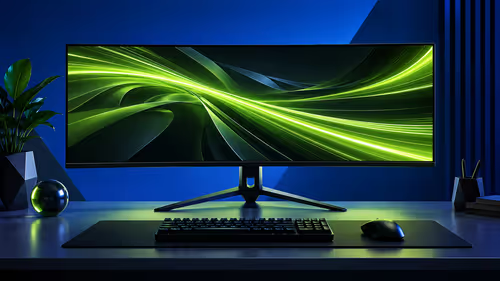
One monitor is a sound starting point. Place it close enough that the car and braking references are easy to read without turning your head. Use the game's field-of-view tools as a starting point, then check that mirrors and the dashboard remain usable. A wider screen can improve peripheral awareness, but it does not repair an unstable frame rate.
Tune the PC for consistency. Choose a frame-rate target it can hold in traffic, at night, and in rain. Those conditions are tougher than a solo daytime lap. Reduce expensive settings one at a time, starting with reflections, shadows, visible cars, and effects that add load during busy scenes. Keep texture quality within your graphics memory budget and watch for stutters after a long session.
Cap the frame rate if the system swings between high peaks and deep drops. A lower, steady result gives your steering and braking a more predictable feel. Test at the start of a crowded race rather than using a quiet practice lap as proof.
Three starter tiers that make sense
The first tier uses your existing desk and chair. Add a force-feedback wheel and pedal set, secure both, and use the monitor you already own. This route puts most of the budget into the controls. Its weak point is furniture movement, so test the desk edge and chair before applying force.
The second tier adds a folding or freestanding wheel stand. It gives the wheel and pedals one rigid relationship, which improves braking consistency and makes setup quicker. You can still use an office chair if you stop it rolling. This tier suits a shared room because the stand can move aside between sessions.
The third tier adds a dedicated seat or cockpit. It earns its place when you race often, need fixed geometry, or use a wheel that overwhelms a desk. Measure the available floor space and the route through doors before ordering. Check mounting patterns for the wheel base, pedals, and any future shifter. Compatibility is worth more than a frame that looks impressive in a photo.
Upgrades to leave until later
Triple monitors, a handbrake, a separate shifter, and elaborate button panels can all be useful. None should outrank a seat you can tolerate or pedals that stay put. Let the cars you drive expose the next limitation.
If you struggle to see cars alongside you, improve screen positioning or add visual aids before committing to three displays. If braking varies from lap to lap, fix pedal movement and calibration. If your hands tire, reduce force and examine wheel height. Each problem points to a specific upgrade, which keeps the build focused.
Headphones can be a smart early addition because tyre noise and engine cues help you judge grip and shifts. Keep the volume comfortable during long sessions. A headset also avoids filling the room with race audio late at night.
FAQ
What is the minimum rig needed for Le Mans Ultimate?
You need a capable PC, a display, and an input device. A controller can get you driving, but a force-feedback wheel and secured pedals give you better control over steering and braking. A desk setup works if the desk, chair, and pedals remain stable under load.
Is direct drive necessary for endurance racing?
No. Direct drive can offer stronger and cleaner feedback, but consistent inputs come from calibration, mounting, and practice. An entry force-feedback wheel can support competitive, enjoyable endurance racing when it is set up within its limits.
Do I need triple screens to start?
No. A single monitor placed well is enough to learn the game and complete long races. Consider triples only after confirming that your PC, room, monitor mounts, and budget can support three matched displays without compromising frame consistency.
Build your Le Mans Ultimate setup around a stable driving position, then choose sim controls that fit your desk, room, and upgrade path.