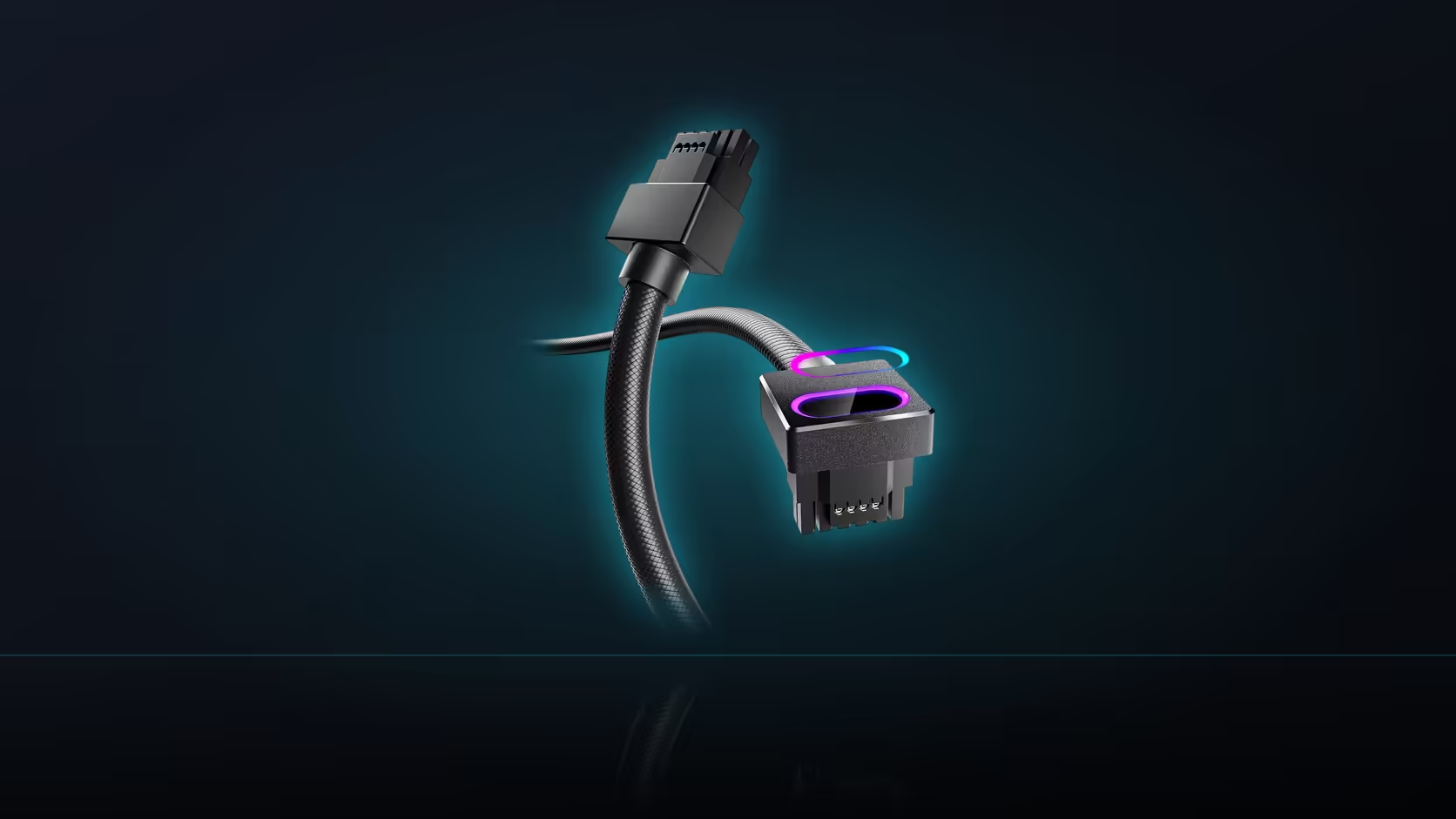
Every build asks the same two questions of the space around a graphics card, and they are easy to conflate because both live at the same connector. The Hydrus 16-pin cable actually solves them separately: a fixed right-angle head deals with depth at the socket, while a flexible frosted jacket deals with whatever shape the rest of the route has to take.
Quick Answer
Priced at R699 in black or white, this AsiaHorse cable addresses two distinct fit problems with two distinct design choices. The right-angle head reduces the depth needed between the card and the side panel; the flexible frosted jacket behind it handles the shape of the run from there to the power supply. A tight case usually needs the head; an awkward route usually needs the flex - and they are not interchangeable solutions.
The depth problem, and what the head does about it
A straight connector standing directly out from a card's power socket needs real clearance behind it before the side panel can close - the full length of the plug plus the cable's own bend radius, projecting straight back from the card. In a case with limited depth on the panel side, that space simply may not exist. A right-angle head sidesteps this by turning immediately at the socket, so the cable heads off sideways rather than backward, needing a fraction of the depth a straight plug demands.
This is a genuinely mechanical fix, not a cosmetic one. In a compact case where the panel barely clears the card as it is, the difference between a right-angle head and a straight connector can be the difference between the build closing up cleanly and not closing at all.
The routing problem, and what the jacket does about it
Once past the socket, the cable still has to travel to wherever the power supply's modular panel sits, and that path is rarely a straight line - it curves around shrouds, through cable-management cutouts, sometimes doubling back on itself in a tighter case. A flexible jacket, described by AsiaHorse as diamond-frosted on this cable, follows whatever curve the case forces without resisting or holding a memory of its packaged shape. That flexibility is what actually gets the cable from the socket to the supply without fighting the route at every turn.
Why one cannot substitute for the other
These two design elements answer genuinely different questions, and confusing them leads to disappointment. A flexible cable jacket does nothing to reduce the depth a straight connector needs at the socket - flexibility further down the run has no bearing on what happens in the first few centimetres. Equally, a right-angle head does not make a later tight bend in the route any easier; it only affects the very start of the cable's path. A case that is tight in both places needs both features working together, and a case that is tight in only one place is really only being helped by whichever feature addresses that specific constraint.
Which one matters more, if you have to pick
In a genuinely compact case, depth behind the card tends to be the harder constraint to work around after the fact - a routing problem further along can sometimes be solved with careful cable management or a slightly different path, but a panel that will not close because the connector protrudes too far has no such workaround short of a different connector shape entirely. That makes the right-angle head the more consequential of the two features in the tightest builds, even though the flexible jacket is doing real work throughout the rest of the run.
What if neither solves the problem
Occasionally a case layout is tight enough that even the right-angle head and a fully flexible jacket cannot make the fit work - the card itself sits too close to the panel regardless of connector shape, or the supply's position leaves no workable path at all. At that point the honest conclusion is that the layout itself is the limiting factor rather than the cable, and the fix is a different route, a repositioned component, or accepting that this particular cable is not right for that particular case.
Testing both before committing to an order
Because these are physical fit questions rather than electrical ones, the only way to be genuinely confident is to test both constraints with the actual card installed, before the cable itself is ordered. Fit the card, look at the depth between its socket and the side panel with the panel loosely held in place, and separately trace the rough path a cable would take to the power supply. Neither check takes more than a few minutes, and both are considerably cheaper to do beforehand than to discover after a cable has already arrived and turned out not to solve the specific problem your case presents.
A case that clears both checks comfortably is the easy scenario - the head and the jacket are working with the layout rather than against it. A case that only clears one is still workable, provided you understand which constraint the cable is actually solving for you and which one still needs separate attention through routing choices or component positioning.
Browse comprehensive cable solutions for the full Hydrus range, and once fit is confirmed, graphics card accessories rounds out a 12VHPWR build.
Frequently Asked Questions
What specific problem does the right-angle head solve?
Depth. Turning immediately at the socket means the connector needs far less clearance between the card and the side panel than a straight plug would.
And what does the flexible jacket solve?
The shape of the route. A flexible cable follows whatever path the case allows rather than forcing a wide curve where there is no room for one.
Can a flexible jacket compensate for a lack of depth?
No. Flexibility further along the run does not reduce the space a straight connector needs at the very start, right at the socket.
Which matters more in a genuinely compact case?
Usually the head, since depth behind the card is often the constraint that decides whether the panel closes at all.
Is the jacket the same finish as the rest of the Hydrus range?
Yes, described as a diamond-frosted jacket consistent with the family, on this model over a 50cm run.
Does the head's fixed direction limit how the rest of the cable can be routed?
It sets the direction the cable starts heading, so the rest of the route has to work with that rather than against it.
What if neither the head nor the jacket solves the fit?
Then the layout itself is the limiting factor, and a different route, repositioned component, or a different cable choice is the answer.
Trying to work out whether your case needs the head, the flex, or both?
Fit the card and check the actual clearance, then browse Evetech's case range if a layout change would help.