Quick Answer
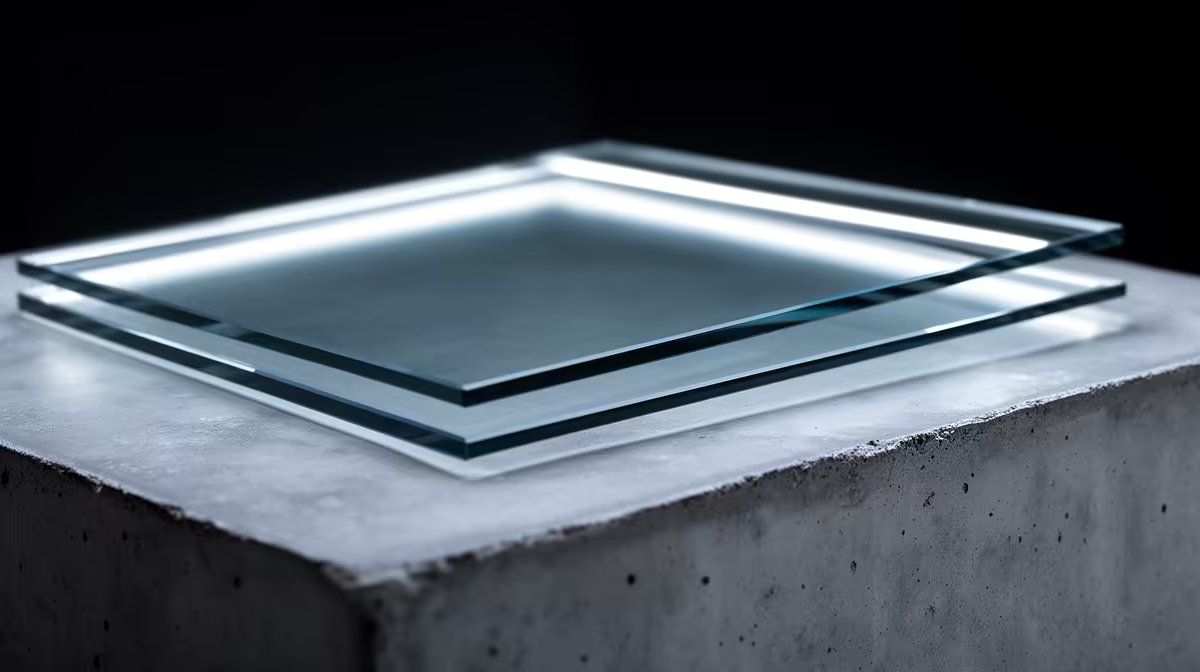
Dual 4 mm tempered glass panels on a PC case provide scratch resistance, low optical distortion, and a professional showcase appearance on both sides of the build. They are the right choice when both internal sides contain display-worthy hardware, but they add 1 kg to 1.5 kg to the case weight and require careful handling to avoid corner chipping.
What "4mm" Means for Glass Quality 🔮
Tempered glass thickness directly affects both durability and visual clarity. At 3 mm, panels are lighter but flex slightly when pressed, which can crack the glass along stress lines near mounting points. At 4 mm, the glass is stiff enough to absorb incidental contact without flexing, and the greater mass damps micro-vibrations from fans. Premium showcase cases use 4 mm glass because it allows large unsupported panels (400 mm by 420 mm and above) without resonance buzz at fan frequencies. For cases retailing locally in the R5,000 to R9,000 range, 4 mm glass on both sides is now standard in the showcase segment.
Showcase Case Design Principles 🎨
A showcase case designed around dual glass panels differs structurally from a standard case. The frame must carry two heavy glass panels without flex, typically requiring 1.2 mm to 1.4 mm cold-rolled steel. The left panel reveals the GPU, AIO cooler, and motherboard lighting, while the right panel exposes cable routing. Showcase-focused designs address the right side with modular cable covers, velcro routing channels, and sometimes secondary RGB lighting specifically for the cable side. Cases with this level of engineering include dedicated sleeved cable holders and a PSU shroud with a ventilated window so the PSU fan and modular cable heads are visible.
Thermal and Weight Considerations 🔧
Dual 4 mm glass panels add 1 kg to 1.5 kg to total case weight, bringing a large full-tower from 12 kg to 13.5 kg with components. This is relevant for SA builders who transport rigs to LAN events. Thermally, the glass panels are neutral: neither the left nor right glass covers any primary ventilation path in a well-designed showcase case, since intake and exhaust route through the top, front, and bottom mesh sections. Verify this by confirming no glass panel covers a fan mount in your specific model.
RGB Lighting for Dual Glass Builds ⚡
When building for dual-glass visibility, add an addressable LED strip along the PSU shroud edge on the right side. A single ARGB strip costs under R300 and runs off a spare motherboard ARGB header, making the cable management side look intentional rather than incidental when viewed through the right glass panel.
FAQ
Is 4mm glass significantly stronger than 3mm for a PC case?
Yes in practical terms. At 4 mm, the glass resists minor impacts of tools dropped during maintenance, and the mounting points are less likely to chip during panel removal. The strength difference is about everyday durability over years of use, not catastrophic failure resistance.
Do dual glass cases come in smoked or tinted options?
Yes, most premium showcase cases offer clear, light smoke, and dark smoke glass variants. Light smoke at 70 percent to 80 percent transmission reduces ambient glare while still revealing RGB lighting effectively.
Does dual glass affect Wi-Fi or Bluetooth signal?
Glass is RF-transparent, so dual tempered glass panels have no measurable effect on Wi-Fi 7 or Bluetooth 5.4 signal strength. The steel frame and PSU shroud create far more RF obstruction than the glass panels themselves.
Ready to build a PC worth showing off?
Evetech carries dual tempered glass showcase cases, RGB components, and premium builds to create the setup you will want on display.