Quick Answer
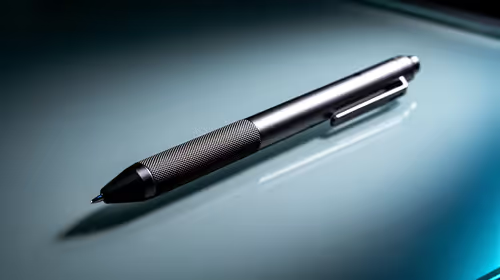
Tilt function, nib material, and screen surface are the three variables that together determine how natural a stylus feels to write or draw with. Get all three right and the experience approaches genuine pen-on-paper; get any one wrong and the friction and feedback feel artificial regardless of how high the pressure-level count is.
How Tilt Function Changes Stroke Shape 📐
Tilt support in an active pen uses internal sensors to detect how far the barrel leans from vertical and in which compass direction. This azimuth-and-altitude data is sent to the drawing app alongside pressure figures. When you tilt a pen to 40 or 50 degrees, the app widens the stroke on the leaning side, exactly as a pencil's flat graphite face does. For artists this is transformative: the same pen and same brush can render a fine upright linework stroke and a broad side-of-pencil shading stroke without ever touching a settings panel. Most current MPP 2.0 and Wacom AES 2.0 pens support tilt to 60 degrees across the full 360-degree azimuth.
Nib Types and What They Do to Writing Feel ✍️
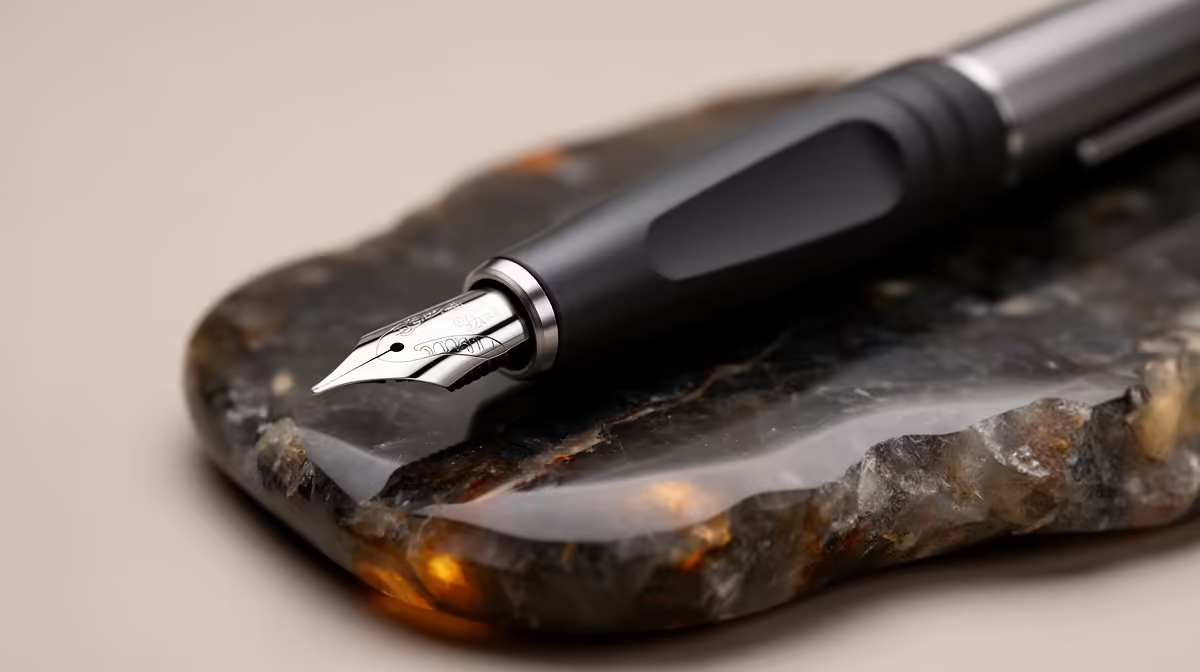
The nib is the part of the stylus that contacts the screen, and its material controls the drag and feedback your hand receives. Hard POM plastic nibs glide with minimal friction, making them fast for gesture and selection tasks but somewhat sterile for handwriting. Soft POM and fibre-tipped nibs add resistance that mimics the drag of a ballpoint on paper, slowing the nib slightly on contact. This drag is important because it provides tactile confirmation that ink is being deposited, reducing the tendency to over-press or write too quickly. Some manufacturers offer textured nibs that increase friction further.
Screen Surface and Its Role in Natural Feel 🖥️
The same pen nib behaves completely differently on a glossy glass screen versus a matte anti-glare surface. On glossy glass, even a soft nib slides with less friction than paper. On a quality nano-texture or matte PET screen protector, the microscopic roughness catches the nib and simulates paper drag convincingly. For students and artists in SA who spend hours writing on-screen daily, adding a matte protector is the single highest-value upgrade to writing naturalness, often costing R150 to R400 for a correctly sized cut.
Match Nib Hardness to Your Screen Surface ⚡
If your screen has a rough matte protector, use a harder nib to avoid accelerated wear. If your screen is glossy glass and you want more drag, use the softest nib available for your pen. Mismatching (soft nib on heavy-texture protector) wears nibs out in weeks and adds unnecessary cost over a year of regular use.
FAQ
Does nib hardness affect pressure-level accuracy?
Nib hardness does not change how many pressure levels the sensor reads, but it affects how linearly pressure is applied. A very hard nib requires more deliberate force to show variation across the full pressure range. A softer nib compresses slightly on contact, which spreads the physical pressure more evenly and often feels easier to control for delicate shading.
Can I mix nibs from different brands in one stylus?
Nib compatibility depends on the barrel diameter and locking mechanism. Wacom nibs are interchangeable across the Wacom AES pen family. MPP nibs from Microsoft Surface Pen family pens are compatible with many MPP-licensed third-party pens. Check your pen's manual for compatible nib specifications.
Is a paper-like screen protector worth it if I mostly take text notes?
For text-only notes, the benefit is smaller but still real: the friction slows impulsive strokes and often improves handwriting legibility. If you write quickly during lectures, the extra drag encourages more deliberate letter formation. It is a modest cost for a meaningful comfort improvement.
Want a pen that genuinely feels natural to write with?
Evetech stocks active stylus pens with a range of nib options and tilt-capable designs suited to writers, students, and illustrators. Browse current availability to find the right fit.